Wedge wire filter screens are a critical component in various industries, known for their high efficiency, durability, and precision. As a supplier of wedge wire filter screens, I am often asked about the manufacturing process behind these remarkable products. In this blog post, I will take you through the step-by-step journey of how wedge wire filter screens are made, from raw materials to the final product. Wedge Wire Filter Screen
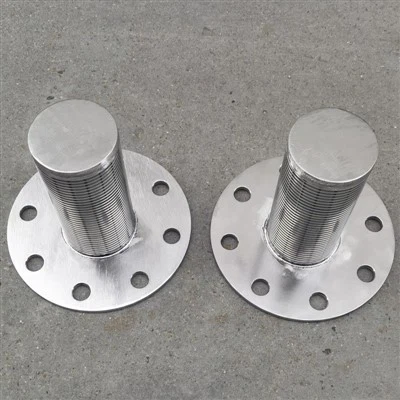
Raw Materials Selection
The manufacturing process of wedge wire filter screens begins with the careful selection of raw materials. The most commonly used material is stainless steel, specifically grades such as 304, 316, and 316L. These grades offer excellent corrosion resistance, strength, and durability, making them ideal for a wide range of applications, including water treatment, food and beverage processing, and mining.
The stainless steel wire used in wedge wire filter screens is typically cold-drawn to achieve the desired diameter and surface finish. Cold drawing improves the wire’s mechanical properties, such as tensile strength and hardness, while also ensuring a smooth and uniform surface. The wire is then cut to the appropriate length for the manufacturing process.
Profile Welding
The next step in the manufacturing process is profile welding. This involves welding the wedge-shaped wires to support rods at precise intervals to create the filter screen structure. The wedge-shaped wires, also known as V-wires, are arranged parallel to each other, with the support rods perpendicular to them.
There are several welding methods used in profile welding, including resistance welding, TIG welding, and MIG welding. Resistance welding is the most commonly used method due to its high efficiency and precision. In resistance welding, an electric current is passed through the wires and support rods, generating heat at the contact points. The heat causes the materials to melt and fuse together, creating a strong and reliable bond.
During the profile welding process, the spacing between the wedge-shaped wires is carefully controlled to achieve the desired slot size. The slot size determines the filtration accuracy of the filter screen, and it can be customized according to the specific requirements of the application.
Welding Quality Control
Ensuring the quality of the welding is crucial in the manufacturing of wedge wire filter screens. To achieve this, strict quality control measures are implemented throughout the welding process. This includes regular inspections of the welding equipment, monitoring of the welding parameters, and testing of the welded joints.
Non-destructive testing methods, such as ultrasonic testing and X-ray testing, are often used to detect any defects or imperfections in the welded joints. These tests can identify cracks, porosity, and other welding defects that may affect the performance and durability of the filter screen.
In addition to non-destructive testing, destructive testing may also be performed on a sample of the welded joints to evaluate their strength and integrity. This involves subjecting the sample to various mechanical tests, such as tensile testing and bend testing, to determine its mechanical properties.
Forming and Shaping
Once the profile welding is complete, the wedge wire filter screen is formed and shaped into the desired configuration. This can include cutting the filter screen to the appropriate size and shape, bending it into a cylindrical or conical shape, or welding it to other components to create a complete filtration system.
Cutting the filter screen is typically done using a high-precision cutting machine, such as a laser cutter or a waterjet cutter. These machines can cut the filter screen with high accuracy and minimal distortion, ensuring that the final product meets the required specifications.
Bending the filter screen into a cylindrical or conical shape is done using a bending machine. The bending process must be carefully controlled to ensure that the filter screen maintains its shape and integrity. Welding the filter screen to other components is done using the same welding methods as in the profile welding process, with strict quality control measures in place to ensure the strength and reliability of the welded joints.
Surface Treatment
After the forming and shaping process, the wedge wire filter screen may undergo surface treatment to improve its corrosion resistance and appearance. The most common surface treatment method is passivation, which involves treating the filter screen with a chemical solution to remove any free iron and other contaminants from the surface.
Passivation creates a protective oxide layer on the surface of the filter screen, which helps to prevent corrosion and extend its service life. Other surface treatment methods, such as electroplating and powder coating, may also be used depending on the specific requirements of the application.
Final Inspection and Packaging
Before the wedge wire filter screen is shipped to the customer, it undergoes a final inspection to ensure that it meets the required quality standards. This includes a visual inspection of the filter screen for any defects or imperfections, as well as a performance test to verify its filtration efficiency and flow rate.
Once the filter screen has passed the final inspection, it is carefully packaged to protect it during transportation. The packaging typically includes a protective layer of plastic or cardboard, as well as a label indicating the product specifications and handling instructions.
Conclusion
The manufacturing process of wedge wire filter screens is a complex and precise process that requires careful attention to detail at every step. From the selection of raw materials to the final inspection and packaging, each stage of the process plays a crucial role in ensuring the quality and performance of the filter screen.

As a supplier of wedge wire filter screens, we are committed to providing our customers with high-quality products that meet their specific requirements. Our state-of-the-art manufacturing facilities and experienced team of engineers and technicians allow us to produce filter screens with the highest level of precision and reliability.
Sintered Fibre Felt Material and Filter If you are interested in purchasing wedge wire filter screens for your application, we would be happy to discuss your requirements with you. Please contact us to schedule a consultation and learn more about our products and services.
References
- ASM Handbook, Volume 6: Welding, Brazing, and Soldering. ASM International, 1993.
- Stainless Steel Handbook. Outokumpu Stainless, 2010.
- Filtration Handbook. Elsevier, 2005.
Henan Easy Filter Equipment Co., Ltd.
As one of the leading wedge wire filter screen manufacturers and suppliers in China, we offer a wide range of products with superior quality. Please rest assured to buy advanced wedge wire filter screen from our factory. We also accept customized orders.
Address: Apartment No.1, Building No.2, Zhengshang Jinyushijia, Xinzhong Street, Xinxiang, Henan, China.
E-mail: vivian@easyfiltertech.com
WebSite: https://www.easyfilter-china.com/
