Hey there! As a supplier of night vision monoculars, I get tons of questions from customers, and one that pops up a lot is how these nifty gadgets perform in foggy conditions. Y’know, fog can be a real pain in the butt, whether you’re out hunting, doing some surveillance, or just exploring the great outdoors at night. So, let’s dig into it and see what’s what. Night Vsion Monoculars
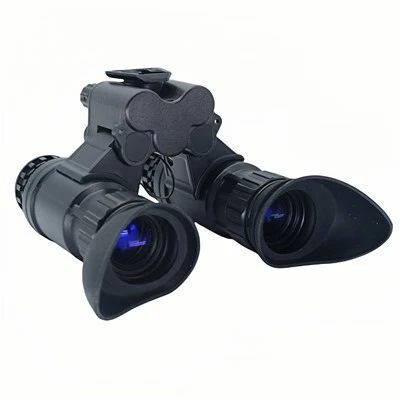
First off, let’s talk about how night vision monoculars actually work. Most of the ones we sell are based on either image intensification or thermal imaging technology. Image – intensification night vision monoculars gather the tiny bits of light available at night, like moonlight or starlight, and amplify it to create a visible image. On the other hand, thermal imaging monoculars detect the heat emitted by objects and create an image based on temperature differences.
Now, when it comes to fog, image – intensification monoculars face a bit of a challenge. You see, fog consists of tiny water droplets suspended in the air. These droplets scatter and absorb the ambient light that the monoculars rely on. Think of it like trying to see through a cloud of flies. The light gets all messed up on its way to your eyes (or the monocular’s sensors). So, the image quality takes a big hit.
In light to moderate fog, you might still be able to make out some basic shapes and outlines. But as the fog gets thicker, the visibility just drops off a cliff. You might end up with a blurry mess, and it can be really hard to tell what’s what. Sometimes, all you’ll see is a hazy blob where there should be a clear object.
But it’s not all doom and gloom for image – intensification monoculars. Some of the high – end models we supply have advanced features that can help a little in foggy conditions. For example, they might have better light – gathering capabilities or image – enhancement algorithms. These can make the most of the limited light that’s still getting through the fog. So, you might get a slightly clearer image compared to a cheaper, lower – quality monocular.
Thermal imaging night vision monoculars, though, are a different story. Since they’re detecting heat rather than visible light, fog doesn’t affect them in the same way. The water droplets in the fog don’t really interfere with the detection of heat signatures. So, in foggy conditions, thermal imaging monoculars can often give you a much better view.
You’ll be able to see the heat profiles of objects even when they’re hidden by the fog. For instance, if there’s an animal in the fog, you’ll see its warm body as a distinct shape against the cooler background. This gives you a huge advantage in tracking and identifying things that might be invisible to an image – intensification monocular.
However, thermal imaging monoculars aren’t perfect either. Very thick fog can still have a minor effect. Sometimes, the water droplets can act like a bit of a barrier, causing the heat signatures to be a little less distinct. But overall, they’re way better than image – intensification monoculars in fog.
Now, let’s talk about range. In normal conditions, both types of night vision monoculars can offer a pretty good range of visibility. But in fog, that range gets significantly reduced. With image – intensification monoculars, as the light is scattered and absorbed, you’ll be lucky to see more than a few dozen meters in thick fog.
Thermal imaging monoculars can maintain a better range, but it still gets cut down. The further away an object is, the more the heat has to travel through the fog, and that can make the heat signature weaker. So, your effective viewing range might go from hundreds of meters in clear conditions to maybe a couple of hundred in light fog and much less in thick fog.
The key is to know what you’re going to use the monocular for. If you’re in an area where fog is rare, going for an image – intensification monocular might be a good call. They’re often more affordable, and they work great in clear night conditions. But if you’re in a coastal area, a marsh, or somewhere else where fog is common, investing in a thermal imaging monocular is probably your best bet.
Now, I’ve got to say, our selection of night vision monoculars is top – notch. We’ve worked hard to source the best products from reliable manufacturers. Whether you need an image – intensification monocular for occasional use or a rugged thermal imaging one for those foggy, challenging environments, we’ve got you covered. And the prices are pretty reasonable too, considering the quality you’re getting.

If you’re thinking about buying a night vision monocular, don’t hesitate to get in touch. We can give you more in – depth advice based on your specific needs. Whether you’re a beginner just looking for a simple way to see in the dark or a professional in need of high – performance gear, we’re here to help. Reach out to us to start a conversation about your requirements, and we’ll find the perfect night vision monocular for you.
Night Vision Scopes References
- Smith, J. "Night Vision Technology: Principles and Applications." 2018.
- Brown, A. "Thermal Imaging in Challenging Weather Conditions." 2019.
Shenzhen Detyl Optoelectronics Co., Ltd.
With abundant experience, we are one of the most professional night vsion monoculars manufacturers and suppliers in China. Please rest assured to buy customized night vsion monoculars at competitive price from our factory. For pricelist and quotation, contact us now.
Address: 4th Floor, Building 3, Factory, No. 20, Second Industrial Avenue, Tangxiayong Community, Yanluo Street, Bao’an District, Shenzhen
E-mail: sales@detyl.com
WebSite: https://www.detyl.net/
