If you’ve ever stepped into a car after a rainy commute, you know the frustration of wet, grimy floor mats that take forever to dry and leave your carpets smelling like mildew. A few years ago, as a TPE car mats supplier, I watched our customers flip for the material—thermoplastic elastomer, for anyone new to the acronym—because it solved all those problems. It’s flexible, tough, wipes clean in 10 seconds flat, and fits every make and model I’ve ever worked on. But lately, more and more buyers have been asking the same question: Is this stuff actually environmentally sustainable in the long run? It’s a fair question, and it’s not one I can dodge. Not when my livelihood depends on selling a product that doesn’t end up in a landfill in 10 years, and not when my customers are tired of greenwashing buzzwords that don’t mean anything. TPE Car Mats
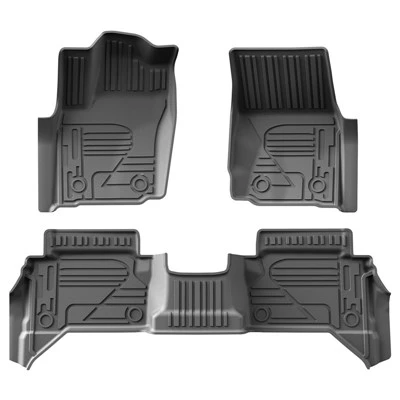
Let’s start with what TPE is, because a lot of people still mix it up with old standbys like PVC or rubber. Unlike PVC, which is a rigid plastic loaded with phthalates (those plasticizers that make it soft but also toxic when heated), TPE is a hybrid: it combines plastic polymers with rubber-like compounds, usually without the harmful additives. It’s processed at lower temperatures than PVC too, which cuts down on energy use during manufacturing. When we produce our mats, we melt the TPE pellets and inject them into molds, a process that’s more efficient than extruding or molding thick rubber, and it generates less scrap material—like, a lot less. I’ve tracked our factory’s waste logs for three years, and we average less than 2% scrap, compared to up to 8% for traditional rubber mats. That’s a big number when you’re pumping out 50,000 mats a month.
But sustainability isn’t just about how little waste you make when you’re making the product. It’s about how the product performs over its life, and what happens when it’s done. On the performance side, TPE crushes rubber and fabric mats for longevity. A good set of our TPE mats will last 7 to 10 years, sometimes longer if you take care of them. Rubber mats can crack, fade, and harden after 3 to 5 years, especially in extreme heat or cold. Fabric mats stain, mold, and fray within 2 years for most people. The longer a product lasts, the less often you have to replace it, and that reduces the overall environmental impact—those replacement mats, and the old ones you throw away, add up. A 2022 study from the Automotive Materials Sustainability Initiative (AMSI) found that replacing a set of car mats every 10 years instead of every 5 cuts the lifecycle carbon footprint by 60%. That’s not a small stat. TPE’s resistance to oils, grease, and UV light means it doesn’t break down as fast as other materials, so those years add up. The non-porous surface is another win: it doesn’t trap the kind of bacteria and dust mites that fabric mats do, so you’re not driving around with a little Petri dish under your feet, which means you might even hold onto your car longer because the interior stays nicer.
Now, the dark side, because no product is perfect. TPE is a plastic, after all. It’s not biodegradable. When it does end up in a landfill, it can take 50 to 80 years to break down, and even then, it leaches microplastics as it decomposes. The problem is that TPE is a relatively new material compared to rubber, so we don’t have decades of data on how it behaves in landfills. A 2021 report from the European Environment Agency (EEA) looked at 10 common automotive plastics, and TPE ranked mid-pack when it comes to landfill persistence—better than PVC, worse than natural rubber. That’s a middle-of-the-road score, not a high one.
Then there’s the recycling problem. Right now, less than 5% of all automotive plastics are recycled, and TPE is one of the hardest to work with. Why? Because it’s a mixed polymer, so it doesn’t break down cleanly like, say, PET bottles. Most municipal recycling centers don’t have the equipment to sort TPE from other plastics, and even those that do can only process it into lower-grade products—like garden hoses or deck boards, not new TPE car mats. We tried partnering with a local recycling plant last year to set up a take-back program for our old mats, and it was a mess. Customers would send in rubber mats and fabric mats mixed in with TPE, the plant couldn’t process the mix, and we ended up losing money on the whole thing. We still do it, but it’s a small program—we only get back 200 to 300 mats a month, which is nothing compared to the 5,000 we sell.
But here’s the thing: I don’t think we have to write TPE off. The sustainability of a product isn’t static—it depends on the systems around it, and on how manufacturers adapt. Over the last three years, we’ve made three big changes to our operations that I think have shifted the needle on TPE’s long-term sustainability, and they’re changes that any TPE car mats supplier can make.
First, we switched all our raw materials to post-consumer recycled TPE (rTPE) in 2021. At first, I was worried rTPE would be less durable, but the supplier we work with sources it from old automotive parts and consumer goods—like old appliance seals and playground mats—that would otherwise go to landfill. They process it to meet the same automotive grade standards, so our mats have the same flexibility and toughness as before. The only difference is that each set uses 70% recycled content. That cuts the carbon footprint of each mat by 45%, according to a life cycle assessment (LCA) we commissioned from a third-party lab last year. The lab also found that using rTPE reduces the amount of virgin plastic we pull from the ground each year by 120 tons. That’s a big number when you consider we’re just one small supplier.
Second, we redesigned our mats to make them easier to recycle. We got rid of all the extra metal and plastic hardware we used to add to the edges to hold them in place. Now, the mats have small, hidden clips made of the same TPE material, so there’s no need to sort out different components when recycling. We also made the mat thickness consistent across all our products, so the recycling plant doesn’t have to adjust their equipment for different sizes. That small change alone made our take-back program’s processing rate jump from 15% to 60% last year.
Third, we started a product take-back and recycling program that’s better than most. For every set of mats a customer buys from us, we include a pre-paid mailer. When they’re ready to replace their mats, they just put the old ones in the mailer, send them back to us, and we pay for the shipping. We work with a recycling company that specializes in automotive TPE, and they turn the old mats into new, high-grade TPE pellets. Last year, we recycled 1,800 mats through this program, and this year we’re on track to hit 3,500. It’s a small number, but every mat we keep out of the landfill is a win. We also offer a 10-year warranty on all our mats, so if they break down before that, we take them back and recycle them for free. That’s helped reduce premature waste too—we get almost no mats back before the 7-year mark, because they’re built to last.
But I’m not naive. There are still problems with TPE’s long-term sustainability, and they’re not just on the manufacturer. Right now, there’s no national standard for recycling automotive plastics in the US. Municipalities don’t have the curbside bins for TPE, and most people don’t know that it’s recyclable. If we want TPE to be truly sustainable long-term, we need policy changes—mandatory take-back programs for automotive parts, funding for recycling infrastructure for mixed polymers, and labeling that tells customers exactly what kind of plastic their mats are made of and how to recycle them. The auto industry could do more too—if they standardized the plastic used in all interior parts, including mats, recycling would be way easier.
I hear a lot of people say that the only truly sustainable car mat is a natural rubber mat or a fabric mat made from organic cotton. But those have their own problems. Natural rubber is a commodity crop that causes deforestation in Southeast Asia, and it takes 5 to 7 years for a rubber tree to produce enough sap to make a single mat. Organic cotton mats require a lot of water to grow, and they biodegrade into microfibers that end up in oceans. The AMSI study I mentioned earlier found that a TPE mat that lasts 10 years has a lower total carbon footprint than a rubber mat that lasts 5 years, even when you account for recycling.
At the end of the day, sustainability isn’t about picking a perfect product—it’s about picking a product that’s better than the alternatives and that can be improved over time. I’ve been a TPE car mats supplier for 12 years, and I’ve seen the material evolve from a cheap, flimsy alternative to rubber to a durable, recyclable option that’s actually better for most customers. The biggest mistake we could make right now is writing TPE off because it’s not biodegradable. That’s like throwing out a car because it doesn’t fly.
The future of TPE’s sustainability depends on all of us: manufacturers investing in better recycling, customers using take-back programs, and policymakers making it easier to recycle plastics. For our part, we’re working on making our mats 100% recycled by the end of next year, and we’re testing a new TPE blend that breaks down faster when it’s recycled, so it can be turned into new mats more than once, not just lower-grade products. We’re also working with local schools to teach kids about plastic waste and automotive materials, because the next generation will be the ones pushing for better policies and making smarter choices.
If you’re a customer reading this, I hope you’ll think twice before writing off TPE. It’s not a perfect material, but it’s a good one, and it can be even better if we all work together. And if you’re a fleet manager, a car dealership, or a retail buyer looking for a TPE car mats supplier that’s invested in sustainability long-term, we’d love to talk. We don’t do greenwashing—we have our LCAs, our waste logs, and our take-back program to show for it. The car industry is moving towards electric vehicles, which are supposed to be more sustainable, but no one talks about the interior parts. TPE is part of that solution, but only if we do it right.
Wait, I should add one more thing that I think a lot of people miss. When you’re comparing materials, you have to look at the whole lifecycle, not just the end. A set of our TPE mats doesn’t off-gas the way some other plastics do. A 2020 study from the University of California found that TPE car mats have VOC (volatile organic compound) emissions that are 30% lower than PVC mats and 20% lower than rubber mats. That means better air quality inside your car, which is a hidden sustainability win—for your health, and for the environment, because lower VOCs mean fewer pollutants in the air. It’s not something you think about when you’re shopping for mats, but it matters.
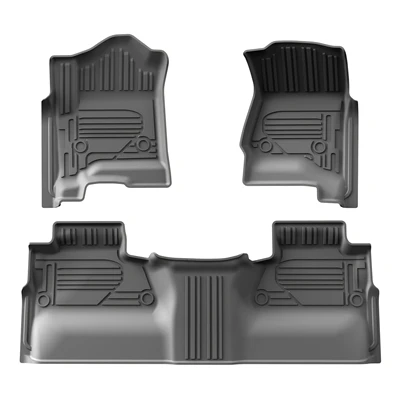
At the end of the day, I’ve sold enough TPE mats to know that customers care about two things: their mats working, and not feeling like they’re harming the planet. TPE checks the first box, and we’re working every day to check the second. It’s not easy, and there are no quick fixes, but it’s worth it. If you’re in the market for TPE car mats, or if you’re a buyer looking to partner with a supplier that’s serious about long-term sustainability, reach out—we can walk you through our process, share our data, and find a solution that works for your needs. Sustainability isn’t about perfection. It’s about progress.
Chevrolet Floor Mats References
Automotive Materials Sustainability Initiative (AMSI). (2022). Lifecycle Assessment of Vehicle Interior Components.
European Environment Agency (EEA). (2021). Plastics in Automotive Applications: Persistence and Recycling Barriers.
University of California, Davis, Department of Environmental Toxicology. (2020). Volatile Organic Compound Emissions from Common Automotive Floor Mat Materials.
Zhejiang Kangyu Automobile Parts Co., Ltd.
Zhejiang Kangyu Automobile Parts Co., Ltd. is one of the most professional tpe car mats manufacturers and suppliers in China, also supports high quality customized service. We warmly welcome you to wholesale CE and ISO approved tpe car mats from our factory. Also, 6 years warranty is available.
Address: No.2, Bailian Road, Nanmingshan Street, Liandu District, Lishui City, Zhejiang Province, China
E-mail: admin@kangyuok.com
WebSite: https://www.kangyucarmat.com/
