Hey there! I’m a supplier of six – axis collaborative robots, and I’m super excited to chat with you about how these bad – boys handle different types of end – effectors. You know, when it comes to making your production processes more efficient and versatile, the right combination of a six – axis collaborative robot and the appropriate end – effector can be a total game – changer. Six-Axis Collaborative Robot
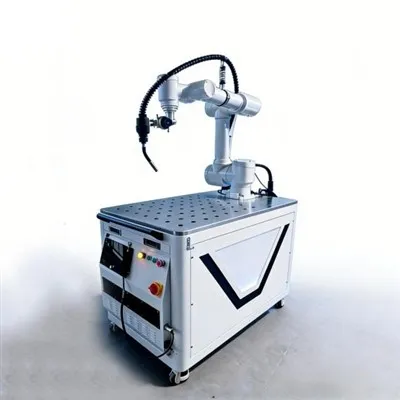
First off, let’s talk a bit about what six – axis collaborative robots are. These robots are like the Swiss Army knives of the industrial world. They’ve got six degrees of freedom, which means they can move in all sorts of directions – up, down, left, right, in, out, and even rotate. This flexibility allows them to reach different angles and positions, making them suitable for a wide range of tasks. And the “collaborative” part? That means they can work safely alongside humans, which is a huge plus in today’s workplaces.
Now, let’s dive into end – effectors. End – effectors are basically the “hands” of the robot. They’re the tools at the end of the robot’s arm that interact with the workpieces. There are several types of end – effectors, and each one has its own unique way of being handled by the six – axis collaborative robot.
Grippers
Grippers are probably the most common type of end – effector. They come in different shapes and sizes, like parallel grippers, angular grippers, and vacuum grippers. Parallel grippers are great for picking up objects with flat surfaces. The six – axis collaborative robot can easily position the parallel gripper to grasp the object precisely. It can adjust the width of the gripper’s jaws according to the size of the object. For example, if you’re working with small electronic components, the robot can set the gripper to a narrow width to pick them up gently without causing any damage.
Angular grippers are useful when you need to pick up objects at an angle. The six – axis robot can rotate its arm and adjust the position of the angular gripper so that it can access objects that are placed in awkward positions. This is really handy in assembly lines where parts are often arranged in non – standard orientations.
Vacuum grippers, on the other hand, use suction to pick up objects. They’re perfect for handling flat, smooth objects like glass panels or plastic sheets. The robot can control the amount of suction applied by the vacuum gripper. If the object is lightweight, it can reduce the suction to prevent any potential damage. And if the object is heavy, the robot can increase the suction to ensure a secure grip.
Welding Torches
When it comes to welding applications, the six – axis collaborative robot can handle welding torches with great precision. Welding requires a high level of accuracy in terms of the torch’s position and angle. The robot can move the welding torch along the welding seam at a consistent speed, ensuring a high – quality weld. It can also adjust the angle of the torch to match the shape of the workpiece. For instance, if you’re welding a curved surface, the robot can continuously change the angle of the torch to keep it perpendicular to the surface at all times.
Tool Changers
Tool changers are another type of end – effector that’s really useful. They allow the six – axis collaborative robot to switch between different tools quickly. This is great for applications where you need to perform multiple tasks with the same robot. For example, in a machining operation, the robot might first use a drill bit to make holes in a workpiece and then switch to a milling cutter to shape the edges. With a tool changer, the robot can do this without any human intervention. The robot can detect which tool it needs and move to the tool magazine to pick up the appropriate one.
Sensors
Sensors can also be attached to the six – axis collaborative robot as end – effectors. These sensors can provide valuable information about the environment and the workpiece. For example, a force sensor can measure the amount of force applied by the robot when it’s gripping or manipulating an object. This is important for tasks that require a delicate touch, like handling fragile items. The robot can use the data from the force sensor to adjust the force it applies in real – time.
A vision sensor can help the robot identify the position and orientation of the workpiece. It can detect the shape, size, and color of the object, which is useful for tasks like sorting and assembly. The robot can then use this information to position itself accurately and pick up or manipulate the object.
How the Robot Handles Different End – Effectors
So, how does the six – axis collaborative robot actually handle all these different end – effectors? Well, it all comes down to programming. Every end – effector has its own set of requirements in terms of movement, force, and position. The robot’s software allows you to program these requirements.
First, you need to define the starting position and the target position of the end – effector. The robot’s six axes will then work together to move the end – effector from the starting point to the target point. You can also program the speed at which the end – effector moves. For example, if you’re using a gripper to pick up a delicate object, you might want to set a slow speed to avoid any sudden movements that could damage the object.
In addition to movement, you can also program the robot to control the functions of the end – effector. If you’re using a welding torch, you can program the amperage, voltage, and travel speed of the torch. If it’s a vacuum gripper, you can set the level of suction.
The robot also has built – in safety features to ensure that it can handle end – effectors safely. For example, if the end – effector encounters an unexpected obstacle, the robot can stop immediately to prevent any damage. It can also detect if there’s a malfunction in the end – effector and send an alert to the operator.
Benefits of Using Different End – Effectors with Six – Axis Collaborative Robots
Using different end – effectors with six – axis collaborative robots offers a whole bunch of benefits. First of all, it increases the flexibility of your production line. You can use the same robot for different tasks just by changing the end – effector. This reduces the need for multiple robots, which can save you a lot of money.
Secondly, it improves the quality of your products. The precision and accuracy of the six – axis robot, combined with the right end – effector, ensure that each task is performed consistently and correctly. For example, in welding applications, a well – programmed robot with a welding torch can produce high – quality welds every time.
Thirdly, it enhances safety in the workplace. Since the robot can handle dangerous tasks, like welding or working with heavy objects, it reduces the risk of human injuries. And because it’s a collaborative robot, it can work safely alongside humans, making the workplace a safer environment.
Considerations When Choosing End – Effectors
When you’re choosing end – effectors for your six – axis collaborative robot, there are a few things you need to keep in mind. Firstly, you need to consider the type of task you want to perform. If you’re mainly doing pick – and – place operations, a gripper might be the best choice. If you’re into welding, then a welding torch is what you need.
Secondly, you need to think about the compatibility between the end – effector and the robot. Make sure the end – effector can be easily attached to the robot’s arm and that the robot’s software can control its functions.
Thirdly, cost is always a factor. You need to balance the performance of the end – effector with its price. Don’t just go for the most expensive one if a cheaper option can do the job just as well.
Conclusion

To sum it up, six – axis collaborative robots are incredibly versatile and can handle a wide variety of end – effectors. Whether you’re using grippers, welding torches, tool changers, or sensors, the robot can be programmed to perform tasks with precision and efficiency. The combination of these robots and the right end – effectors can bring a whole new level of productivity and quality to your production processes.
Six-Axis Collaborative Robot If you’re interested in learning more about our six – axis collaborative robots and how they can work with different end – effectors for your specific needs, don’t hesitate to reach out. We’re here to help you find the perfect solution for your business. Let’s start a conversation about how we can take your production to the next level.
References
- “Robotics and Automation Handbook”
- “Industrial Robotics: Technology, Programming, and Applications”
Xinweilai Intelligent Technology (Shandong) Co., Ltd.
As one of the most professional six-axis collaborative robot manufacturers and suppliers in China, we’re featured by quality products and good service. Please rest assured to wholesale bulk customized six-axis collaborative robot from our factory. For pricelist and quotation, contact us now.
Address: Jinghua Road, Economic and Technical Development Zone, Dezhou City, Shandong Province
E-mail: liujiqing@xinweilaiznkj.com
WebSite: https://www.xinweilaiznkj.com/
