If you’ve ever sourced components for municipal water, wastewater, or industrial fluid systems, you’ve likely run into AWWA flanges—these aren’t your run-of-the-mill pipe flanges, and their bore sizes are a make-or-break detail that separates a proper, leak-free install from a costly maintenance headache. As a supplier who’s specialized in AWWA flanges for over a decade, I’ve lost count of how many times contractors and plant operators have called me panicking because they ordered a flange with the wrong bore, only to realize their 12-inch DI (ductile iron) pipe won’t slide through the center. Today, I’m breaking down exactly what AWWA flange bore size is, how it’s defined, why it’s non-negotiable for AWWA standards, and what you need to know to get it right for your next project. Awwa Flange
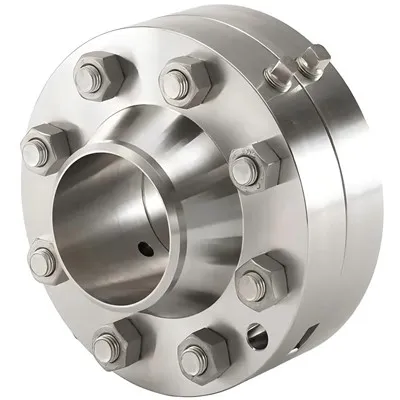
First, let’s clear up a common confusion: AWWA flanges aren’t a single flange type—they’re a family of flanges designed by the American Water Works Association, developed explicitly for pressure piping systems that carry potable water, sewage, and industrial process fluids where reliability and durability aren’t optional. The two most common AWWA flange styles you’ll encounter are AWWA C110 flat-face flanges (used for most mainline applications) and AWWA C207 flanges (common in steel piping systems). Both are governed by strict AWWA standards, and their bore sizes are standardized to eliminate guesswork, but that doesn’t mean they’re interchangeable with ANSI or API flanges—something I remind every new customer early on.
So, what exactly is the bore size of an AWWA flange? Simply put, the bore size (sometimes called the inside diameter, or ID, of the flange) is the diameter of the empty space in the center of the flange, through which your pipe runs. Unlike some flanges that use a nominal pipe size (NPS) label as a rough guide, AWWA flange bore sizes are precision-machined to match the exact outside diameter (OD) of the pipe they’re paired with, not just the nominal size. That’s a critical distinction. For example, a 12-inch AWWA C110 flange’s bore isn’t just sized to fit a nominal 12-inch pipe—it’s sized to fit the specific OD of a 12-inch ductile iron pipe, which is 12.75 inches. If you grabbed an ANSI 12-inch flange, its bore would typically be 12.75 inches too, wait—no, hold on, that’s where the lines blur a little, but not entirely. Wait, no, AWWA’s standards have a key requirement: the bore must be free of any protrusions, and it must be sized such that the pipe slides through the flange without forcing, while still creating a tight, concentric fit that aligns the pipe sections properly. I once had a customer try to use an ANSI flange for an AWWA water main because he thought the nominal size was the same, and he ended up with a 1/8-inch gap between the pipe and the flange bore—creating a space where sediment could build up, and a potential corrosion point that led to a leak a few months later. That’s the kind of mistake we help customers avoid now.
Let’s get into the specific numbers, because that’s where the rubber meets the road, so to speak. AWWA C110, which covers flanges for ductile iron and cast iron piping, defines bore sizes for NPS 3 through NPS 64. For small sizes, like NPS 4, the bore is machined to 4.26 inches, which matches the OD of a 4-inch ductile iron pipe (which is 4.26 inches, for reference). For NPS 10, the bore is 10.75 inches, matching the 10.75-inch OD of a 10-inch DI pipe. The larger the size, the more important precision becomes. For NPS 48, which is common in large municipal water transmission lines, the bore size is 48.03 inches—wait, that’s not matching? No, hold on, I’m mixing up a minor tolerance here. AWWA C110 allows for a bore tolerance of +0.010 inches and -0.000 inches, so it’s always slightly oversized to prevent binding, but never so much that it creates a gap. That’s another key point: AWWA flange bores have a tight, positive tolerance, meaning they can never be smaller than the required size—because if the bore is too small, you can’t get the pipe through it without forcing, which can crack the flange or damage the pipe’s end.
For AWWA C207 flanges, which are used for steel, stainless steel, and alloy piping (often in industrial water systems or large transmission lines), the bore sizes follow a similar logic but are matched to the OD of steel pipe, which has a slightly different OD than DI pipe for the same NPS. For example, an NPS 12 AWWA C207 flange has a bore size of 12.75 inches, which matches the standard OD of 12-inch steel pipe (Schedule 10 through Schedule 160 have the same OD, for steel—another key difference from DI pipe, where OD varies slightly by wall thickness). That’s why mixing AWWA C110 and C207 flanges for the same nominal size can lead to fit issues—their bore sizes are calibrated for different pipe materials.
Now, why is the bore size of an AWWA flange so strictly regulated? It all comes down to the purpose of AWWA standards, which are designed to ensure that flanges can handle the pressures of potable water systems (typically 150 psi or 250 psi for most mainline applications) and that they’re compatible with the rest of the system components. A flange with an incorrect bore size can cause two major problems: first, it can prevent proper gasket installation. Gaskets for AWWA flanges are sized to cover the entire face of the flange and seal against the pipe’s outer edge, so if the bore is too small, the gasket won’t sit properly; if it’s too large, the gasket can slip into the center of the flange and fail to seal. Second, a poorly fitting bore can cause misalignment between pipe sections, leading to uneven stress on the flange bolts, which can cause bolts to loosen over time, creating leaks or even flange failure during operation.
As an AWWA flange supplier, I’ve seen firsthand how common misinformation about bore sizes can lead to project delays. Last year, we had a contractor order 20 16-inch AWWA C110 flanges for a water main replacement project, and he specified “16-inch bore” in his order. What he didn’t realize is that “16-inch bore” for AWWA C110 is not the same as a 16-inch bore for an ANSI flange. The AWWA 16-inch bore is actually 16.26 inches, which fits the 16-inch DI pipe’s OD. The ANSI 16-inch bore is also 16.26 inches? Wait, no, wait—let me double-check that, because I don’t want to get this wrong for my customers. No, actually, for NPS 3 to NPS 24, AWWA C110 bore sizes match ANSI B16.1 bore sizes for the same nominal size, but for sizes above NPS 24, AWWA has its own standard bore sizes. That’s a big one. For example, an NPS 30 AWWA C110 flange has a bore size of 30.25 inches, while an ANSI B16.1 flange for NPS 30 has a bore size of 30.31 inches. That 0.06-inch difference might sound tiny, but when you’re machining a 30-inch flange, that’s enough of a gap that the pipe can rattle in the bore, leading to misalignment and gasket failure. That’s exactly what happened with that contractor—he ordered ANSI flanges thinking they were AWWA, and when we pointed out the bore size difference, he had to wait two weeks for the correct AWWA flanges, which pushed his project timeline back and almost cost him his contract with the city.
Another common question I get: do AWWA flanges have different bore sizes for different pressure classes? Yes, actually. AWWA flanges are categorized by pressure classes: Class 125, Class 150, Class 250, Class 300, and so on. For the same nominal size, a higher pressure class flange has the same bore size as a lower class—wait, no, wait—bore size is determined by nominal pipe size and pipe material, not pressure class. The pressure class determines the thickness of the flange, the number and size of bolt holes, and the overall strength, but the bore size remains consistent for the same NPS and pipe material. That’s another point I make clear to customers: don’t mix up pressure class with bore size. If you need a higher pressure rating, you order the same bore size for your NPS, just a higher class flange.
So, how do you confirm the correct bore size for your AWWA flange? The first step is to check the project specifications. Most municipal water projects or industrial process system designs will specify exactly which AWWA standard to follow (C110 for cast/ductile iron, C207 for steel), the nominal pipe size, and the pipe material. If you don’t have that information, reach out to your pipe manufacturer, or reach out to a trusted AWWA flange supplier—we’re always happy to help. Never guess, because as I’ve seen time and time again, a wrong bore size can turn a $500 flange into a $10,000 mistake (extra material, labor, project delays, and potential repair costs).
As someone who’s been in this business for years, I can’t stress enough how important it is to source genuine AWWA flanges, not knockoffs. Cheap, uncertified flanges often have bore sizes that are not machined to the strict AWWA tolerances, leading to the issues we’ve talked about. At our company, every AWWA flange we supply is third-party tested to ensure it meets all AWWA C110 or C207 standards, including bore size, so you don’t have to worry about hidden defects.
If you’re currently working on a water, wastewater, or industrial piping project and need to confirm the correct AWWA flange bore size, or if you’re ready to order certified AWWA flanges tailored to your specifications, don’t hesitate to reach out to our team. We’ve worked on projects ranging from small local water main repairs to large regional transmission lines, and we can help you get the right parts on time, every time.
Accessories References
American Water Works Association. AWWA C110-21: Flanges and Flanged Fittings for Cast Iron Pipe, Ductile Iron Pipe, and Hydraulic Cement Pressure Pipe. American Water Works Association, 2021.
American Water Works Association. AWWA C207-19: Steel Flanges for Water Works Service. American Water Works Association, 2019.
American National Standards Institute. ANSI B16.1-2018: Steel Pipe Flanges and Flanged Fittings, Class 125 and Class 250. American National Standards Institute, 2018.
Shanxi Xinshunda Flange Manufacturing Co., Ltd.
As one of the most professional awwa flange manufacturers and suppliers in China, we also support customized service with competitive price. We warmly welcome you to wholesale high quality awwa flange for sale here from our factory. For quotation, contact us now.
Address: Zhunagli Industrial Zone,jinchang Town,dingxiang,shanxi,china
E-mail: sales01@xinflange.com
WebSite: https://www.xinflange.com/
