If you’ve ever walked past a warehouse loading dock at 2 a.m. and wondered why a 10,000-pound industrial door opens and closes without a single touch, you’re not alone. For the last 12 years, I’ve run a small but steady industrial door control box supply business, and I can tell you: the quiet, reliable systems that make those doors work are not the same as they were even five years ago. Back when I started, our main product was a basic box with a few relays, a keypad, and a simple safety sensor. Today, the advancements we’re putting out are so precise, smart, and energy-efficient that some of our long-time clients have had to come back just to upgrade their old systems after realizing how much they were losing in wasted power and downtime. Industrial Door Control Box

I want to break down the latest advancements in industrial door control boxes not with jargon that sounds like a textbook, but with the stories and problems we hear from the factories, warehouses, and distribution centers that use our products every day. Let’s start with the biggest shift we’ve seen in the last three years: sensor integration that’s not just “does something bad exist?” but “what is exactly happening right here, right now?”
A few months ago, a food distribution client of ours came to us with a problem. Their cold storage doors were opening automatically and staying open 10–15 times a day longer than they needed to, letting cold air escape and raising their utility bills by almost 18% in one quarter. Their old control boxes only had a basic motion sensor that would trigger the door to open if anything crossed in front, but it couldn’t tell the difference between a forklift driver, a pallet of goods, or even a stray piece of cardboard blowing by. The new control boxes we installed for them use a high-resolution LiDAR sensor, not the cheap ultrasonic ones that older systems rely on. LiDAR bounces thousands of light pulses per second, mapping the exact size, shape, and distance of objects in the door’s path. It can tell the difference between a 300-pound forklift and a 10-pound cardboard box, so it only triggers the door for actual loads, not debris. We also added a proximity sensor tied to the dock leveler—another thing their old system didn’t have. If the dock leveler (that adjustable plate that connects the warehouse floor to the truck bed) isn’t fully locked into place, the door won’t open at all. That stopped their accidental cold air loss immediately; their next utility bill dropped by 21%. That’s the kind of real impact these new sensors bring, not just “safer” on a spec sheet.
Next up: predictive maintenance software that’s built directly into the control box, not just a separate app. Five years ago, if a door broke, a maintenance crew would get a call, drive out, and diagnose the problem after it was already causing downtime. Now, our latest control boxes have edge computing built in—meaning they process data right on the box, not on a distant server. The box tracks things like how many times the door opens and closes in a day, how much force it uses to move, how the motor is performing, and even the temperature inside the box. If it detects that the motor is drawing 12% more power than it was three months ago, it sends an alert to the facility manager a full two weeks before the motor would fail.
Last year, a general contractor we work with installed our new control boxes at a manufacturing plant in the Midwest. A month after installation, the box sent an alert that the door’s track roller was wearing out faster than usual. The maintenance team didn’t have to wait for the door to break; they ordered a new roller during a slow shift, swapped it out in 20 minutes, and avoided a 4-hour downtime window that would have cost the plant over $7,000 in lost production. That’s not a small number for a factory; downtime is expensive, and being able to prevent it instead of fixing it after the fact is a game-changer. We’ve also tied this software to our own support team, so if a user gets an alert they can’t interpret, they can send a quick message and our technicians can pull the data from the control box remotely to tell them exactly what part to order. No more guesswork, no more unnecessary service calls.
Then there’s the shift to wireless communication and cloud connectivity, but not the kind that makes facilities worry about cybersecurity. Let’s be honest: in the past, a lot of industrial control boxes were hardwired, which meant installing them took longer, required running miles of cable across a dock, and if a cable got damaged, the whole system went down. Now, our control boxes use low-power wide-area network (LPWAN) technology, which is designed specifically for low-data, long-range communication, not the same Wi-Fi that your office uses. It doesn’t use much power (so it doesn’t drain the control box’s battery) and it’s way less likely to get hacked than regular Wi-Fi. That means we can connect hundreds of doors in a single warehouse to a central dashboard without worrying about someone accessing the system to open a door remotely.
A lot of our clients were nervous about connectivity at first—they thought it would mean more vulnerability, not less—so we worked with a few of our clients to test the system for six months before rolling it out more widely. One of them is a retail distribution center on the East Coast that has 12 loading doors. Before, they had a technician drive around every morning to check each door manually, which took an hour and a half. Now, their operations manager logs into a simple dashboard and sees every door’s status: is it closed? Is the sensor working? Is there an alert waiting? They can even program the doors to open at specific times—like 7 a.m. for incoming trucks, and 6 p.m. for outgoing loads—without having to adjust a keypad on each box. That saved them over 200 man-hours a year, which for a small operation is almost a part-time employee’s salary.
Another big advancement we’ve seen is energy efficiency that’s actually measurable, not just marketed. Older industrial door control boxes would run the motor at full power every time, even if the door only needed to move a foot instead of 10 feet. The latest control boxes use variable frequency drives (VFDs) that adjust the motor’s speed and power based on the door’s size, weight, and how far it needs to move. For large 14-foot-high doors, that means the motor uses 30–40% less power per cycle, according to tests we did with a third-party energy firm last year.
We had a client with 8 overhead doors at a small manufacturing shop; their old system was costing them about $1,200 a year in electricity for the doors alone. After installing our new control boxes with VFDs, that dropped to $720—almost 40% less. They told us that paid for the cost of the control boxes in just three months, before even factoring in the reduced wear and tear on the door’s motor. That’s the kind of return on investment that makes people stop and think about upgrading, even when their old system “works just fine.”
We also can’t talk about advancements without focusing on safety, which has been a top priority for us from day one, but now it’s more intuitive than ever. Older safety sensors would stop the door if anything broke the beam, but they often would stop even for small objects or would trigger false stops if the sun hit the sensor wrong. Our new control boxes use AI-powered safety software that analyzes the data from the LiDAR and proximity sensors to tell the difference between a person walking through the door’s path, a forklift, or a small piece of debris. It still stops the door for people, but it doesn’t trigger a false stop when a leaf blows by or a worker moves a box slowly past the edge of the door.
Last quarter, a logistics company came to us after dealing with 12 false safety stops a month that were delaying their truck loading times. Their old system would stop the door if a worker’s jacket brushed the sensor beam, which happened all the time during cold weather when workers wore thick coats. Our new control box cut those false stops to almost zero, and their loading time per truck went down by an average of 12 minutes. For a company that loads 50 trucks a day, that’s 10 extra hours of loading time a week—time they can use to take more shipments or avoid overtime costs.
Now, I know a lot of people might read this and think, “That’s all well and good, but my door works with a basic keypad. Why should I care about all this tech?” The truth is, these advancements aren’t just for big companies with hundreds of doors. We’ve installed our control boxes for small manufacturers with only 2 doors, and they’ve seen the same energy savings and reduced downtime. The days of industrial door control boxes being a set-it-and-forget-it afterthought are over. They’re now a core part of a facility’s operations, tied to everything from cold storage temperature control to loading dock efficiency.
If you’re someone who’s responsible for a warehouse, factory, or distribution center, and you’re dealing with high utility bills, unexpected downtime, or safety issues with your current door systems, the latest control box advancements are worth a look. Our team has spent years testing these systems, working through bugs, and making sure they’re reliable for the daily wear and tear that industrial doors go through. We don’t just sell boxes; we work with clients to assess their specific problems, whether that’s cold air loss, frequent breakdowns, or slow loading times, and tailor a control box solution that fits their needs.
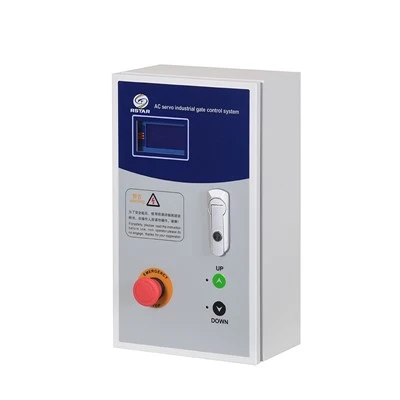
If you’re ready to stop dealing with outdated control systems that cost you money and time, and you want to see how these new advancements can work for your operation, reach out to us to discuss your requirements. We’re here to answer questions, walk you through how the technology works, and help you find a solution that makes sense for your budget and your facility.
Industrial Fan Regulator References
- Industrial Maintenance & Plant Operation. (2023). "Edge Computing for Industrial Control Systems: Use Cases and Benefits."
- International Society of Automation. (2022). "LiDAR Sensors in Industrial Safety: Reducing False Alarms and Improving Performance."
- U.S. Department of Energy. (2023). "Energy Efficiency in Industrial Door Systems: VFD Technology and Cost Savings Analysis."
- Logistics Management. (2024). "Wireless Dock Systems: Improving Loading Dock Efficiency and Cybersecurity."
- Occupational Safety and Health Administration (OSHA). (2022). "Industrial Door Safety: Advancements in Sensor Technology for Worker Protection."
Wuxi Rstar Electric Co., Ltd.
With abundant experience, we are one of the most professional industrial door control box manufacturers and suppliers in China. Welcome to wholesale bulk customized industrial door control box at competitive price from our factory. If you have any enquiry about quotation, please feel free to email us.
Address: 9th Floor, Building 9, Shengfeng Lianzhi Valley, No.67 Zhujiang Road, Xinwu District, Wuxi City
E-mail: rstarbz@163.com
WebSite: https://www.rstar-wx.com/
