As a plastic turned parts supplier, I talk to customers every week who ask a simple but critical question: “How long will these parts hold up when they rub against something else?” It’s not just about durability—it’s about downtime, replacement costs, and whether a component can keep a machine running for months or years without failing. Abrasion resistance, the ability of a material to resist wear from repeated friction, is make-or-break for plastic turned parts, especially since plastics are often seen as less tough than metals. But after 12 years in this business, I can tell you it’s not that plastics are inherently bad at abrasion resistance—it’s that choosing the right plastic grade, understanding how it’s turned, and applying it to the right use case will make all the difference. Let’s break this down like I do when I walk a new client through their project. Plastic Turned Parts
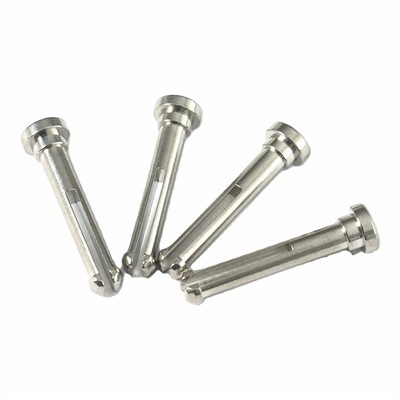
First, let’s get clear on what abrasion actually means for a turned plastic part. When two surfaces move against each other—say, a gear sliding along a metal shaft, or a medical component rubbing against another plastic part as a device cycles through use—abrasion is the gradual loss of material from the plastic surface. This isn’t just minor scratching; it can lead to part misalignment, increased noise in industrial machinery, or even complete component failure in applications like food processing, automotive, or medical devices. For turned parts, the abrasion resistance starts long before we ever touch a lathe: it starts with the base polymer.
Not all plastics are created equal when it comes to abrasion resistance. I’ve had clients come to me with a $0.50 part made from standard polystyrene (PS) because they thought price was everything, only to call me three months later saying the part wore out in two weeks. Polystyrene is cheap, but it’s brittle and has almost no inherent abrasion resistance—it scratches if you look at it wrong. Compare that to a material like ultra-high molecular weight polyethylene (UHMWPE), which is the gold standard for abrasion resistance in many of the parts we turn. UHMWPE has a molecular weight 10 times higher than standard polyethylene, which means the chains are longer and stick together better. When a surface rubs against UHMWPE, the molecules don’t tear apart easily; instead, they can even deform slightly and slide, which reduces friction and wear. I recently turned UHMWPE guide rails for a packaging machine that runs 24/7, and three years later, those rails are still going strong with barely visible wear marks.
Another key material is nylon, especially filled nylon grades. Unfilled nylon has decent abrasion resistance, but when we add glass fiber or PTFE filler, it gets even better. For a client in the automotive industry, we turned nylon 6/6 with 25% glass fiber for door latch components. The latch cycles thousands of times a day, and the filled nylon resists the friction against steel parts far better than unfilled nylon or even aluminum parts they tried before. The filler acts as a reinforcement: glass fibers add hardness that resists scratching, while PTFE acts as a lubricant, reducing the coefficient of friction between the part and its mating surface. That said, I always warn clients not to overfill nylon—too much glass fiber makes the part brittle, which can lead to cracking instead of wear if the application has any impact.
Then there’s acetal (POM), which is a workhorse for precision turned parts. Acetal has a very low coefficient of friction, which means it glides against other surfaces instead of grabbing and wearing down. We turn a lot of acetal gears for small electric motors, and they outlast nylon in high-speed, low-load applications because their surface is more uniform, thanks to the turning process. Wait, that’s a good point—turning itself affects abrasion resistance. When we machine a plastic bar into a turned part, the tool path and surface finish of the part matter as much as the material. If a turned part has a rough, scratched surface from a dull lathe tool, that’s going to catch on mating surfaces, leading to more abrasion. When we program our lathes, we adjust feed rates and tool sharpness to get a surface finish that’s smooth but not too polished—too polished, and the part might wear faster because there’s no microscopic texture to hold lubricant, while too rough and friction spikes. I had a client a couple years ago who switched from injection-molded acetal parts to turned ones, thinking they’d save money, but the first batch had a rough surface from a worn tool, and they failed in a week. Once we adjusted the turning process to get a Ra value of 0.8 µm, those parts lasted six months.
We also have to consider the operating environment, which is a big factor I see clients overlook. Abrasion resistance isn’t static; it changes with temperature, chemicals, and load. For example, in a hot industrial oven application, standard UHMWPE softens and loses its abrasion resistance—so we use ultra-high molecular weight polyethylene modified for high temperatures, or even polyether ether ketone (PEEK). PEEK is a high-performance thermoplastic that’s expensive, but when we turn PEEK parts for aerospace or medical applications, they can withstand temperatures up to 250°C, resist abrasion even when mating with metal components, and stand up to chemicals like hydraulic oils. Last year, we turned PEEK bearing retainers for a oil and gas drilling tool that operates in high heat and corrosive environments, and the client told us after six months of use, there was less than 0.1 mm of wear—way under their 1 mm limit.
On the flip side, if a part is used in a cold environment, some plastics become brittle and their abrasion resistance drops. I once had a client in Alaska who ordered acrylic parts for a conveyor system in a frozen food warehouse. Acrylic is brittle in cold temps, and the parts cracked within a month when they rubbed against metal. We switched them to a modified acrylic with impact modifiers, which stayed flexible at -40°C, and those parts still work today. Load is another factor: a part carrying 10 kg will wear faster than one carrying 1 kg, so we match material grade to the load. For high-load applications, we often use polycarbonate with carbon fiber filler, which combines high hardness for abrasion resistance with impact strength so it doesn’t break under load.
A common question I get is: how do I test the abrasion resistance of a turned plastic part before I buy it? There are standard tests, like the Taber Abrasion Test, which measures weight loss after a set number of rub cycles with a abrasive wheel. We run this test in-house for clients, and I always share the results openly. For example, a standard UHMWPE part will have a weight loss of around 10 mg after 1,000 Taber cycles, while a filled nylon part might be 5 mg, and PEEK could be as low as 1 mg. That data helps clients pick the right material without guessing. But I also tell clients that lab tests are a starting point—field testing is still the best way. We often send prototype turned parts to a client’s facility for a month of use, so they can see how the part performs in their specific environment, not just a lab.
I’ve also learned over the years that abrasion resistance isn’t just about the material—it’s about part design. For example, a turned part with sharp edges will have higher stress concentrations, leading to faster wear at those edges. When we design turned parts, we add radius corners where the part mates with another component, which distributes friction more evenly. I had a client who had a problem with a turned plastic cam that wore out at the corner; after we rounded the corner slightly and switched from unfilled nylon to 15% PTFE-filled nylon, the cam lasted three times longer. Another design tip: for parts that need to slide, we sometimes add a lubrication groove during turning. It’s a small notch on the surface that holds a small amount of lubricant, reducing friction and wear between the part and its mating surface. It doesn’t cost much to add during turning, but it makes a huge difference in abrasion resistance.
Now, let’s talk about mistakes I see suppliers make when it comes to abrasion resistance. Some cut corners by using low-grade plastic materials to save cost, which is why they might have a bad reputation for plastic turned parts. Others don’t adjust the turning process for the material—for example, machining a soft plastic like LDPE with a high feed rate, which melts the surface and creates a rough, worn finish. At our shop, we have different parameters for every material grade we turn: UHMWPE gets a slower feed rate to avoid stretching, PEEK gets a sharper tool to get a smooth surface, and filled nylon gets a medium feed rate to preserve the filler’s distribution in the part.
For clients, the takeaway is this: when you’re sourcing plastic turned parts, don’t just look at price. Ask your supplier about the material grade, how they machine it, and what tests they’ve run for abrasion resistance. A $0.50 part might seem like a steal, but if it wears out in two weeks, you’re spending more on replacements and downtime than if you’d paid $1.00 for a part that lasts six months. We’ve worked with dozens of clients who made that mistake before coming to us, and now they’re repeat customers because we tailor the part to their specific abrasion needs, not just the cheapest option.
At the end of the day, abrasion resistance is one of the most critical performance properties of plastic turned parts, but it’s not a one-size-fits-all solution. It’s a combination of material science, machining process, design, and operating environment. As a supplier who’s been in this industry long enough to see what works and what doesn’t, I don’t just turn parts— I work with clients to solve their wear problems. If you’re dealing with parts that wear out too fast, or you’re not sure which plastic is right for your application, reach out and let’s talk through your project. We can run tests, share data, and build a part that lasts as long as you need it to.
Stainless Steel Turned Parts References
- Polymer Properties Database. "Abrasion Resistance of Thermoplastics." 2024.
- Groover, M. P. Fundamentals of Modern Manufacturing: Materials, Processes, and Systems. 7th ed. Wiley, 2020.
- Plastics Technology. "How Turning Processes Affect Plastic Part Durability." 2023.
- ASTM D4060-21. Standard Test Method for Abrasion Resistance of Organic Coatings by the Taber Abraser. ASTM International, 2021.
Huizhou Quanyi Precision Hardware Products Co., Ltd.
We’re well-known as one of the leading plastic turned parts manufacturers and suppliers in China, featured by quality products and good service. Please rest assured to buy customized plastic turned parts made in China here from our factory. Contact us for more details.
Address: Building A10, 7th Floor, Zhongchuangyingke 5G Industrial Park, Zhonghan Industrial Park, Tonghu Town, Huizhou City
E-mail: info@qycncturning.com
WebSite: https://www.qycncturning.com/
