Hey guys, let’s cut to the chase: if you’ve ever stared at your car’s maintenance schedule and wondered, “Do I actually need to swap my transmission parts at some random mileage number?” you’re not alone. As a transmission parts supplier who’s been in this game for over a decade, I hear this question from mechanics, fleet managers, and regular car owners every single week. And the short answer? No, there’s no one-size-fits-all magic number. But let’s break this down like we do with every part that rolls out of our shop—no jargon, just real talk. Transmission Parts
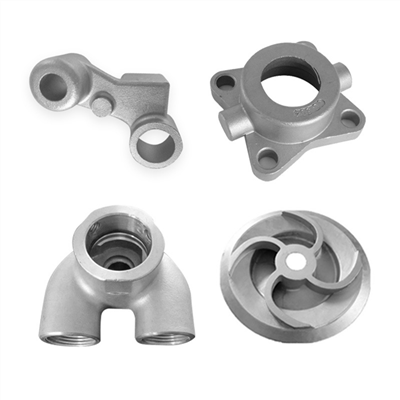
First, let’s get one thing straight: transmission parts aren’t like brake pads, where you can pretty much count on them wearing out around 30k-50k miles. Transmissions are way more complex. They’re made up of dozens of tiny, interconnected parts—gears, clutches, solenoids, seals, the whole kit and caboodle—and how they perform depends on way more than just how many miles you drive. Take two identical cars, same model, same year: one guy uses it only for commuting to an office, doing 10 miles each way on smooth highways; the other uses it for weekend off-roading or hauling 500 lbs of tools back and forth to a job site. The parts on the second car are going to take way more abuse, no question. So their “lifespan” is gonna be totally different, even if the mileage is the same.
I see a lot of people get tricked by that old “60k mile transmission flush” rule, too. Let me clarify: a transmission flush is different from replacing parts. A flush is just cleaning out the old fluid and replacing it with fresh stuff, which is actually a good thing to do on schedule—but that doesn’t mean you need to replace parts at 60k. Wait till you see cars with 150k miles that still have their original transmission parts going strong, as long as they kept up with fluid changes and didn’t abuse the car. And vice versa: a car with 40k miles that’s been driven hard, towed heavy loads, or neglected fluid changes might already have worn solenoids or clutch plates that need replacing. That’s not a mileage issue—that’s a usage issue.
Let’s talk about specific parts to make this even clearer. Take transmission solenoids, for example. These little guys control the flow of fluid that shifts your gears. I’ve had customers tell me their solenoids went bad at 35k miles—because they owned a truck that towed a camper every weekend. Other customers drive compact sedans for school drop-offs and grocery runs, and their solenoids are still working at 120k miles. Then there’s transmission seals. Seals are made of rubber, right? Rubber degrades over time even if you never drive the car. We’ve seen a customer’s 5-year-old classic car that sat in a garage most of the time have a leaking seal at 60k miles, just because the rubber dried out. Another guy’s work van drove 100k miles in 2 years of city stop-and-go, and his seals were still fine at 110k, just because he kept the fluid clean.
So why do some manufacturers list specific mileage numbers for part replacements? It’s a general guideline, not a hard rule. They have to account for every possible use case: the grandma driving a minivan, the teen drag racing a sports car, the contractor towing a trailer. So they pick a number that works for most average drivers—but that number might be way too low or way too high for your specific situation. If you follow that number blindly, you might end up paying for parts you don’t need, or worse, ignoring signs that parts are going bad because you’re waiting for a mileage mark that never comes.
Now, let’s talk about the signs you should actually look out for, instead of just checking your odometer. These are the things that tell you your transmission parts need attention, no matter the mileage. First, shifting problems: if your car hesitates when shifting gears, or shifts hard like it’s grinding, that’s a sign. It might be a worn clutch, a bad solenoid, or even a faulty gear, depending on what’s going on. Then there’s leaks—if you see red (or sometimes brown, if it’s old) fluid under your car when you park, that’s a seal or a line issue, and that needs fixing sooner rather than later, because low fluid will wreck your transmission parts fast. Another big one is weird noises: grinding, buzzing, or humming that you didn’t hear before when shifting. That’s not normal, and it’s almost always a part that’s wearing out.
I’ve seen way too many people make the mistake of waiting for a specific mileage to replace parts, only to end up with a total transmission failure. That’s way more expensive than fixing a single part early. A transmission rebuild can cost $3k-$5k, easy, whereas replacing a solenoid or a seal is a few hundred bucks. So why gamble? Instead of fixating on mileage, pay attention to your car’s behavior. If it’s acting off, get it checked by a trusted mechanic, and if they say a part needs replacing, go with it—no matter what the odometer says.
Wait, let’s address another common myth: some people think if you replace a transmission part, you have to replace all parts at the same time. That’s not true, either. Unless the mechanic says there’s a chain reaction going on (like a bad solenoid causing other parts to wear faster), you can just replace the specific part that’s broken. For example, if your clutch plate is worn at 70k miles, you don’t need to replace the gears or seals unless those are also damaged. That’s another thing we tell our customers—don’t let anyone upsell you on parts you don’t need. We supply high-quality, OEM-compatible transmission parts, so you can get exactly what you need, no extra fluff.
Let me also throw in a quick personal example. A few months back, a customer brought in a 2018 Honda Civic that had 45k miles. He’d used it for his photography business, driving all over the city, hauling camera gear in the trunk every day. He was worried because he thought he should replace transmission parts at 60k, but he wasn’t having any issues. We looked at his transmission data, checked the fluid, and told him his parts were still in great shape—he didn’t need to do a thing yet. Another customer, with a 2020 Ford F-150 that only had 50k miles, came in because his truck was shifting rough. We tested it, found a faulty solenoid, replaced that, and he was good to go. No need to wait for a mileage number—he fixed the problem as soon as it showed up.
So to wrap this up: do transmission parts need to be replaced at a specific mileage? No, not really. Mileage is a rough guide, but your driving habits, how well you maintain your fluid, and how you treat your car matter way more. The best thing you can do is stick to your manufacturer’s fluid change schedule, keep an eye out for weird shifting, leaks, or noises, and when a part needs replacing, don’t overthink the mileage—just get it fixed.
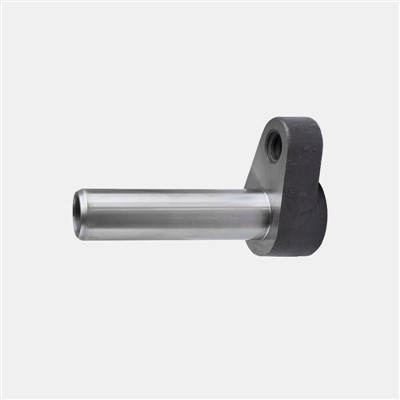
If you’re a mechanic, a fleet manager, or a car owner who needs high-quality transmission parts (solenoids, seals, gears, all of it), we’ve got you covered. We supply parts that are built to last, just like the ones your car came with, so you can trust that you’re making the right repair without breaking the bank. Don’t waste money on unnecessary parts because of a random mileage number. Reach out to our team to chat about your needs, whether you’re replacing a single part or building a parts order for a whole fleet.
Precision Disc Parts Machining References
- Automotive Transmission Service and Maintenance Guidelines, Automotive Service Association, 2022
- Transmission Component Lifespan Variability, SAE International Journal of Passenger Cars – Mechanical Systems, 2021
- Seal Degradation in Automotive Transmissions, Society of Tribologists and Lubrication Engineers, 2020
- The Impact of Driving Habits on Transmission Wear, U.S. Department of Energy Vehicle Technologies Office, 2023
Taizhou Liuhuan Machinery Co., Ltd.
As one of the most professional transmission parts manufacturers and suppliers in China, we’re featured by quality products and good service. Please rest assured to buy customized transmission parts made in China here from our factory. For quotation, contact us now.
Address: Xinyuan Industrial Zone, Damaiyu Street, Yuhuan City, Zhejiang Province,China
E-mail: tzlhmachining@gmail.com
WebSite: https://www.tzlhmachining.com/
