If you’re in the market for a roof ridge cap roll forming machine, one of the first questions you’ll ask is: how long will it take to get it? As a supplier with over 12 years in the roll forming equipment industry, I can tell you that delivery time isn’t a single number—it depends on a mix of factors most buyers don’t consider until they’re already deep in the procurement process. Let’s break this down, based on what I see with my own customers every month, to help you avoid delays and plan your timeline properly. Roof Ridge Cap Roll Forming Machine
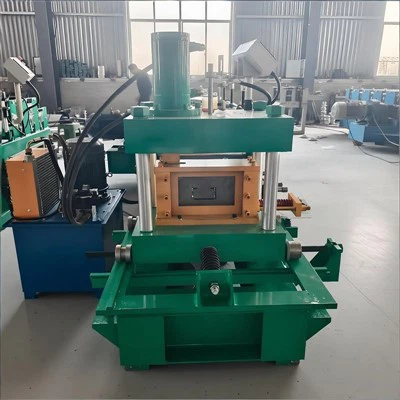
First, let’s start with the baseline: standard lead times for in-stock machines are often the first thing you’ll see advertised, but those numbers rarely tell the whole story. For smaller, pre-designed models that we build consistently to keep inventory on hand, like our entry-level ridge cap machine for residential projects, lead times usually clock in at 3 to 5 business days. That said, “in stock” doesn’t mean sitting in a warehouse untouched. We rotate our inventory to match seasonal demand, so if you’re ordering during spring or early summer—peak roofing season in most regions—our pre-built units can sell out in a matter of days. Last year, for example, a contractor from Ohio ordered a standard machine on a Wednesday, only to find we’d sold the last one to a Texas roofing crew two hours before he called. He ended up waiting 10 days for a custom-aligned unit to come off the line, which pushed his project back slightly. That’s why I always tell buyers: even for in-stock machines, confirm availability before you commit.
If you’re ordering a custom machine, not a standard model, lead times stretch a lot further. Customization is where most of my customers hit delays they didn’t expect. Let’s say you’re a contractor who works with unique roof profiles—maybe a 12-inch ridge cap instead of the standard 10-inch, or a material that’s not galvanized steel, like aluminum or copper. That means we can’t pull a pre-built machine from inventory; we have to adjust our production line, source the right materials, and run test sheets to make sure the ridge cap comes out smooth and fits your existing panels. For moderate customizations—say, adjusting the machine’s coil width to match your local supply’s standard—lead time jumps to 15 to 20 business days. For more complex changes, like building a machine that works with copper (which requires different roller materials to avoid corrosion) or integrating a pre-cutting system to eliminate secondary trimming, you’re looking at 25 to 30 business days. I had a customer in British Columbia last year who wanted a machine for standing-seam ridge caps, a less common profile in our area. We had to import custom rollers from a manufacturer in Italy, which added 7 extra days to the lead time, and he ended up waiting 32 days total. That’s why it helps to have a clear list of your non-negotiable custom needs before you reach out—small changes last minute can add 5 or more days to the process.
Next, material sourcing plays a huge role in delivery time, and it’s a factor most buyers overlook. Roll forming machines are made with steel frames, precision rollers, and electrical components, and shortages in any of these can push timelines out. For example, back in 2021, we faced a 2-week delay because our steel supplier had a backlog from construction projects, so we had to wait for a new batch of frames. Electrical components—like programmable logic controllers (PLCs) that run the machine’s software—have also been hard to get lately; a chip shortage in 2022 meant we waited 10 days for PLCs, which held up 8 machines at once. Even small parts, like bearings for the roller shafts, can cause delays if a local supplier runs out. To mitigate this, we keep a 2-week buffer of core materials on hand, but that only works if the shortage isn’t widespread. If you’re ordering during a time of material volatility—like post-pandemic supply chain shifts—you should add 5 to 10 extra days to your expected lead time.
Then there’s production and testing time, which is separate from building the machine. Once all parts are sourced, assembling a ridge cap roll forming machine takes about 10 to 12 business days, depending on its size. Smaller, single-layer machines for portable operations take less time, while larger, multi-layer machines that can handle multiple roof profiles take longer. But assembling isn’t the end—we have to test the machine thoroughly before it leaves our facility. That means running 50 to 100 feet of material through it to check for smooth bends, consistent measurements, and no jams. If a test run has a flaw—say, the ridge cap’s edges are slightly uneven—we have to adjust the rollers and run another test, which can add 2 to 3 days. Last quarter, we had a customer who ordered a machine for 16-gauge material; during testing, we found the rollers were slightly misaligned for that thickness, so we had to regrind them, pushing the delivery back 3 days. That’s why testing is non-negotiable—we’d rather delay a machine than send a defective one that causes problems on your job site.
After production and testing, there’s shipping time, which varies a lot based on where you are. For domestic orders within the U.S., standard ground shipping takes 3 to 7 business days, depending on your location. We ship most machines on pallets with custom crating to protect the rollers and electrical components, so we can’t use cheap, fast shipping options. For international orders, however, shipping time is much longer. It can take 4 to 6 weeks for a machine to clear customs, plus another 1 to 2 weeks for door-to-door delivery, depending on your country’s import rules. I had a customer in Australia who ordered a custom machine in January; it arrived at the port in Los Angeles by the end of February, but customs delays pushed it back another 2 weeks, so he didn’t get it until mid-March. International buyers should also factor in time for customs documentation—like import licenses and duty payments—so adding 2 weeks to your shipping estimate is a safe bet.
Now, what about rush orders? I get this question all the time—customers who have a big job coming up and need a machine in a hurry. We do offer rush options, but they come with trade-offs. For standard in-stock machines, a 3- to 5-day rush is possible if we can rearrange our production line, but it requires a 10% rush fee. For custom machines, a 10-day rush is the max we can do, but only if your custom changes are minor—we can’t rush complex roller manufacturing or material sourcing without sacrificing quality. I once had a contractor in Florida who needed a machine for a hurricane relief job; he paid the rush fee, and we had his machine ready in 8 days instead of the standard 18. But I always warn customers: rushing a machine can lead to small defects that you don’t notice right away, like slightly uneven bends, so only use rush orders if you have a true emergency.
Let’s talk about a real example to put this all together. Last month, a small roofing company in Georgia reached out to us. They wanted a standard 10-inch ridge cap machine, no custom changes, for their spring job. They asked if they could get it in 10 days. Here’s the timeline we mapped out: first, confirm the machine was in stock—we had one available, so no delay there. Next, check our material buffer: all steel frames and rollers were on hand, so no sourcing delays. Then, production and testing would take 5 days instead of the usual 3 (we did a quick turnaround for the rush, with no defects). Shipping to Georgia was standard ground, 3 days. Total delivery time: 5 + 3 = 8 days, which was 2 days faster than the standard, and we charged the 10% rush fee as agreed. That worked because their order was low-custom, in-stock, and didn’t have supply chain hiccups. If they’d wanted a custom 12-inch machine, that timeline would have stretched to 18 days, plus shipping, and a rush would have only cut it to 13 days.
So what can you do to get the most accurate delivery time for your ridge cap roll forming machine? First, be specific about your needs before you call. Write down the machine’s size, material type, any custom features, and your delivery location. That way, we can give you a number without back-and-forth questions. Second, check for local supply chain trends—if your region has had steel shortages lately, add a buffer. Third, confirm availability of in-stock units before you commit; waiting a day to check can save you weeks if the machine is sold out. Finally, don’t assume a shorter lead time is better—cutting corners on production or testing to rush a machine can end up costing you more in repairs or delays on your job.

If you’re ready to get a personalized delivery time for your roof ridge cap roll forming machine, or you have questions about customization, material options, or rush orders, feel free to reach out. We work with contractors, roofing companies, and metal fabricators of all sizes, and we’re happy to help you plan a timeline that fits your project.
Roofing Sheet Arching Machine References
Roll Forming Machine Production Standards. (2023). International Metalworking Manufacturers Association.
Supply Chain Trends in Construction Equipment. (2022). Global Construction Industry Report.
Botou Shengda Cold Forming Machinery Equipment Manufacturing Co., Ltd.
Address: Liuxin Village, Botou Town, Botou City, Cangzhou City, Hebei Province
E-mail: cangzhoushengda888@163.com
WebSite: https://www.sdrfm.com/
