Hey everyone, and thanks for stopping by! If you’ve ever been on the hunt for wall panels, chances are you’ve stumbled across MDF (medium-density fiberboard) options—they’re like the workhorses of the interior design world, right? Super versatile, easy to work with, and way more budget-friendly than solid wood. But here’s the thing that trips up so many of my clients, both new and seasoned: figuring out if you need raw MDF wall panels or pre-finished MDF wall panels. I’ve been supplying MDF wall panels for over 10 years now, and I still get at least three calls a week from folks asking, “Wait, what’s the actual difference?” No vague sales pitches, no confusing jargon—just the real, science-backed breakdown you need to pick the right one for your project. MDF Wall Panel
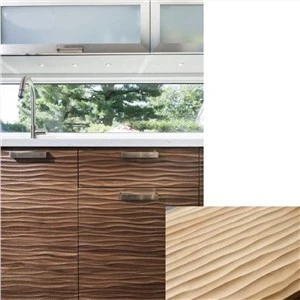
Let’s start with the basics: what even is MDF, anyway? I think a lot of people glaze over this part, but understanding its core makeup is key to getting the difference between raw and pre-finished. MDF is made by breaking down hardwood or softwood residuals (think sawdust, wood chips, even small offcuts from furniture factories) into super fine fibers, mixing them with a wax binder and a resin glue, then pressing them under high heat and pressure. The result is a dense, uniform board—no knots, no warping (way less than solid wood, anyway), and it holds screws and nails really well. Pretty cool, right? It’s not some fake, synthetic garbage; it’s just wood waste turned into something useful.
Now, raw MDF wall panels. Let’s get this straight: raw MDF is just that—bare, unfinished MDF. No paint, no veneer, no laminate, nothing on its surface. It’s like a blank canvas. But here’s where the science comes in that you won’t find in your average home decor blog: that super fine, uniform surface I mentioned earlier? It’s both a pro and a con for raw panels. On the plus side, because it’s smooth and consistent, it takes paint, stain, or whatever finish you throw at it way better than solid wood. No grain to fight against, no knots that’ll bleed through—you get a super even, professional-looking result. It’s also super customizable. Want to do a hand-painted accent wall? Maybe a striped design, or even faux wood grain with a special technique? Raw MDF lets you do literally anything you can imagine with a finish. It’s also way cheaper upfront than pre-finished panels, which is a big win for budget projects or large spaces.
But wait, the con—huge con—with raw MDF is moisture. Because it’s made of tiny wood fibers held together with resin, it’s hygroscopic. That means it absorbs water like a sponge, even in small amounts. Leave it in a humid garage for a week before installing? It’ll warp, swell, maybe even get soft and mushy if it’s exposed to a lot of moisture over time. I’ve had a client bring back a batch of raw panels last year because he stored them in his unfinished basement during a rainy month, and they were half an inch thicker on one side than the other. Raw MDF also needs to be sealed at all edges, too. When you cut a raw panel to size, you’re exposing those inner fibers, and if you don’t seal the cut edges with paint or caulk, they’ll absorb moisture too. That’s a step a lot of DIYers miss, and it leads to disaster fast.
Okay, now pre-finished MDF wall panels. These are panels that come factory-finished—meaning the entire surface (and often the edges, too) is already coated with something: paint, veneer, laminate, even a UV-cured coating that’s super tough. Let’s cut to the good stuff first about pre-finished. No need to paint or stain them after installation. That’s a massive time-saver, especially for big projects. Imagine a 1,000 square foot living room wall—painting that would take you a weekend, plus masking, plus sanding, plus cleaning up all the paint fumes and drips. Pre-finished panels go up, and that’s it. One of my regular clients is a general contractor who does 20+ residential remodels a year, and he swears by pre-finished for that exact reason—cuts his install time by almost half, which means he can turn jobs over faster.
Another big win: moisture resistance. The factory finish acts as a barrier, so those tiny MDF fibers can’t absorb as much water. Pre-finished panels are way more stable in humid spaces like bathrooms, laundry rooms, or basements, as long as they’re not submerged in water. I still don’t recommend putting them right next to a shower without a waterproof membrane, but they’ll handle the occasional steam way better than raw panels. They also come in every possible finish you can think of—matte white, glossy black, oak veneer, even stone-look finishes if you want that modern vibe without the cost of real stone. No, they’re not exactly the same as real wood or real stone, but they look pretty damn close now, and that’s enough for most people.
But here’s the catch with pre-finished, the part that a lot of salespeople won’t tell you: customization is basically off the table. If you buy a matte white pre-finished panel and decide you want it navy blue? You can’t just paint it. The factory finish is a tough, often UV-cured coating that doesn’t adhere well to regular house paint. Trying to paint it will result in peeling, bubbling, or a splotchy mess. You also have way less flexibility if you mess up the installation. If you cut a pre-finished panel too short, that raw edge you cut is exposed, and there’s no finish there to match. You’d have to buy a matching edge banding and glue it on, which is doable but adds an extra step, and it’s not as seamless as the factory edges. Also? Pre-finished panels are more expensive upfront. That same 4×8 raw MDF panel might cost you $15, while a pre-finished one is $25 or $30. Add that up for an entire wall, and that’s an extra few hundred dollars.
Wait, let’s clear up a common myth people ask me about: “Is one more durable than the other?” It depends on the finish on the pre-finished panel, but generally, pre-finished is better for scuffs and scratches, right? Because the factory coating is thicker and more hard-wearing than a DIY paint job. Raw MDF, even if you paint it, will scratch easier if you don’t use a high-quality paint and a clear topcoat. But that said, if you take good care of it, a properly finished raw panel can be almost as durable. I had a customer a few years ago who did a raw MDF accent wall in his kid’s playroom, painted it a bright blue, and added a clear polyurethane topcoat. Two years later, when he moved, he told me the only scuffs were where he dragged a toy chest against the wall, and a little sanding and touch-up paint fixed them. That’s a good example of how preparation matters.
Let’s talk about installation, because that’s a huge part of the difference. Raw MDF panels are way heavier? No, wait—they’re about the same weight as pre-finished, usually. The difference is how they’re installed. For raw panels, you have to seal all edges before hanging, and then prime and paint after. That means you need to rent a sprayer or invest in good brushes/rollers, buy primer and paint, and plan for drying time. You can’t finish the wall in a day; it takes a few days, at least. Pre-finished? You unbox them, maybe wipe them down, and hang them. No drying time, no extra materials needed for finishing. That’s perfect for people on tight schedules, or commercial projects where you can’t have a construction zone that’s unusable for days.
But wait, what about when something goes wrong? If you need to replace a panel after installation, that’s way easier with raw MDF. If you have a raw panel wall, you can just cut a new panel to size, seal the edges, paint it to match the rest, and swap it out. No one will notice. With pre-finished? You have to find an exact match for the finish, which isn’t always easy—especially if it’s a discontinued color or a special veneer. Last year, I had a client who spilled wine on a pre-finished white panel in his dining room, and the stain wouldn’t come out. We had to special order a matching panel from the factory, which took two weeks, and it cost him way more than just buying a matching raw panel would have. That’s a big downside if you’re in a space where damage is likely—like a dining room, playroom, or home gym.
Let me wrap this up with what I tell every customer when they call me, because it’s all about your specific project. If you’re a DIYer on a tight budget, want to customize the finish (like a custom color, or even a textured finish), and your space is low-moisture (like a living room, bedroom, or home office), raw MDF is the way to go. Just make sure you seal all edges, use a high-quality primer and paint, and don’t cut corners on the finishing step. If you’re on a tight timeline, have a high-moisture space (like a half-bath or finished basement), want a no-fuss, ready-to-go look, or don’t want to deal with painting after installation, pre-finished is your pick. But if you might want to change the color later, or there’s a higher risk of damage, raw might still be better, as long as you do the prep right.
At the end of the day, there’s no “better” option—just the right option for what you need. I’ve been supplying MDF wall panels for long enough to know that a lot of people get sold on pre-finished because it’s marketed as “easy,” but if you don’t need that ease, raw can save you a ton of money. And don’t get me wrong—pre-finished is amazing for the right job. I did a commercial office build-out last year where the timeline was non-negotiable, and pre-finished panels were the only way we hit our deadline.
If you’re still unsure which one is right for your project, shoot me a message. I can walk you through your space, your budget, and your timeline to help you pick the perfect panels. No hard sells, no confusing advice—just 10 years of experience helping customers get exactly what they need. Hit me up anytime to chat about your next project!
MDF Wall Panel References:
- American Wood Council. (2020). Medium-Density Fiberboard (MDF): Manufacturing, Properties, and Applications. Wood Products Industry Guidelines.
- National Association of Home Builders. (2021). Interior Wall Paneling Materials: Performance, Cost, and Installation Considerations. NAHB Research Center Report.
- Wood Panel Products Association. (2019). Moisture Resistance Characteristics of Factory-Finished vs. Unfinished Medium-Density Fiberboard. WPAA Technical Bulletin.
- The Spruce. (2022). MDF vs. Pre-Finished MDF: What You Need to Know for Your Next Project. Home Improvement Guide.
Dongguan MUMU Woodwork Co., Ltd.
Dongguan MUMU Woodwork Co., Ltd. is one of the most professional mdf wall panel manufacturers and suppliers in China, featured by cheap products and good service. If you’re going to wholesale customized mdf wall panel at low price, welcome to get quotation and free sample from our factory. Contact us for more discount information.
Address: Room No.2602, Universal Commerce Center,Dongguan, China 523073
E-mail: export@mumu-ing.com
WebSite: https://www.mumu-ing.com/
