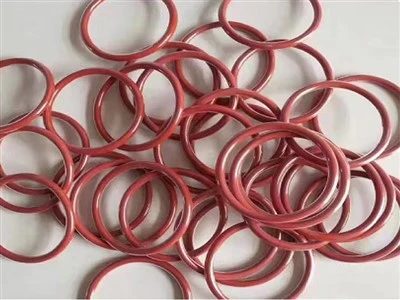
Hey there, if you’ve ever stopped to think about how modern farming actually works, you might not realize just how much rubber plays a part behind the scenes. I’ve been in the agricultural rubber products game for over a decade now, and most folks when they hear “agricultural rubber” probably picture a tractor tire or a rain boot. But the truth is, that’s just the tip of the iceberg. Let me break down what these products really are, why they matter so much, and why picking the right supplier makes all the difference for your farm. First off, let’s get one thing straight: agricultural rubber products aren’t just random rubber parts. They’re engineered to stand up to some of the toughest conditions out there—extreme heat, freezing cold, constant exposure to mud, chemicals, UV rays from the sun, and even rough, abrasive terrain like rocky fields. Unlike regular rubber stuff you’d find around the house, these are made specifically for the unique demands of farming, whether that’s a small family farm or a big commercial operation. Let’s start with the stuff most people actually recognize: tires. But wait, it’s not just any tires. Farm equipment needs different tires for different jobs. There are tractor tires with deep, aggressive treads to grip soft soil without sinking, like when you’re planting or harvesting. Then there are trailer tires built to carry heavy loads of grain or livestock feed without wearing out fast. Even ATV and UTV tires, which are super popular for getting around large properties, fall into this category. But here’s a thing I see a lot of buyers skip: not all farm tires are created equal. Some are made with specialized rubber compounds that resist punctures from thorns, rocks, or sharp farm debris—huge if you’re operating in brushy or stony areas. Next up, something that’s been around as long as farming itself, but we still need: hoses. Agricultural hoses aren’t the same as the garden hose you use to water your vegetable patch. These are heavy-duty rubber hoses for things like irrigation systems, transferring fertilizers, pesticides, and even fuel for tractors and generators. They have to handle high pressure, sometimes corrosive chemicals, and constant bending and dragging across fields. I’ve seen cheap hoses fail mid-season, and that’s a nightmare—you’re left with no water for your crops or a broken fuel line right when you need to run harvest equipment. That’s why we make our hoses with reinforced inner layers and rubber that won’t break down from chemical exposure. Then there’s seals and gaskets, the unsung heroes of farming machinery. A tractor’s engine, a combine harvester, even a pump for your irrigation system relies on small rubber seals to keep fluids in and dirt out. If a seal breaks, you’re looking at costly downtime—time you can’t afford to waste during planting or harvest. We produce custom rubber gaskets that fit exact models of equipment, so you don’t have to scramble to find a generic one that doesn’t work. Another big category: livestock equipment. Farmers don’t just grow crops—they raise animals, and rubber is everywhere there too. Think about the mats in a barn: rubber stall mats that are slip-resistant, easy to clean, and soft on animals’ hooves. No more hard concrete leading to sore joints or slippery surfaces that cause falls. There’s also rubber feed buckets and trough linings, which are durable enough to withstand animals biting and chewing, and resistant to mold and bacteria that can make livestock sick. Even the hoses that deliver water to troughs are made from rubber that won’t get chewed through by curious cows or goats. What about equipment for planting and harvesting? Yep, rubber is key there too. Many planters use rubber cups or discs to pick up seeds one by one and place them in the soil at the exact right depth. If that rubber wears out, you get misplanted seeds, wasted money, and lower yields. Combine harvesters have rubber parts in their conveyor systems to move grain without damaging it, which is super important—you don’t want to ruin your crop before it even gets to the silo. And let’s not forget about crop protection: rubber gloves for applying pesticides or working in muddy fields, tarps made with rubber coatings to cover harvested grain and keep it dry, and even weatherstripping for greenhouses to regulate temperature and keep pests out. Now, why am I passionate about this stuff? Because I’ve seen farmers go with cheap, no-name rubber parts just to save a few bucks, and it always ends up costing them more in the long run. A $50 hose that fails mid-season might cost you $500 in lost crops or $1,000 in emergency repair fees for a combine. When you work with a supplier that knows agricultural rubber, you get products tested to actually hold up to farm life, not just a showroom. I also love that we can tailor products to specific needs. One of our recent projects was a custom rubber liner for a large-scale dairy’s manure spreader—they needed something resistant to the acids in manure, so we worked with a rubber chemist to develop a compound that didn’t break down even after months of use. Another customer, a small organic vegetable farm, wanted puncture-resistant hoses that were safe for organic use, so we made sure the rubber had no harmful additives that could leach into soil. A lot of people ask me: “Why rubber, not another material?” Great question! Rubber has unique properties that make it perfect for farming. It’s elastic, so it can bend and stretch without cracking—important for hoses and tires that move. It’s resistant to abrasion, so it doesn’t wear out fast on rough surfaces. It can be formulated to resist chemicals, UV rays, and extreme temperatures, which is non-negotiable for outdoor farm equipment. And it’s waterproof, which is a must for hoses, tire inner tubes, and barn mats. Sure, you can use plastic or metal for some parts, but those don’t hold up nearly as well. A metal pipe might rust, a plastic hose might crack in cold weather, but good rubber can handle it all. Now, let’s talk about common mistakes I see buyers make when sourcing agricultural rubber products. First, going for the cheapest option without checking what it’s actually made of. A lot of low-cost rubber parts use “recycled” rubber that’s not properly processed, so it breaks down quickly. Or they use compounds that don’t resist chemicals or UV, so your tire cracks after one season. Second, not ordering the right size or specification. Farm equipment isn’t one-size-fits-all—your tractor needs a specific tire size, your irrigation pump needs a specific hose diameter. I’ve had customers order a hose that was too short, or a gasket that was the wrong thickness, and then they’re stuck waiting for a replacement during a busy time. Third, ignoring after-sales support. If you’re a farmer, you don’t have time to become a rubber expert. A good supplier should help you figure out exactly what you need, answer questions, and get you parts fast when you need them. That’s why we make it a point to work closely with our customers—whether you’re a small hobby farmer or a 10,000-acre operation, we’ll take the time to understand your needs and find the right products. At the end of the day, agricultural rubber products are the quiet backbone of modern farming. Without the right hoses, seals, tires, and mats, equipment breaks, crops fail, and livestock health suffers. It’s not just a small part—it’s something that keeps your whole operation running smoothly. If you’re tired of dealing with rubber parts that don’t hold up, or you’re setting up a new farm and want to equip yourself with reliable products, I’m here to help. We can walk through your specific needs, whether you need replacement parts for existing equipment, custom solutions for a unique project, or bulk orders for a large operation. Don’t let bad rubber parts slow you down—reach out to our team to chat through your requirements and find the right agricultural rubber products for your farm. Rubber Products
EPDM Rubber References:
- Agricultural Rubber Products: Applications and Material Requirements, Journal of Rubber Research, 2021.
- ASTM International Standards for Agricultural Tires and Hoses, 2022.
- Modern Farming Machinery Components: Rubber’s Role, Food and Agriculture Organization (FAO) Technical Report, 2020.
Wuhu Chaori Rubber and Plastic Technology Co., Ltd.
As one of the most professional rubber products manufacturers and suppliers in China, we have world-leading production equipment and strong manufacturing capabilities. Please feel free to wholesale bulk durable rubber products made in China here and get quotation from our factory. For price consultation, contact us.
Address: Qihang Road, Xinwu Economic Development Zone, Wanzhi District, Wuhu City, Anhui Province, P.R. China
E-mail: chaori2026@163.com
WebSite: https://www.chaorirubber.com/
