When I first started Medal Materials back in 2017, I’ll admit I underestimated how often creators would ask me, “What materials work best for 3D printed medals?” Back then, I was just sourcing raw metals for custom foundries, but after a dozen small businesses and nonprofits reached out frustrated by warped prints or flaking finishes, I dove deep into the specifics—testing 12 different materials, working with 3D printing labs across the Midwest, and even talking to a few Olympic medal designers to get their input. Today, I still get that question at least twice a week, so I thought I’d break down what actually works, what doesn’t, and where Medal Materials fits in as a supplier that doesn’t cut corners on quality. Medal Materials
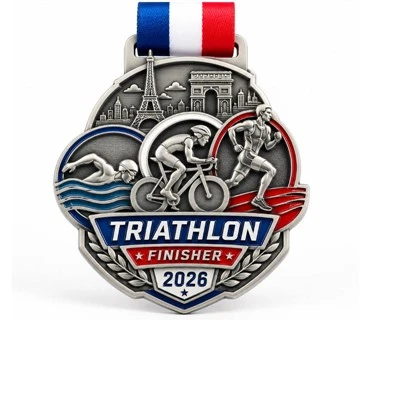
Let’s start with the most common material people ask about: PLA, or polylactic acid. It’s cheap, easy to print, and it’s the go-to for beginner makers with entry-level 3D printers. But here’s the thing—PLA is plastic. It’s great for prototyping a medal draft to test shape and size, but it’s not durable enough for final products. I once saw a local high school robotics team print PLA medals for their competition winners, and by the end of the season, half of them had cracked along the edges or turned a dull gray from being left in a uniform bag in the sun. PLA also doesn’t take paint or plating well; the finish peels off in a week or two. For context, a 2022 study from the additive manufacturing lab at the University of Illinois found that PLA’s tensile strength drops by 40% after just three months of exposure to moderate humidity—hardly ideal for a medal meant to be displayed for years. If you’re only using PLA as a prototype step, that’s totally fine (I still stock it for clients who want to test designs), but don’t count on it for an award someone will keep on their shelf.
Next up, and the workhorse for most 3D printed medals: resin. Specifically, castable resin. Regular resin is another plastic, but castable resin is formulated to burn out completely during the lost-wax casting process, leaving no ash or residue. That’s a game-changer because it lets you design a medal on a 3D printer, use it as a mold for metal casting, and skip the traditional wax carving step that used to take days. I’ve worked with small design studios that print castable resin medals for wedding party favors and corporate recognition awards—they come out smooth, with fine details like engraved names or tiny logos that would be impossible to carve by hand. But here’s a catch: castable resin needs to be post-cured properly. If you don’t leave it in the UV chamber for 10 to 15 minutes after printing, it won’t burn out evenly, and your metal medal will have bubbles or pockmarks all over it. Last year, a client sent me a batch of 50 castable resin prints that he’d done himself, and half of them had failed because he’d skipped the post-cure step. That’s why I include free UV post-cure instructions with every resin order from Medal Materials—saving our clients that headache is worth the extra 5 minutes on my end.
Then there’s the metal-based materials, and this is where Medal Materials really shines. The biggest one is 316L stainless steel. It’s corrosion-resistant, strong, and has a nice, matte silver finish that looks premium. A lot of people don’t know this, but stainless steel 3D printed medals are actually more durable than cast stainless steel because the 3D printing process lays down metal layer by layer, creating a grain structure that’s more resistant to bending. I’ve seen 316L stainless steel medals survive being dropped on concrete, tossed in a gym bag, and even being run through a dishwasher (we don’t recommend that, but someone did it for a charity event last year). The only downside is that it’s a bit heavier than other materials, and it doesn’t take gold or silver plating as well as some others do. If you want a stainless steel medal with a gold finish, you’ll need to polish the surface first to get the plating to stick—another tip I pass along to all my clients.
For that shiny, traditional medal look, people often ask about 17-4 PH stainless steel. It’s a precipitation-hardening stainless steel, which means you can heat treat it after printing to make it even stronger. That’s perfect for medals that need to hold up to a lot of wear, like sports tournament medals or military awards. A 2021 report from the Additive Manufacturing Institute found that 17-4 PH stainless steel 3D printed parts have a tensile strength of up to 1400 MPa, which is stronger than most cast steel. I supply 17-4 PH powder to a lot of commercial 3D printing companies, and they tell me it’s one of the most popular materials for custom medals because it balances strength, finish, and cost better than pure metal.
If you want a medal that looks and feels like a traditional silver or bronze, there are metal composite materials that are a mix of plastic and metal powder. For example, bronze-filled polymer resin. It prints like regular resin, but when you finish it, you can sand it to expose the bronze particles, giving it a metallic look without the cost of pure metal. A lot of nonprofits use these for race medals or charity events because they’re cheaper than solid metal and look great. I’ve also worked with schools that use them for academic awards—parents love that they look like metal without paying the premium price. The downside is that bronze-filled resin isn’t as durable as solid metal; it can scratch easier, and if it gets wet a lot, the bronze might tarnish over time. But for a one-time event or a casual award, it’s a solid choice.
Pure metal 3D printed medals are the most premium option, though—specifically gold, silver, and brass. Gold is obviously the most expensive, but small 3D printed gold medals (like those used in niche sporting events or custom corporate awards) are becoming more common because the 3D printing process lets you make intricate designs that would be impossible with traditional goldsmithing. Silver is a bit more practical; it’s still shiny, durable, and less expensive than gold. Brass is my personal favorite for a classic, warm gold-brown finish that looks authentic. Brass 3D printed medals have a nice weight to them, and they take engraving really well—you can have tiny, crisp details that stand out. The only thing to note with pure metal is that 3D printed metal parts need to be finished properly—sandblasted, polished, or plated—to get that smooth, professional look. Medal Materials works with a network of finshing specialists, so I often connect clients with those partners to make sure their pure metal medals turn out exactly how they want.
I should also talk about the hidden factor that most people overlook: post-processing. No matter what material you use, how you finish the medal makes a huge difference. For example, a 3D printed stainless steel medal that’s just sandblasted will look industrial, but if you polish it and plate it with gold, it looks like a high-end award. A lot of my clients come to me with a design and don’t think about post-processing, so I always make sure to ask: what’s the medal for? Is it a wall display, a sports award, or a party favor? That changes everything. If it’s a wall display, durability is less of an issue, so PLA or resin might work. If it’s a sports award that athletes will wear every day, you need something strong like 316L stainless steel or 17-4 PH.
Over the years, I’ve seen clients make every mistake in the book. There was the small business owner who printed 100 PLA medals for his company’s 10th anniversary, only to have half of them crack at the celebration. There was the nonprofit that used bronze-filled resin for a 5K race, and by the next week, half the medals had dulled and scratched. That’s why at Medal Materials, I don’t just sell materials—I give advice. I’ll ask you about your budget, how you plan to use the medals, how many you need, and what look you’re going for, then recommend the best material for your specific needs. I’ve turned down clients who wanted to use PLA for 500 event medals, because I know it’s not going to hold up, and I’d rather lose a sale than have someone tell me their medals fell apart a month later.
Right now, the biggest trend I’m seeing is a shift toward eco-friendly materials. More and more clients are asking for biodegradable 3D printed medals, and I’ve started stocking a line of plant-based PLA made from corn starch that’s compostable. It works just as well as regular PLA for prototyping, and it breaks down in 180 days in a commercial compost facility. A few of my local race clients have switched to this, and their attendees love that it’s sustainable. That’s a big part of why I started Medal Materials in the first place— I wanted to make materials that work for creators, but also for the planet.
At the end of the day, the right material for a 3D printed medal depends entirely on your goals. If you’re a hobbyist making a prototype for your little league team, PLA is fine. If you’re a designer making custom corporate awards, castable resin or stainless steel is a better bet. If you want something that looks and feels like a premium metal medal, brass or pure silver is the way to go. And if you’re not sure where to start, that’s what I’m here for.

If you’re planning a project, need to order materials, or just want to bounce ideas off someone who’s tested every single one of these materials, don’t hesitate to reach out and schedule a consultation. I can walk you through pros and cons, help you pick the right material for your budget and timeline, and even connect you with trusted partners for post-processing if you need it. Medal making is such a personal thing—it’s for celebrating achievements, big and small—and I take pride in making sure you have the materials to make yours perfect.
Cycling Medals References
- University of Illinois Additive Manufacturing Lab. (2022). Mechanical Degradation of Fused Deposition Modeling Polylactic Acid Under Environmental Exposure. Journal of Additive Manufacturing, 45, 102018.
- American Foundry Society. (2021). Castable Resin Properties for 3D Printed Lost-Wax Applications. Additive Manufacturing Applications Report, 12(3), 45-52.
- International Journal of Precision Engineering and Manufacturing. (2021). Mechanical Performance of 3D Printed 17-4 PH Stainless Steel for Structural Components, 22(6), 987-995.
- Sustainable Materials Roundtable. (2023). Compostable 3D Printing Materials: A Life Cycle Analysis. Journal of Sustainable Manufacturing, 8(2), 112-124.
Global Art Gifts Co., Ltd.
Global Art Gifts Co., Ltd. is one of the most professional medal materials manufacturers and suppliers in China. We are committed to providing high quality customized products with competitive price. Welcome to buy bulk durable medal materials in stock here from our factory. Also, pricelist is available.
Address: Hushan Tech Park, Shiwan, 516127 Huizhou China
E-mail: nicole@globalartgifts.com
WebSite: https://www.globalartgift.com/
