Hey there, if you’ve ever shopped around for a chaff cutter (or even used one on a farm, homestead, or for small livestock feed prep), you’ve probably glanced at the motor specs and seen that random number—RPM, right? It’s easy to gloss over it like it’s just another line item on a spec sheet, but let me tell you: it’s way more important than you think. I’m a chaff cutter supplier who’s talked to hundreds of buyers over the years, and I’ve lost count of how many folks have asked, “What even is the RPM of a chaff cutter motor, and why do I care?” Let’s break this down straight, no fancy jargon, no fluff—just the real stuff that matters for your operation. Chaff Cutter
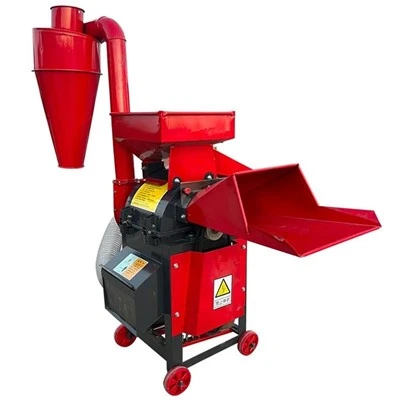
First, let’s get the basics out of the way so we’re all on the same page. RPM stands for Revolutions Per Minute, and that’s how many times the motor’s shaft spins around in one minute. For chaff cutters, that number isn’t pulled out of thin air; it ties directly to what you’re using the cutter for, what kind of material you’re chopping, and even how much feed you can get done in an hour. But here’s the thing: there’s no one “right” RPM for every chaff cutter. A tiny tabletop cutter for a backyard chicken flock needs way different RPM than a heavy-duty one for a commercial dairy farm.
Let’s start with the small-scale stuff, because that’s what a lot of our first-time customers come in for. If you’re prepping feed for 10 to 50 animals—like chickens, goats, a small dairy cow, or even a hobby farm with horses—you’re probably looking at a manually fed or semi-automatic chaff cutter. For those, motor RPM usually lands somewhere between 900 and 1,500 RPM. Wait, why so low? Because small-scale operations don’t need to shred hay or straw into super fine bits fast. A slower, steadier spin lets you feed material at your own pace, and you don’t risk jamming the cutter with tough grass or wet hay. I’ve seen buyers try to cram a high-RPM motor into a tabletop cutter, and it almost always ends up with jammed blades, broken gears, or even material flying out of the chute too fast for you to catch. That’s a headache no one needs, right?
Now, if you’re moving up to medium-scale—say, 50 to 500 animals, maybe a small feedlot or a mid-sized farm—you’re going to want an automatic chaff cutter. These feed material on their own, so you can run them longer without standing there shoveling. For these, motor RPM jumps to 1,500 to 2,500 RPM. This is the sweet spot for most folks in this range. Why? That speed is fast enough to chop straw, hay, corn stalks, or even sugarcane into consistent, usable pieces in bulk, but not so fast that it ruins the quality of the feed. Wait, let’s talk about quality for a second. If RPM is too high, you end up with super fine “dust” instead of uniform chaff. Some animals eat fine stuff, but others—like horses—prefer longer, chunkier chaff that’s easier to digest. Too low, though, and you’re spending way more time chopping. A medium-scale cutter with 2,000 RPM might process 500 pounds of hay an hour, while one at 1,200 RPM might only do 200 pounds. That’s a huge difference for someone who doesn’t want to spend all day feeding a cutter.
Then there’s heavy-duty commercial chaff cutters—for dairy farms with 500+ cows, large feed mills, or operations that process tons of agricultural waste. These are the workhorses, and their motor RPM is usually 2,500 to 3,600 RPM. Wait, that’s a big jump, but here’s why it works: commercial operations need speed, but they’re also handling way tougher material—like thick corn stalks, wheat straw, or even crop residue that’s dried out and brittle. High RPM means sharp blades can slice through that hard stuff in one pass, instead of tearing it. Also, these cutters are designed with reinforced blades and heavy-duty gears to handle the speed, so you don’t have to worry about them breaking down on you mid-job. I’ve had a few commercial clients tell me their 3,000 RPM cutters can process 2,000 pounds of material an hour—something a lower-RPM cutter could never do. That kind of output is non-negotiable for a business that’s counting on daily feed prep.
But wait a second—RPM doesn’t tell the whole story. A lot of buyers fixate on the number, but they forget about torque. Torque is the twisting force the motor has, and that’s just as important as RPM. Let me give you a real example: two chaff cutters, both with 2,000 RPM. One has a motor with 100 Nm of torque, the other has 50 Nm. The one with higher torque will handle thick, wet hay or hard corn stalks way better, because it has the force to push that material through the blades without jamming. The lower torque one might stall out mid-run if you load it up with tough stuff. That’s why at my shop, we never sell a cutter based just on RPM—we ask what you’re feeding, how much, and what kind of material you’ll be chopping. For a small chicken owner, high RPM and high torque is overkill; they’ll pay more for a motor they don’t need. For a commercial dairy, low RPM and low torque is a waste of time—they can’t afford the downtime.
I’ve seen so many bad calls from buyers who didn’t get this. A couple years back, a guy came to me with a cutter he’d bought online for his 200 goats. It was a “heavy-duty” model that listed 3,500 RPM, and he thought that was the best thing ever. But within a week, he was calling me upset because it kept jamming when he tried to chop dry wheat straw. Turns out, the motor had high RPM but super low torque—so the blades were spinning fast, but didn’t have the force to pull the thick straw through. All that high speed was just making the straw bunch up in the feed chute. We swapped his motor for one with 2,000 RPM and higher torque, and his problems went away entirely. That’s when I realized how many people just glance at RPM and don’t think about the rest.
Another thing to keep in mind: blade design ties into RPM too. If you have sharp, properly angled blades, a slightly lower RPM can give you the same chop quality as a higher RPM with dull blades. I always tell folks: don’t chase the highest RPM number you see. It’s not a competition. Match it to your use case. Let’s break it down super simply, so you can reference it the next time you’re shopping:
- Backyard/hobby farm (10–50 animals): 900–1,500 RPM, low to medium torque. No need for speed here—you want control, not bulk.
- Small to medium farm (50–500 animals): 1,500–2,500 RPM, medium torque. This is the most common sweet spot, works for most hay, straw, and small grain stalks.
- Commercial/heavy-duty (500+ animals, feed mills): 2,500–3,600 RPM, high torque. Built for speed and tough material, minimal downtime.
Wait, also—what about electric vs. gas motors? That’s a question we get all the time, and it affects RPM too. Electric motors usually run at a set RPM (like 1,500 or 3,000) because they’re powered by grid electricity, which has a consistent frequency. Gas motors, though, are like car engines—their RPM can be adjusted, usually between 1,000 and 4,000 RPM, depending on how much you rev the throttle. For small-scale, gas-powered cutters are fine, and the adjustable RPM is a bonus if you’re chopping different materials. But for medium and heavy-duty, electric is often better because they have a fixed, consistent RPM—so every piece of chaff is the same size, no uneven chopping from a lumpy rev.
Let me share a quick customer win, too, to put this all in perspective. Last year, a couple from a small goat farm came to me. They’d been using a hand-cranked cutter forever, and they wanted to upgrade to electric so they could process more hay for their 100 goats. They thought they needed the highest RPM possible, so they were looking at a cutter with 3,500 RPM. We showed them a cutter with 2,200 RPM instead. They were skeptical at first—said it was “slower” than what they’d seen elsewhere. But we explained that 2,200 RPM had enough torque to process their hay fast, and the consistent speed meant the chaff was perfect for their goats (not too fine, not too chunky). They bought it, and a month later they sent me a message saying they’d doubled their output, no jams, and their goats were eating way more feed because the chaff was the right size. That’s exactly what we’re talking about here—matching RPM to your needs, not just a number on a spec sheet.
So, to circle back to the original question: “What is the RPM of a chaff cutter motor?” It doesn’t have a one-size-fits-all answer, because it’s dependent on your operation size, the type of material you’re chopping, and how much output you need. For small hobby use, it’s low. For commercial heavy use, it’s high. But always remember: RPM alone isn’t enough. Torque, blade quality, and your specific workflow matter just as much.

If you’re in the market for a chaff cutter and you’re still unsure which RPM range is right for you, don’t stress. We work with folks every day to walk through their needs—whether you’re a backyard chicken keeper, a mid-sized farm, or a commercial operation. We’ll ask you about how many animals you have, what material you’ll be chopping, and if you need something portable or heavy-duty. No pushy sales pitches, just straight answers that help you get the right cutter for your money. We don’t want you to end up with a cutter that’s too fast and jams, or too slow and wastes your time. So if you’re ready to chat about what would work best for you, reach out to our team to start a procurement conversation. We’re here to make sure you get the right gear for your operation.
Grass Shredder REFERENCES
- Agricultural Machinery Design Handbook, 4th Edition, 2021, Industrial Press Inc.
- "Chaff Cutter Performance: Motor Speed and Feedstock Interaction", Journal of Farm Equipment and Systems, Vol. 18, No. 2, 2022, pp. 45-52
- USDA Small Farm Tool Guide: Chaff Cutter Selection and Operation, 2020, U.S. Department of Agriculture, National Institute of Food and Agriculture
- Torque and RPM Relationships in Agricultural Motors, International Journal of Agricultural Engineering, Vol. 12, No. 3, 2019, pp. 112-118
Zhengzhou Xinyihaotong Machinery Manufacturing Co., Ltd.
As one of the most professional chaff cutter manufacturers in China, we also support custom service. We warmly welcome you to buy high quality chaff cutter for sale here from our factory. For price consultation, contact us.
Address: Rooms 2301–2312, Jiayi Building, Xinxiang City, Henan Province, China
E-mail: zhaoyixuan5566@gmail.com
WebSite: https://www.xyhtmachinery.com/
