If you’ve ever stared at a bag of overpriced freeze-dried pet food at the pet store and thought, “Wait, can I just do this at home with my freeze dryer?” — same. I get it, because I run a home freeze dryer business, and this question comes up at LEAST three times a week, from dog parents to cat lovers, even people with weird little pocket pets I didn’t know existed. Today, I’m breaking this down like I would for my neighbor who’s trying to save money and keep her chonky golden retriever from eating “mystery meat” pet store bags — no fancy jargon, just real talk mixed with the science behind it. Home Freeze Dryer
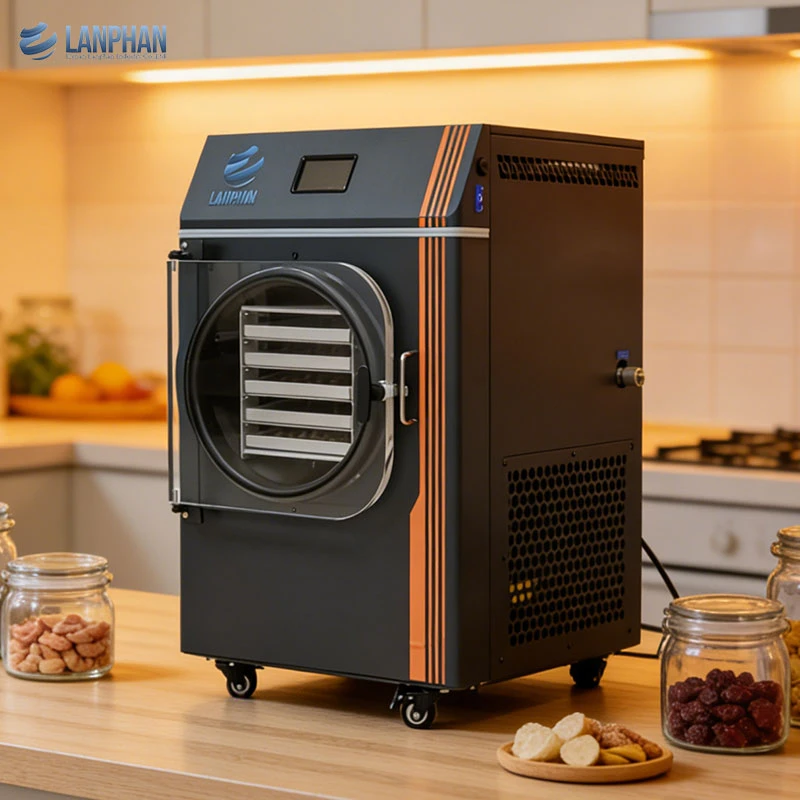
First, let’s get one thing straight: freeze-drying isn’t just sticking something in a cold freezer. If you tried shoving a can of pet food in your regular chest freezer? It’d just get rock solid, maybe dry out a little on the edges, but it’s not actual freeze-drying, and it’s definitely not safe for your pet. What makes a home freeze dryer different (and worth the investment, in my biased but honest opinion) is the whole process: freezing the food super fast, then lowering the pressure around it so the frozen water in the food turns straight into vapor — skipping the liquid stage entirely. That’s called sublimation, and it’s the key to freeze-drying.
Now, can you do this at home? Short answer: YES. But there are a lot of caveats, and not all pet food is made equal, so let’s break this down step by step, starting with the pet food itself because that’s the biggest make-or-break.
First: what kind of pet food are we talking about? Most people test raw pet food first, right? Raw is super popular right now because you know exactly what’s in it — ground chicken, beef, maybe some veggies and supplements, no weird preservatives. Raw pet food works great in home freeze dryers, but you can’t just dump a whole bag of mushy raw mix into your trays. Here’s the trick: you have to pre-prep it first. Raw pet food is usually high in water (like 60-70% water, give or take), which is exactly what we want for sublimation, but if it’s in big clumps or thick patties, the inside won’t freeze fast enough, and you’ll get spots that are partially frozen, not fully dry. So I tell all my customers to spread raw pet food super thin on the freeze dryer trays — like 1/4 inch max — and break up any big chunks with a spoon. Some even mix a little water to make it spreadable, like a thin gruel, which works even better because there’s no thick center to mess up. But wait, safety first: if you’re using raw meat, make sure it’s food-grade, no spoiled stuff, and wash your hands and trays super well before and after. Bacteria like E. coli and salmonella can hang around, even after freeze-drying, because freeze-drying doesn’t kill bacteria — it just stops them from growing. That’s a big one I see people miss.
What about commercial kibble? Can you freeze-dry that? Uh, it’s possible, but why would you? Wait, hear me out: some people want to make their own freeze-dried toppers for kibble, like freeze-dried beef liver or green beans to add flavor. That works great, but if you’re thinking of freeze-drying a whole bag of kibble? Kibble is already pretty dry (like 10% water or less) — freeze-drying it just removes even more, and it won’t last longer than regular kibble, plus it’s a waste of time and energy. Kibble is already designed to be shelf-stable, so save that for stuff you actually want to boost, not the base.
What about cooked pet food? Like, if you made a big batch of homemade dog food with ground turkey, rice, and carrots, can you freeze-dry that? Totally, but again, prep is key. Cooked food is a little softer, so you have to make sure it’s not too greasy. If there’s excess oil, it will get on the freeze dryer condenser (that cold plate that catches the water vapor) and mess up the process. So I tell people to pat cooked food with a paper towel first to soak up any extra grease. Also, remove bones if they’re small and crunchy — wait until you rehydrate the food to add bones, because small bones might not dry all the way and could be a choking hazard for some pets.
Now, let’s talk about how the home freeze dryer process works specifically for pet food, because it’s a little different than freeze-drying fruit or veggies (which a lot of people do for snacks). For fruit, you usually run the freeze dryer for 20-24 hours, but pet food is denser, right? Meat and grains are thicker, so it takes longer. I usually tell people to plan for 24-30 hours for raw or cooked pet food, depending on how thin they spread it. And once it’s done, how do you know it’s fully freeze-dried? It should be crunchy, crumbly, no soft spots. If you bend a piece and it breaks, that’s good. If it bends and has a give, it needs more time.
Once you’ve freeze-dried it, how do you store it? That’s another big part of keeping it safe. Freeze-dried pet food has almost no water left, so bacteria can’t grow, but it will absorb moisture from the air if you don’t seal it right. The best way is to use airtight Mylar bags with oxygen absorbers — I sell these as add-ons with my freeze dryers, because regular plastic bags just aren’t enough. If you store it in a cool, dark place, it can last up to 25 years (I’m not exaggerating — I’ve seen people store freeze-dried pet food for 10 years and it was totally fine, as long as it’s sealed right). That’s a huge win if you want to make big batches and save money, or even prep for emergencies.
But wait, hold up — is freeze-drying pet food actually worth it? Let’s do the math, because that’s what everyone asks. A 2-pound bag of freeze-dried pet food from the store is like $40, right? That’s $20 a pound. At my freeze dryer, a batch of raw chicken or beef (like 5 pounds of meat) will make about 1 pound of freeze-dried pet food, because most of it is water that gets removed. So 5 pounds of meat costs around $10, so $2 a pound — that’s a massive difference. Plus, you control what goes into it: no artificial preservatives, no filler, no mystery byproducts. I had a customer last month whose dog has a grain allergy, and she was paying $60 a bag for grain-free freeze-dried pet food, and now she makes her own with chicken and sweet potato for like $10 a pound. That’s the real value here.
But let’s not pretend there are no downsides. Freeze dryers aren’t cheap — entry-level home models are around $2,000, and the bigger ones go up. That’s a big upfront cost, so if you only have one or two pets and don’t go through tons of food, it might not make sense. Also, it takes up space — the freeze dryer is like a big countertop appliance, so if you have a tiny kitchen, that’s something to think about. And it’s not a “set it and forget it” thing — you have to prep the food, load the trays, unload it when it’s done, clean the machine. It’s a few hours of work a batch, which is nothing if you’re into DIY, but if you just want to buy and go, it’s not for you.
Another thing I get asked all the time: can freeze-drying kill bacteria in pet food? The short answer is no, not reliably. Raw meat has bacteria on it, and freeze-drying stops them from reproducing, but it doesn’t kill them. So you have to use safe, high-quality raw meat — no ground meat that’s past its prime, no meat that’s been sitting out at room temperature. If you cook the pet food first, that does kill most bacteria, so that’s a safer route for people who are worried about foodborne illness for their pets or themselves. Also, after you’re done loading the trays, wash them with hot, soapy water, and wipe down the inside of the machine, same as you would with any kitchen appliance.
Wait, what about treats? Like, freeze-drying your own chicken strips or salmon treats for your cat or dog? That’s where this really shines. Store-bought freeze-dried treats are tiny bags for $15, but you can make a huge batch of your own for way less, and you know exactly what’s in them. I have a customer who makes her own freeze-dried liver treats for her border collie, and he goes crazy for them — way more than the store-bought ones, and she says she saves like $200 a month. That’s the stuff that makes this whole business worth it for me, seeing people save money and take better care of their pets.
Let me also address a common myth: some people think freeze-drying pet food will make it less nutritious. No, actually, freeze-drying preserves almost all the nutrients, way better than canning or dehydrating. Dehydration uses heat, which can break down vitamins like B and C, and canning uses high heat and pressure that can do the same. Freeze-drying is cold, so the nutrients stay intact. The only thing that’s lost is the water, which you add back when you’re ready to feed it to your pet — you just mix it with warm water and it goes back to almost the original texture. That’s a big plus for picky pets, too — some dogs won’t eat raw, but they’ll eat rehydrated freeze-dried food because it smells like the real thing.
So putting it all together: yes, you can freeze-dry pet food in a home freeze dryer, but only if you do it right. You have to prep the food thin, use safe ingredients, know the process, and store it properly. It’s not for everyone, but if you’re tired of overpriced store-bought pet food, you want control over what goes into your pet’s meals, and you don’t mind a little bit of DIY work, it’s a game changer.
If you’re curious to test this out for yourself, I’d say start small. Buy a cheap bag of raw chicken breast from the grocery store, cut it super thin, run it through your freeze dryer, and see how it turns out. Most of my customers love starting with treats first, then moving to full meals. If you have questions about getting set up, what trays work best, or how to prep specific types of pet food, feel free to reach out to my team. We walk new customers through every step, so you don’t have to guess if your first batch will work out.
At the end of the day, pet parents just want what’s best for their fur babies, and freeze-drying at home is such a great way to do that without breaking the bank. It’s easy once you get the hang of it, it’s safe if you follow the basics, and the results are worth every minute of work. If you’ve never tried it, now’s the time to give it a shot.
Want to learn more about how home freeze dryers work for pet food, or get recommendations for which model fits your needs? Connect with my team to discuss your requirements and find the right solution for you and your pets.
Vertical Autoclave References:
- Foust, C. (2021). Food preservation methods: Freeze-drying vs. dehydration vs. canning. University of Minnesota Extension.
- American Veterinary Medical Association. (2022). Raw food diets for pets: Risks and benefits. AVMA.
- Labeling of freeze-dried pet food products. (2020). Association of American Feed Control Officials (AAFCO).
- Sublimation processes in home freeze drying. (2019). Journal of Food Processing and Preservation.
- Storage guidelines for long-term freeze-dried food. (2023). National Center for Home Food Preservation.
Henan Lanphan Industry Co., Ltd.
As one of the most professional home freeze dryer suppliers in China, we have world-leading production equipment and strong manufacturing capabilities. Please rest assured to wholesale advanced home freeze dryer for sale here from our factory. For price consultation, contact us.
Address: Room 801, East Tower, Xiyuan Square, Zhongyuan District, Zhengzhou City, Henan Province
E-mail: lanphanindustry@lanphan.com
WebSite: https://www.lanphan-industry.com/
