If you’ve ever sat through a red light on a nearly empty suburban side street at 2 a.m., or watched a downtown intersection clog up because a single left-turn lane didn’t get the green light when traffic actually arrived, you’ve probably wondered: how do traffic lights decide when to change? For years, the answer was simple—timers, wired loops, and pre-set schedules that rarely adapted to real-world conditions. But if you’ve worked with traffic light controllers like I have, you know the game has shifted. As a supplier of these systems, I’ve spent the last decade walking cities through the shift from old, static technology to AI-powered controllers that aren’t just “smarter”—they’re actually solving the pain points that human drivers and urban planners deal with every single day. Traffic Light Controllers
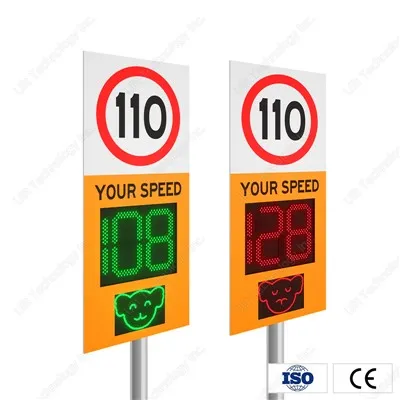
Let’s start with what most people don’t realize: traffic light controllers are the unsung brains of any intersection. Before AI, every controller followed a rigid sequence. A busy downtown intersection might get a 90-second green for the main road during rush hour, a 30-second green for side streets, and a full red during off-peak hours. But what happens when a delivery truck gets stuck on the side road at 5 p.m., when the main road should get priority? Or when a sudden thunderstorm dumps 2 inches of rain, making the main road so slick that drivers need extra time to slow down? Old controllers couldn’t adjust. They’d stick to their pre-set times, leading to wasted fuel, frustrated drivers, and even increased congestion that stretches for miles.
That’s where AI comes in. For my team and I, the move to AI-powered traffic light controllers wasn’t about adding a fancy tech gimmick—it was about building a system that learns from real-time data to make decisions in milliseconds, without human input. Here’s how it works, step by step. First, every intersection equipped with our AI controllers has a network of sensors: high-resolution cameras, radar detectors, and even loop sensors buried in the pavement. These aren’t the basic sensors that just count cars—they capture way more detail. A camera can tell the difference between a sedan, a bicycle, a delivery van, or a pedestrian waiting at a crosswalk. Radar tracks the speed of approaching vehicles, how far back a queue of cars stretches, and even if a vehicle is braking hard to stop at a red light.
This data is sent to the controller’s on-board AI model, which is trained on local traffic patterns. It’s not a one-size-fits-all model, either. When we set up a controller for a downtown Seattle intersection, we feed it data from 6 a.m. to 10 p.m. for a month: how many pedestrians cross Pine Street during lunch, how many left turns happen on 2nd Avenue after work, even the extra slowdown during morning rush hour when kids walk to school. For a rural intersection outside Denver, the model is trained on far less frequent traffic: how often farm trucks cross the road at harvest time, how many cyclists use the route on weekends. The AI doesn’t just follow a pre-written sequence—it analyzes this incoming data and adjusts the green light times in real time.
Let’s take a concrete example. Last year, we installed our AI controllers at four key intersections in a growing suburb outside Dallas, where new housing developments had left the old static controllers woefully outdated. Before the upgrade, commuters on the main 4-lane road waited an average of 2 minutes and 15 seconds during evening rush hour, while side-street drivers waited just as long even when there were only two cars waiting. The AI controller at one of those intersections, at the junction of a new subdivision and the main highway, started learning within days. On weekdays between 4 p.m. and 7 p.m., it noticed that 80% of traffic was coming from the subdivision side, heading toward the highway, rather than the other way around. Instead of sticking to a pre-set 90-second green for the highway, it adjusted to give that subdivision road 100 seconds of green, while still holding back side-street traffic only when a car actually arrived—instead of pre-set short greens that left half a lane empty. Within three months, wait times on that main road dropped by 40%, and idling time at those four intersections was down by 32%. That’s not a small win—less idling means less fuel burned, less pollution, and fewer frustrated drivers.
But AI traffic controllers do more than adjust light times. They also solve a problem that’s long plagued urban planners: unexpected events. Think about a parade on a downtown street, a broken-down truck blocking a lane, or even a sudden snowstorm that slows traffic to a crawl. Old controllers can’t adapt to these surprises. But our AI controllers are connected to a city’s central traffic management system, and they can also communicate with city infrastructure and even connected vehicles. If a snowplow is approaching an intersection, the controller can prioritize clearing the main roads by extending green lights for snowplows or holding back side-street traffic that would slow the plow’s progress. If a parade is scheduled, the city can input the route in advance, and the controller adjusts all the adjacent intersections to give the parade a clear path, without disrupting other traffic unnecessarily. We even had a client in Chicago that used the AI controllers during last year’s marathon: the system detected thousands of runners approaching on one street, adjusted green lights to keep the course clear, and only had to hold back non-participating traffic for 30 seconds at a time, compared to the usual 10 minutes with old controllers.
Of course, no technology is perfect, and when you’re talking about something that impacts thousands of people every single day, accuracy and reliability are non-negotiable. That’s why the AI models powering our controllers aren’t just trained on historical data—they’re validated by local traffic engineers, and they have built-in safety checks. For example, a controller will never let a red light turn green if it detects a pedestrian still in the crosswalk, even if the AI calculates that the main road should get priority. It will also never let a green light last longer than a set maximum time, to prevent situations where traffic on one side is backed up for miles while another side gets an unnecessarily long green. We also test every controller in real-world conditions before installation, running simulations of local traffic for weeks to make sure it doesn’t make unexpected or unsafe decisions.
Another big myth about AI traffic controllers is that they’re too expensive for small cities or suburban areas. That’s not the case. When we work with a municipal client, we don’t just sell them a piece of hardware and walk away. We partner with them to customize the AI model for their specific intersection, offer flexible payment plans, and even provide ongoing support and updates. For small towns, the cost of installing AI controllers is often offset within two years by reduced congestion-related costs, like less road wear from idling cars, fewer traffic tickets, and lower carbon emissions. For larger cities, the return on investment is even bigger: a 2022 study from the Federal Highway Administration found that AI-powered traffic controllers can reduce overall congestion by 10-20%, which translates to millions of dollars in saved fuel and lost productivity for commuters.
What excites me most about this technology, though, is how it’s evolving. Right now, our AI controllers are already connected to a growing network of connected cars—vehicles that can communicate their speed and direction to the controller. Soon, a controller will be able to tell a driver approaching a red light that they have 10 seconds before it turns green, so they can slow down gently instead of braking hard and causing a rear-end collision. Or it will be able to coordinate with traffic lights a mile down the road to create a “green wave” that lets drivers go through multiple intersections without stopping, cutting commute times even more. We’re also working on adding features for vulnerable road users, like cyclists and people with disabilities, giving them extra time to cross and prioritizing their approach if they press a pedestrian signal button.
I’ve been in this industry for 15 years, and I’ve seen how traffic light technology has changed from a simple metal box with a switch to a complex, intelligent system that actually helps people get where they need to go. The old days of static, one-size-fits-all traffic lights are over—AI has turned these intersections into dynamic, adaptive networks that respond to the needs of the people who use them every day. For anyone who’s ever waited through a light that clearly didn’t need to be that long, or wondered why a side street gets no green time at 6 p.m., the answer is now simpler: the light wasn’t learning. It wasn’t paying attention. But AI traffic controllers? They are.
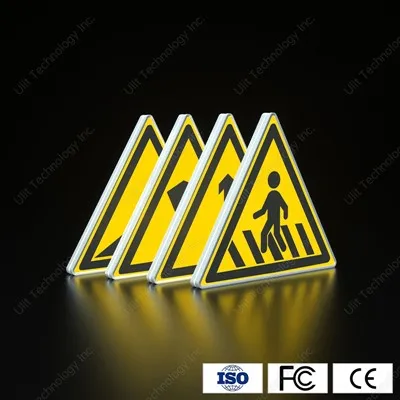
If you’re an urban planner, a municipal official, or someone responsible for managing traffic in your community, and you’re looking to upgrade your intersection systems to AI-powered traffic light controllers, we’re here to help. We work with communities of all sizes, from small towns to major cities, to design, install, and support customized traffic solutions that reduce congestion, improve safety, and save money. To learn more and discuss how our controllers can work for your specific needs, reach out to our team today.
400mm Traffic Light Timer References
Federal Highway Administration. (2022). AI-Enabled Traffic Control Systems: Benefits, Implementation, and Case Studies. U.S. Department of Transportation.
Transportation Research Board. (2021). Intelligent Traffic Signal Systems: Current Practice and Future Directions. National Academies of Sciences, Engineering, and Medicine.
Chicago Department of Transportation. (2023). 2022 Marathon Traffic Management Report: Evaluation of AI-Powered Signal Control. City of Chicago.
Ulit Technology Inc.
As one of the most experienced traffic light controllers manufacturers and suppliers in China, we offer a wide range of products with superior quality. We warmly welcome you to wholesale bulk durable traffic light controllers from our factory. If you have any enquiry about cooperation, please feel free to email us.
Address: NO.2 Mudan Road, Nan’an District, Chongqing, China
E-mail: cqulit@sina.com
WebSite: https://www.ulitcn.com/
