Hey there! If you’ve ever walked into a co-working space that shifts from bright, focused daylight during the morning rush to soft, warm glow for post-lunch brainstorming, or stepped into a café that dims the lights as the evening hits, you’ve probably wondered how that happens. As an Indoor LED Module supplier, I get asked this question all the time: do indoor LED modules actually support different lighting modes? Spoiler alert—yes, they do, and it’s way more flexible than most folks realize. I’ve been in this game for over 8 years, working directly with architects, office managers, café owners, and even small retail shops that need lighting that works around their daily rhythms. Today, I’m breaking this down like I would over a coffee, no jargon, just real talk and what I’ve seen work (and what doesn’t). Indoor LED Module

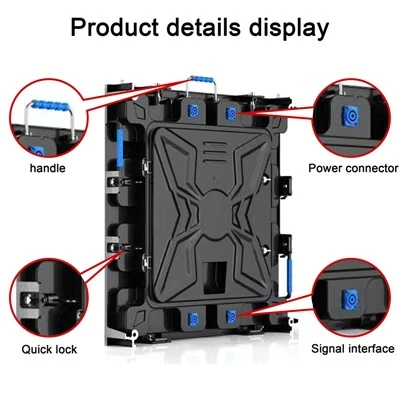
First, let’s clear up the basics because a lot of people mix up LED bulbs and modules. A module is that core part—you know, the flat, circuit-board-looking thing with the LED chips, resistors, and drivers built in—instead of a loose bulb you screw into a socket. For us as suppliers, that means every part is standardized but customizable, which is why mode switching is baked right in if it’s designed to be. Now, what are these “lighting modes” people care about? Mostly two big ones: color temperature (warm yellow vs. cool blue-white) and brightness levels (dimming for movie nights, cranking it up for warehouse picking). Sometimes people want extra modes like “emergency” lighting that kicks in if the power dips, or even dynamic modes like fading between warm and cool over the day to mimic natural sunlight. But can indoor LED modules actually handle that, or is it just marketing?
Let’s start with the most common mode: dimming. Back in the day, old LEDs would flicker like crazy when you dimmed them, and some modules still do if they’re cheap. But the good ones—like the ones we produce—have a built-in dimmable driver, not a cheap after-market add-on. Wait, what’s a driver? Basically the part that regulates electricity to the LED chips. If your driver’s crappy, even the best module will cut out or flicker when you try to dim it. I had a client a few years back, a small startup co-working space, who bought cheap off-brand modules from a random supplier. They dimmed the lights for their evening team hangs, but they got that annoying strobing that made people’s eyes hurt after an hour. We swapped them out for our dimmable constant-current modules, and the difference was night and day—they can go from 100% bright for focus work down to 10% soft glow without a single flicker. That’s because our drivers are rated for 0-10V dimming, which is the industry standard that works with almost any building’s existing lighting controls, or even smart systems like Philips Hue if a client wants that. We also do PWM dimming, but only for clients who need it for specific applications, like art galleries where zero flicker is non-negotiable.
Next up, color temperature shifting. This is the mode that’s blowing up in offices now, right? The whole “circadian lighting” trend where you have cool 5000K light first thing in the morning to wake your brain up, then shift down to 3000K warm light in the afternoon to help people wind down a bit. Can indoor LED modules do that? Absolutely, if they’re multi-die modules. Multi-die just means one module has two different sets of LED chips—cool white and warm white—on the same circuit board. Our multi-die modules, for example, have four cool chips and two warm chips, so when you adjust the power to each set, you mix the colors to get any temperature between 2700K (super warm, like a table lamp) up to 6500K (bright daylight). I worked with a hospital clinic last year that installed these in their patient waiting areas. They set a schedule: 6500K from 8am-12pm to keep staff and patients alert, 4000K from 12pm-5pm for a calm but focused space, and 2700K after 5pm to help visitors sleep better before overnight stays. The clinic manager told us it cut down on midday fatigue complaints by almost 30%—and that’s all because the modules can switch modes without replacing a single part. No more swapping light fixtures every season, which is a huge win for maintenance costs.
But wait, what about those fancy dynamic modes, like fading through colors or syncing with music for a restaurant? Yeah, indoor LED modules can do that too, but it’s not for every application. We recently supplied modules to a rooftop bar in downtown Austin that wanted lights that shift from deep purple for happy hour to orange for dinner, then back to soft blue late at night. Our addressable modules work with DMX controllers, so each individual module can be programmed to change color on command. The bar owner loved it—he doesn’t have to hire a lighting tech to reset the whole system every time he wants a new vibe. But I always tell clients to be real about their needs: if you’re just a small café that wants to dim the lights after 7pm, you don’t need addressable modules with 16 million color options. That’s overkill, and it adds unnecessary cost. We tailor every module to what the customer actually needs, no upselling for stuff they’ll never use.
Now, let’s get into the nitty-gritty of what makes a module support different modes—because it’s not magic, it’s engineering. First, the driver, like I mentioned earlier. A non-dimmable driver can’t do brightness modes, period. A constant-current driver is key too—if you use a constant-voltage driver, the brightness can fluctuate as the module warms up, which ruins mode consistency. Then there’s the LED chips themselves. High-quality chips from manufacturers like Cree or Samsung (we source from trusted brands, no no-name junk) have better color consistency and can handle frequent adjustments without drifting. Cheaper chips will start to look yellow or blue after a few months of mode switching, which is a nightmare for a retail space where display lighting needs to stay true. We test every batch of our modules for mode stability—we run them through 10,000 dim cycles and check for color shift, and I can count on one hand how many bad batches we’ve had in 8 years. That matters, because a lighting mode that works for a week is useless if it breaks after 6 months.
Another thing a lot of people don’t talk about is dimming compatibility with building controls. I’ve seen so many projects where a client buys fancy mode-supporting modules, but their old dimmer switches are incompatible, so they can’t get the dimming to work. That’s a preventable mistake. We always ask clients what kind of control system they’re using—wall dimmers, smart apps, scheduled building controls—then we specify the module that works with it. For example, if a client has a legacy 0-10V dimmer from the 90s, we don’t push our new Bluetooth-enabled modules that only work with smartphones. We send them the 0-10V compatible dimmable modules that’ll plug right into their existing setup, no rewiring needed. That saves them thousands in installation costs, and we don’t get a follow-up call at 2am panicking because the lights won’t dim.
But hold on—are there limits to what indoor LED modules can do? Of course. I don’t want to overhype this. First, extreme mode switching can shorten the lifespan of a module, if it’s not designed for it. If you’re dimming from 100% to 1% every hour, that’s harder on the driver than just turning it on and off. We have heavy-duty modules for applications that need frequent, deep dimming, like gyms or movie theaters, that can handle that without burning out. Regular modules are fine for occasional dimming or color shifts, but if you need constant rapid changes, we’ve got you covered. Second, not all modules are created equal. Some budget modules only support two modes: full on and full off, or a single fixed color temperature. Those are fine for basic hallway lighting, but if you want more, you need to spec a module that’s explicitly rated for multi-mode operation. I always tell clients to ask their supplier for datasheets that list mode compatibility—any decent supplier will have that, no hiding it.
Let me share a quick horror story to drive that point home. A friend of mine owns a small boutique in Portland, and a “discount” LED supplier talked him into buying their “mode-ready” modules for his clothing displays. He wanted to switch between bright 5000K for day shopping and soft 3000K for evening events. Six months later, half the modules were flickering when set to 3000K, and two had burned out completely. When we looked at their datasheets, they never mentioned multi-mode support—they just advertised “LED modules” to make a sale. The problem? They used cheap drivers that couldn’t handle the power shifting needed to change color temperature, and the chips shifted color after a few hundred cycles. We replaced them with our multi-die color-tunable modules, and he hasn’t had an issue since. That’s why working with a supplier you trust matters—we don’t just sell you a part, we help you make it work for your space.
Now, where is this all going? The future of indoor lighting modes is getting even more flexible, right? We’re working on modules that can sync with human circadian rhythms automatically—no need to program a schedule, they’ll detect the room’s natural light and adjust accordingly. We’re also doing modules that can adjust color based on what’s in the room—like a retail store that lights up red for makeup displays and blue for tech, all with the same module. But even with all that new tech, the basics still hold: indoor LED modules do support different lighting modes, as long as they’re designed and specified correctly.
At the end of the day, the answer to “do indoor LED modules support different lighting modes?” is a resounding yes—when they’re built to. Whether you’re a small business owner wanting to dim the lights after closing, an office manager building a circadian-friendly workspace, or a bar looking to switch vibes for different nights, there’s a module that fits. I’ve helped hundreds of clients get exactly the lighting modes they need without overspending or dealing with maintenance headaches.
If you’re looking to upgrade your indoor lighting and want to chat about what mode options make sense for your space, I’d love to connect. No sales pitch, no weird hidden fees, just real advice based on what works (and what doesn’t) from 8 years in this industry. Reach out anytime to talk through your project, whether it’s a 5-module café setup or a 500-module office build.
Indoor LED Display References:
- "LED Driver Technology Fundamentals" (Energy Star, 2021)
- "Circadian Lighting: Design Guidelines for Commercial Spaces" (International Association of Lighting Designers, 2022)
- "Multi-Die LED Modules for Tunable White Lighting" (Journal of Display Technology, Vol. 18, No. 6, 2022)
- "Dimming Performance of Indoor LED Modules: Flicker and Long-Term Reliability" (Lighting Research & Technology, Vol. 54, No. 3, 2022)
Shenzhen Starcolor Optoelectronics Co., Ltd.
As one of the most professional indoor led module manufacturers and suppliers in China, we’re featured by quality products and good price. Please rest assured to wholesale discount indoor led module in stock here from our factory. Customized orders are welcome.
Address: 2nd floor, Building A, Hongjingda Industrial Park, Shiyan town, Bao’an District, Shenzhen
E-mail: starcolorled@outlook.com
WebSite: https://www.starcolordisplay.com/
