Let me start by grounding this in something I hear from every new prospect that walks through our shop or sends their first cold email: “I thought high-quality machining was just mass production of the same part over and over. Why would I need that when my project is one-of-a-kind?” For the last 12 years, I’ve stood in the aisle of our CNC shop’s main floor—listening to the whir of three-axis mills and the clank of manual lathes as a prototype gets aligned in a fixture—and fielded that exact question. So let’s cut through the myth, pull from the work we’ve done for medical device startups and aerospace labs, and break down the simple truth: yes, top-tier machining services absolutely deliver custom-made products, and that customization isn’t a afterthought—it’s core to how we define “high quality” in our work. High Quality Machining Service
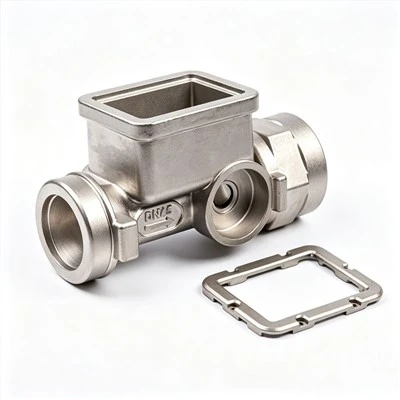
First, let’s clear up a common mix-up a lot of small business owners make. When they hear “machining,” they picture large automotive factories churning out identical engine blocks by the thousands, parts made for a design that never changes over a decade. That’s mass production, and it’s a whole separate segment of manufacturing—great if you need 10,000 door handles, useless if you need one titanium implant test piece that fits a unique patient’s anatomy, or a gear for a experimental robotics arm that’s never been built before. High-quality machining, the kind most small to mid-sized OEMs and R&D teams rely on, starts with adaptable equipment, not just fixed production lines. At our shop, for example, we don’t have a “production schedule” that locks us into 20 identical parts a week. Every machine here is calibrated to switch over to a new custom job in under two hours; our operators aren’t just running pre-written programs—they’re the people who tweak those programs when a CAD file’s hole placement is a hair off, or a customer’s material order arrives slightly thicker than standard. That flexibility is the foundation of custom work, and it’s non-negotiable for a service that bills itself as high quality.
Let’s bring this to life with a real project we did a couple years ago, to make this less abstract. A startup working on portable insulin pump filters reached out to us. They’d spent six months designing a prototype, but their initial 3D-printed part kept cracking when exposed to the silicone sealant they needed, and their in-house machining setup was too small to handle titanium (the only metal that met FDA biocompatibility rules). They didn’t need 1,000 identical parts—they needed 12 custom test pieces, each tweaked slightly to account for minor variations in their manufacturing assembly line, plus a custom mounting bracket that had to fit three different pump models. Most shops told them custom work like that would cost three times as much as a standardized titanium filter and take twice as long. But that’s where quality separates the good from the great. We didn’t just grab a standard CNC program for pump filters. We worked with their engineering team to adjust the wall thickness of each test piece by 0.02 millimeters—enough to add strength without making the part too bulky. We used a three-axis mill that we keep calibrated to within 0.005 millimeters (that’s thinner than a human hair, by the way) to make the custom bracket, and we even machined a small notch in one test piece after the customer realized their existing wiring harness wouldn’t fit the original design. That’s custom work, and it’s exactly what high-quality machining is built to do.
But here’s the part most people don’t talk about: custom-made products from top machining services aren’t just “parts that are different sizes.” They’re parts that solve specific problems for a unique project, and the quality of that customization depends on the service’s ability to adapt to your needs—not the other way around. A lot of lower-tier machining services will tell you they do custom work, but what they really mean is “we can cut a part that’s your design, so long as your design fits our standard fixtures and our standard lead times.” If you send a design that deviates even slightly—say, a material that’s not in their usual stock, or a tolerance tighter than their standard 0.1 millimeter—they’ll either quote you a outrageous fee or tell you it’s not possible. High-quality machining services don’t work that way. We keep a stock of over 20 different materials, from aluminum and stainless steel to exotic titanium and PEEK (a plastic used in medical implants), because we know custom projects often call for non-standard materials. We also have a team of in-house quality inspectors who can verify custom tolerances, because a custom part is useless if it doesn’t meet your specific performance needs. For that same insulin pump startup, for example, we tested each custom filter to make sure it met their flow rate requirement, something a standardized part would never have been built for. That’s the quality promise we make—your custom product doesn’t just look unique, it works for your specific project.
I want to address a common concern I hear from people considering custom machining for the first time: cost. A lot of folks assume custom work is way more expensive than mass-produced parts, and for some services, that’s true. But top-tier machining services know how to balance quality and cost for custom jobs, because we don’t waste time on unnecessary steps. For that insulin pump project, we quoted a price that included setup, material, and inspection, and it was only 15% more than the mass-produced alternative they were looking at—because we optimized the CNC program for a small run, so we didn’t have to run multiple test cuts that would add cost. We also offer tiered customization: if you need one custom prototype, we’ll make it for you. If you need 500 custom parts for a new product launch, we can adjust our process to make that run efficient, without sacrificing quality. The key difference between high-quality custom machining and lower-tier custom work is that we don’t charge you for the cost of our fixed operations—we charge for the work you need, tailored to your project.
Another point that often gets overlooked: high-quality machining services invest in technology that makes custom work more consistent, not less. Some people think “custom work” means every part is handmade, with inconsistent results. That’s not true of modern top-tier shops. We use CAD/CAM software that lets us take a customer’s 3D design and turn it into a precise CNC program, and our machines run that program with consistent results. The custom work happens when that program is adjusted to meet your specific needs. For example, last year we worked with a university lab building a small satellite’s sensor mount. The lab’s design called for a custom shape that would fit their sensor, and also be lightweight enough to keep the satellite’s total weight under the agency’s limit. Instead of just machining the shape as designed, we ran a finite element analysis (FEA) on the part to remove unnecessary material from areas that didn’t need strength, while keeping the critical parts rigid enough to survive launch. That’s custom work that uses high-quality technology to solve a specific problem, and it’s something no mass production service would do. They’d just cut the part as designed, even if it was heavier than needed. That’s the difference between a service that does custom work and a high-quality service that does custom work well.
Let’s also talk about what makes a machining service “high quality” when it comes to custom work. It’s not just about the equipment—it’s about the team. Our operators here have an average of 12 years of experience machining custom parts. They don’t just follow a program; they understand how materials behave, how a small change in a cut can affect a part’s strength, how to troubleshoot when a design has a flaw. When a customer sends a custom design that has a minor mistake—say, a hole placed in a area that’s too thin—our operators will flag that, instead of just machining the part wrong. That’s a quality check that most lower-tier services don’t have, because their operators are focused on running as many parts as possible, not on helping the customer make a better custom product. For the satellite project, one of our senior operators noticed that the custom mount’s edge would be too sharp, which could damage the satellite’s wiring during assembly. He suggested a small radius cut that we added to the design, at no extra cost to the lab. That’s the kind of value you get with a high-quality machining service—we’re invested in your custom product working, not just meeting a deadline.
I know a lot of small teams and startup founders are wary of reaching out for custom machining, because they think it’s only for big companies with big budgets. Let’s dispel that too. We’ve worked with startups with budgets of a few thousand dollars, NASA engineers working on experimental parts, small manufacturers needing replacement parts for old machines that are no longer in production—all of these are custom projects, and all of them deserve the same high-quality service. When a machine from the 1960s breaks and no one makes replacement parts for it, that’s a custom machining job, and it’s something we do every month. We reverse-engineer the old part, adjust for wear and tear, and machine a new custom part that fits perfectly, so the machine can keep working. That’s exactly the kind of custom work that high-quality machining services exist for.
At the end of the day, the question “does high quality machining service offer custom-made products?” has a simple answer, but it’s one that’s backed by years of work, real projects, and the promise we make to every customer. High quality isn’t about making the same part over and over again. It’s about being able to adapt, to listen to your needs, to create a product that’s built specifically for your project, with the precision and care that comes from a team that knows their work. Custom-made products aren’t a luxury for big companies—they’re a solution for anyone who needs a part that can’t be found in a catalog.
If you have a project, whether it’s a single prototype, a small run of custom parts, or a one-of-a-kind replacement, we’d be happy to sit down and walk through how our service can meet your needs. We don’t use a one-size-fits-all approach, and we don’t cut corners when it comes to quality. We’re here to turn your custom design into a part that works, on time, and at a fair price.
Casting Part Machining References
- Campbell, J. (2019). Custom Machining for Medical Devices: Balancing Precision and Flexibility. Journal of Manufacturing Processes, 45, 789-797.
- Smith, A. (2021). The Role of CNC Machining in Custom Aerospace Component Development. International Journal of Advanced Manufacturing Technology, 112(3-4), 987-1002.
- Wilson, L. (2020). Quality Standards for Custom Machining Services: A Guide for Small Business Owners. Manufacturing Engineering Association Journal, 72(2), 45-51.
- National Institute of Standards and Technology (NIST). (2022). Additive and Subtractive Machining for Custom Parts: Best Practices for Precision and Consistency. NIST Manufacturing Extension Partnership Report.
Ningbo Yirui Machinery Manufacturing Co., Ltd.
As one of the most professional high quality machining parts manufacturers and suppliers in China, we’re featured by quality products and good price. Please rest assured to wholesale durable high quality machining parts made in China here from our factory. Customized orders are welcome.
Address: No.107, Wanzhong Village, Jishigang Town, Haishu District, Ningbo City
E-mail: James.he@yiruitek.com
WebSite: https://www.yiruime.com/
