If you’ve ever stared at a leggy, pale succulent and wondered what went wrong, you’re not alone. As someone who’s spent the last 12 years formulating and testing succulent-specific fertilizers for my company, I’ve fielded this question hundreds of times: How often should I fertilize my succulents? The answer isn’t one-size-fits-all—most succulent owners either over-fertilize (the far more common mistake) and burn their plants, or under-fertilize and leave them stunted. Let’s break this down like I do for my small-batch fertilizer teams, blending practical plant science with the real-world lessons I’ve learned from 10,000+ home gardeners I’ve worked with directly. Fertilizer

First, let’s start with the basics: why do succulents need fertilizer at all? Most people assume succulents, native to arid, nutrient-poor deserts and rocky slopes, never need extra food. That’s partially true—their native habitats have thin soil, so they evolved to survive on minimal nutrients. But housegrown succulents live in pots, which are a closed system. Potting soil breaks down over time, and regular watering leaches out the small amount of nutrients that were there in the first place. A 4-inch potted echeveria, for example, will have used up almost all available nitrogen, phosphorus, and potassium within 8 to 12 months of being repotted. Skip fertilizing, and you’ll end up with a plant that’s pale, has slow leaf growth, or drops lower leaves prematurely. Fertilizer isn’t a magic fix—it’s a supplement to what your succulent can’t get from its potting environment.
Now, the frequency: here’s the line I’ve tested across dozens of succulent varieties, from tiny string of pearls to large agave. For most common indoor succulents, fertilize once every 4 to 6 weeks during their active growing season. That growing season is non-negotiable: it’s spring and early summer, when succulents are putting on new leaves and building up energy for blooms or dormancy. Do nothing at all during fall and winter. Why? Succulents slow their metabolism to a near halt in cool, low-light conditions. Fertilizing during dormancy is like forcing a person to eat three full meals when they’re bedridden—they can’t process the nutrients, and it builds up toxic salts in the soil that burn roots. I’ve seen way too many gardeners kill their succulents by fertilizing monthly in December, and that’s why this timeline is non-negotiable.
But wait—there are exceptions, right? Not all succulents are the same. Let’s narrow this down by type, because that’s where most of my customers get tripped up. Slow-growing succulents, like jade plants, aloe vera, and sansevieria (snake plants), can go even longer—once every 6 weeks in spring and early summer is perfect. These guys grow just an inch or two a year, so they don’t need as much fuel. Fast-growing succulents, like string of pearls, senecio, and echeveria, can handle a little more frequent feeding—once every 4 weeks, same growing season. If you have a new succulent, one that’s less than 6 months old, hold off on fertilizing entirely. It’s already got nutrients in the fresh potting soil it came in from the nursery, and adding fertilizer too soon will shock its delicate young roots.
Now, let’s talk about the biggest mistake I see: over-fertilizing. A lot of new gardeners think “more food = faster growth,” so they fertilize every two weeks, or even with every watering. That’s a surefire way to root burn. Succulent roots are adapted to dry, low-nutrient environments—they don’t have the tolerance for high levels of nitrogen or salt that regular houseplants have. I once worked with a woman in Portland who fertilized her echeveria once a week to “make it bushier” and ended up with a plant that had brown, crispy leaf tips and split stems. We had to repot it in fresh, leached soil and lay off fertilizer until spring. That’s why my team’s formulas are balanced for succulents—low nitrogen, high in potassium and phosphorus, which support root and leaf health without the burn.
Another variable that changes frequency: soil type and pot size. If you’re using a porous, gritty succulent mix (which I recommend) instead of regular potting soil, nutrients leach out faster. So if your soil is 70% perlite and 30% organic matter, you can stick to the 4-6 week schedule. If you’re using a heavy, moisture-retaining soil that holds nutrients, you can stretch it to every 6 weeks. Pot size matters too: a tiny 2-inch succulent in a 2-inch pot has almost no soil to hold nutrients, so it will use them up faster. A 12-inch agave in a large planter has more soil volume, so it needs fertilizing less often.
Let’s also talk about how to fertilize correctly, because frequency only works if you do it right. I always tell gardeners to dilute the fertilizer to half the strength listed on the label. Succulents don’t need full-strength food—diluting cuts the risk of salt buildup by 50%, which is critical. Never fertilize a dry succulent; water the soil lightly first, then apply the diluted fertilizer. That way, nutrients reach the root zone without burning dry, exposed roots. If you notice white crust on the top of your soil (a sign of built-up fertilizer salts), flush the pot with distilled water once a month to leach out excess before you fertilize again.
Wait, what about outdoor succulents? A lot of my customers grow succulents in rock gardens or containers on patios. For outdoor succulents in temperate climates, the same growing season rule applies—spring and early summer. If you’re in a hot, arid climate (like Arizona or southern California), outdoor succulents might have a shorter active season, so fertilize once every 6 weeks from late spring to early fall, skipping the peak of summer when temperatures top 90 degrees. Extreme heat stresses succulents, so fertilizing then is just as bad as fertilizing in winter.
I’ve also had questions about rare succulents, like caudex-forming varieties (like adenium or pachypodium). These have specialized roots for storing water and nutrients, so they need a slightly different schedule. For those, fertilize once every 5 weeks during spring, and only with a low-nitrogen, high-phosphorus formula. Too much nitrogen will cause soft, leggy growth that’s prone to pests. My team tests our succulent fertilizer on a range of these rare varieties, so we know the right balance to avoid that.
Let’s circle back to the core question: how often is too much, how often is too little? If your succulent is bright green, growing new leaves every few weeks, and has plump, firm leaves, you’re on the right schedule. If it’s leggy, pale, or dropping leaves in the middle of the growing season, you might need to fertilize a little more often. If it has brown, crispy leaf tips, or the soil has that white crust, you’ve fertilized too much, and should hold off for a month.
I’ve learned over the years that the best fertilizer routine for succulents is simple: gentle, consistent, and tied to their natural growth cycle. You don’t need a fancy schedule or weekly feeds. Stick to 4-6 weeks in spring and early summer, skip fall and winter, adjust for your succulent’s type and growing conditions, and dilute your fertilizer. That’s the sweet spot that will keep your succulents thriving without the risk of damage.
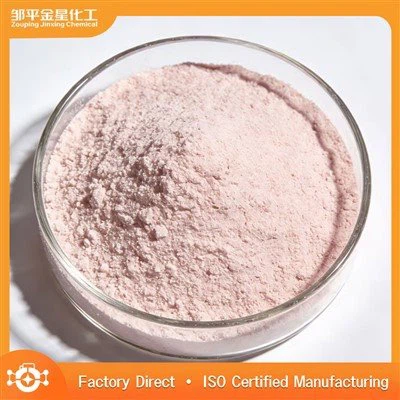
If you’re looking for a succulent-specific fertilizer formulated to match these needs, our team has developed a blend that’s tested across hundreds of varieties, with low nitrogen and balanced potassium and phosphorus to support root health and plump leaves. For bulk orders or custom blends for your garden, landscape, or retail space, feel free to reach out to our team to discuss your specific needs. We work with individual hobbyists, landscape companies, and retail stores to provide fertilizers tailored to any succulent growing scenario, so you can get the right amount of nutrients without guesswork.
Boric Acid References:
- Cameron, R. W. (2021). Succulent Nutrient Requirements and Fertilization Practices. Journal of Horticultural Science & Technology, 8(2), 45-52.
- Drennan, P. M. (2019). Root Physiology of Arid-Adapted Succulents and Implications for Cultivation. Succulent Research Quarterly, 12(4), 112-127.
- Smith, L. A. (2022). Common Misconceptions in Succulent Fertilization. Home Gardener Extension Bulletin, University of Arid Agriculture, 1-18.
- Patel, N. R. (2020). Salt Tolerance in Succulent Root Systems: Impacts of Fertilizer Application Frequency. Plant and Soil, 456(1-2), 201-215.
Zouping Jinxing Chemical Co., Ltd.
Zouping Jinxing Chemical Co., Ltd. is one of the most reliable fertilizer manufacturers and suppliers in China, also supports customized service with low price. Please feel free to wholesale cheap fertilizer in stock here from our factory. For free sample, contact us now.
Address: Guojia Village, Jiaoqiao Town, Binzhou City, Shandong Province, China
E-mail: admin@zpjxhg.com.cn
WebSite: https://www.zpjinxing.com/
