Hey there, if you’re in the market for a used truck—whether you’re a small business owner hauling construction supplies, a landscaper bouncing between job sites, or even a startup moving inventory cross-country—you’ve definitely stumbled on that one burning question: how fast does this thing actually lose value? I’m a used truck supplier, and I hear this nonstop, from guys who’ve been in the game 20 years to first-time buyers stressing over their budget. The truth is, there’s no one-size-fits-all number, but there are real, measurable factors that dictate a truck’s depreciation rate—and I’m gonna break that down like I would over a cup of coffee at my lot, no fancy jargon. Used Truck

First, let’s get one thing straight: depreciation doesn’t just start the second you drive a new truck off the lot. Wait, yeah—actually, it does, but the steepest drop happens in the first three years, not the first 10 minutes like cars. That’s a big difference. I see it every week. A 2021 Peterbilt that sat on my lot last month? It was priced 35% less than its original MSRP, and it only had 42,000 miles. Compare that to a used sedan, which drops 20% the second you drive it home. Trucks hold their value way better, but that early drop is still real. Why? Because new truck buyers are picky about “factory fresh” vibes, and a lot of folks don’t want to deal with the headaches of a brand-new rig’s initial kinks. I once sold a 2018 Freightliner with 120k miles for almost what a new base model would’ve cost—guys prefer the lower price tag and already broken-in engine.
Now, let’s talk numbers, because that’s what everyone actually cares about. From what I’ve tracked on my lot over the past five years, plus data from the truck industry, the average light-duty used truck (think Ford F-150, Chevy Silverado 1500, Ram 1500) depreciates about 15-20% in its first year, then 5-10% each year after that until it hits 10 years old. Heavy-duty trucks, like the F-350, Ram 3500, or semi-tractors? Way slower. I’ve seen heavy-duty rigs drop only 10-12% in their first year, then 3-7% annually. That gap makes sense because heavy-duty trucks are built to work harder, last longer, and buyers know that—no one’s expecting a semi to be a luxury car; they just need it to pull 20 tons consistently.
Mileage is the next big one, and I can’t stress this enough. A truck with 50,000 miles is night and day from one with 150,000 miles, even if they’re the same year and model. Let’s say a 2019 Ford F-150: if it has 50k miles, it’s probably depreciated around 28-30% from new. If it has 150k miles? That jumps to 45-50% depreciation. Why? Because truck engines and transmissions aren’t built to last forever—especially if they’re idling all day on job sites, or towing heavy loads 10 hours a day. I had a customer last year who bought a 2017 F-250 with 80k miles for $28k, and a 2017 F-250 with 160k miles that same week for $19k. That’s a $9k difference for 80k more miles—huge. But here’s the catch: beyond 200,000 miles, depreciation slows down a ton. A 15-year-old truck with 220k miles isn’t that much cheaper than a 10-year-old one with 200k, because parts are still available, and people who know trucks know they can keep running for years more.
Then there’s usage type, which is the make-or-break factor most buyers overlook. A truck used solely for highway driving, moving freight at a steady speed? That’s gonna depreciate way slower than one used for off-road construction, hauling heavy loads daily, or sitting in a field idling all winter. I once had a pair of identical 2020 Ram 2500s: one was owned by a real estate agent who only used it to haul furniture to open houses, put 20k miles a year on it, never towed more than a ATV. The other was owned by a landscaping company that towed 10 tons of mulch every weekend, put 40k miles a year, and had a scratch on the side from a fence. The first one sold for $42k, the second for $32k—same year, same model, 80k total miles. That’s a 24% difference because of how it was used. Condition and maintenance play into that too, obviously. A truck with full service records, no accidents, and fresh oil changes and brake jobs will depreciate 10-15% less than one that’s been neglected, even if the total miles are the same.
Model and brand loyalty matter more for trucks than cars, too. Ford, Chevy, Ram, International—these are the big four for a reason. Trucks from these brands hold their value way better than lesser-known makes, because parts are easier to find, mechanics know how to fix them, and there’s a bigger resale market. I once had a 2019 Hino commercial truck that sat on my lot for six months, while a 2019 Freightliner same size sold in two weeks. The Hino depreciated 40% in its first three years, while the Freightliner was only 28% in that same time. It’s simple: more people want the common brands, so they don’t lose as much value.
Now, let’s get realistic—what does this mean for you, the buyer? If you’re looking to save money, the sweet spot for depreciation is usually when a truck is 3-5 years old, with 60k-100k miles. That’s when the steep first-year drop is over, and it’s still got plenty of life left. I see these trucks sell almost every week, because buyers are getting a rig that’s almost new, but not paying the new price’s huge premium. For example, a new 2024 F-150 XL is around $40k. A 2020 F-150 XL with 70k miles? You can get that for $27k. That’s a $13k difference, and the truck’s only four years old—most warranties are even still partially transferable, so you don’t have to worry about big repair costs right away.
If you’re planning to keep the truck for 10+ years, though? Depreciation is way less of a big deal. Because by the time you hit year 6, depreciation slows down to almost nothing. A 10-year-old truck that’s been well maintained is gonna hold its value, even if it’s got high miles. I have a 2012 Ram 1500 that I’ve had sitting for a while—someone just offered me $8k for it, and I paid $10k for it two years ago. I’m not selling it for that, because I know I can keep it running for another five years, and it’s still worth something. So if you’re the type to hold onto a truck until it can’t drive anymore, don’t stress too much about depreciation rates—just get one that fits your needs and take care of it.
Wait, let’s talk about myths here, because I hear these all the time. First myth: “Diesel trucks depreciate slower than gas trucks.” That’s not always true. Diesel engines are built for heavy work, so they do hold value better for commercial use, but if you’re a private buyer using a diesel truck to commute to work, you’re paying more for the diesel upfront, and you won’t see that extra value in depreciation. I’ve seen gas light-duty trucks sell for almost the same price as identical diesel ones after five years, because most private buyers don’t need diesel’s extra torque. Second myth: “More miles = a bad truck.” Not necessarily. A truck with 150k highway miles is way better than one with 80k city miles, because highway miles are steady, not stop-and-go, which is harder on engines. I once sold a 2018 Ford F-150 with 180k highway miles to a guy who uses it for a towing business, and he paid full value for it—because he knew highway miles mean it’s not been abused.
Now, as a used truck supplier, I’ll be honest with you: I don’t just look at spreadsheets to price my trucks. I look at actual sales from the past three months, what other dealers in the area are charging, and what buyers are actually asking for. Last quarter, semi-tractors with under 100k miles were flying off the lot, so their depreciation dropped a little because demand was high. A few months ago, we had a surplus of light-duty trucks, so I had to knock $2k off the price to move them, which temporarily made their depreciation look higher. So depreciation rates aren’t static—they shift based on supply and demand, the local market, and even things like fuel prices. When diesel prices spiked last year, pickup trucks’ depreciation went up a little, because buyers were holding off on buying anything that used a lot of fuel.
So putting it all together, the short answer to “what’s the depreciation rate of a used truck?” is: it depends, but here’s a rough baseline. Light-duty (1/2 ton): 15-20% year 1, 5-10% years 2-10, slows after 10 years. Heavy-duty (3/4 ton and up, semi): 10-12% year 1, 3-7% years 2-10, slows way after 10. Mileage, usage, condition, brand, and market demand will shift that number up or down, sometimes by 10-15%. The sweet spot for buying is almost always the 3-5 year mark, where you avoid the steepest drop and get a reliable truck for thousands less than new.
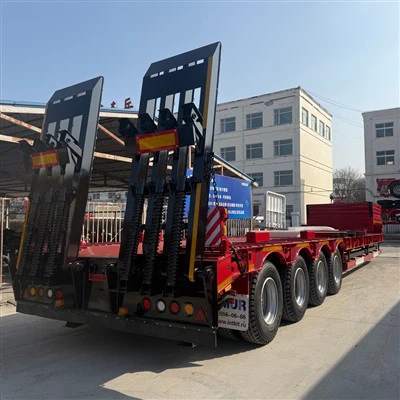
At the end of the day, buying a used truck isn’t just about the depreciation rate—it’s about getting one that fits your job, your budget, and will last you as long as you need it. If you’re looking to browse our inventory, chat about which truck makes sense for you, or get a customized quote, reach out anytime. We work with all kinds of buyers, from small business owners to first-time rig operators, and we’ll be straight with you about what a truck’s worth, no hidden fees or confusing fine print. Don’t overpay for a new truck’s markup, and don’t settle for a beat-up rig that’ll cost you thousands in repairs later—let’s find the right used truck for you, no guesswork.
Used Motor Grader References
Automotive News. (2023). Light and Heavy-Duty Truck Depreciation Trends 2023.
International Truck and Engine Corporation. (2022). Used Commercial Truck Value and Lifespan Report.
J.D. Power. (2023). 2023 Used Vehicle Valuation Guide: Pickups and Commercial Trucks.
Heavy Leading Company Limited
Heavy Leading Company Limited is one of the most experienced used truck manufacturers and suppliers in China, featured by quality products and low price. Welcome to buy discount used truck in stock here and get pricelist from our factory. We also accept customized orders.
Address: Guotang, Quanpu, Liangshang, Jining City, China
E-mail: truckalex@heavyleading.com
WebSite: https://www.truckalex.com/
