Hey there, if you’re deep in the pyrolysis plant game or just starting to wrap your head around how waste turns into power (or oil, gas, you name it), you’ve probably asked yourself one big question: “What the hell do I actually need to make that power work?” Trust me, I’ve been around this block enough times to know that the pyrolysis reactor gets all the hype—but the auxiliary equipment? That’s the stuff that either makes your whole setup run like a dream or leaves you staring at a broken machine at 2 a.m. I run a pyrolysis plant auxiliary equipment supply company, and my team and I field calls every single day from folks who skipped a key piece and paid for it later. So let’s cut the jargon, keep this real, and break down exactly what you can’t skip if you want your pyrolysis plant’s power generation to not just work, but work well. Pyrolysis Plant Auxiliary Equipment
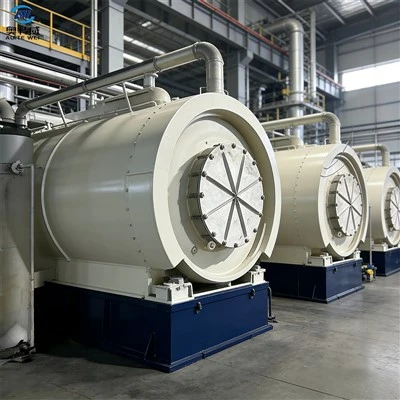
First off, let’s get on the same page: pyrolysis for power isn’t just heating waste in a chamber to make syngas, right? The syngas is the fuel that powers your genset, boiler, or whatever you’re using to turn that chemical energy into electricity. But before that syngas ever touches your power unit, it’s got all kinds of junk in it—tar, particulate matter, moisture, even trace contaminants that’ll clog or destroy your genset faster than you can say “uptime.” That’s why the first big chunk of auxiliary gear is all about gas conditioning, and let’s be real, skimping here is the #1 mistake new plant owners make.
I’ve seen guys show up to our shop with a $50k reactor and a $100 used genset, then wonder why their genset dies after three weeks. The culprit? No proper gas cleaning. Let’s start with the basics: gas coolers. Raw syngas coming straight out of the reactor is like 500-800°C (that’s hot enough to melt some plastics, fyi). If you don’t cool it down fast, two bad things happen: first, tar that’s in the syngas stays vaporous, and second, it can damage downstream gear like filters or compressors. We supply two types of coolers most: shell-and-tube and air-cooled. Shell-and-tube is better for steady, large-scale plants because it’s more efficient, but air-cooled is perfect for smaller, modular setups where space is tight and water is scarce. Pro tip: don’t cheap out on the heat exchanger material. Use stainless steel for the tubes, not plain carbon steel—tar and acidic gases will eat through carbon steel like butter over time.
Next up after cooling is the gas scrubber. This is where you knock out most of the particulates, moisture, and lighter tar vapors that didn’t condense in the cooler. A lot of people go for simple water scrubbers, but wait—raw syngas has hydrogen sulfide and ammonia, right? Those are corrosive, and they’ll mess with your genset’s combustion system if they’re not removed. So we usually recommend a packed-bed scrubber if you’re aiming for reliable power. Packed beds have small, high-surface-area media (like plastic or ceramic rings) that let the syngas mix with a cleaning solution—sometimes just water, sometimes a mild chemical mix to knock out those nasty contaminants. And yeah, we sell those cleaning solutions too, because if you don’t get that mix right, you’re back to square one.
Then there’s the final step before syngas goes to power generation: the tar removal and fine filtration unit. Even after the scrubber, tiny tar droplets and ultra-fine particulates are still there. Tar is a genset’s worst enemy—it sticks to valves, injectors, and pistons, leading to reduced power output, more maintenance, and eventually total failure. We supply two types of tar filters: ceramic candle filters (great for high-temperature syngas, way more durable than fabric) and activated carbon filters (for the last trace tar and contaminants). Here’s the thing: ceramic filters need regular backwashing, right? So you can’t just install them and forget. Your auxiliary setup has to include a backwashing system—usually with compressed air or nitrogen—to clear out the trapped tar and particulates every few hours. If you skip that, the filter clogs, pressure goes up, and your reactor’s efficiency drops fast.
Once your syngas is clean and cool enough, it’s time to get it to the power unit, which is where the next set of auxiliary equipment comes in. Let’s talk about gas blowers and compressors, because syngas is light, and you need consistent flow to feed your genset or boiler. If you’re running a small-scale setup (under 1 MW, say), a good centrifugal blower works fine. But if you’re scaling up to 2 MW or more, you’ll need a positive displacement compressor to maintain steady pressure, no matter how much gas the reactor is spitting out. I’ve heard horror stories of blowers that can’t keep up, leading to pressure swings that mess up the reactor’s pyrolysis temperature—another quick way to kill efficiency. Also, make sure your blower or compressor has a built-in safety relief valve. If the syngas line gets blocked, pressure will spike, and you don’t want that in your plant—safety isn’t negotiable here.
Wait, what about power generation-specific auxiliary gear, not just the gas side? Let’s not forget the genset itself, but even the best genset won’t run without supporting equipment. First, the fuel gas skid. This is a packaged unit that has pressure regulators, flow meters, and maybe a small filter to make sure the gas going to the genset is exactly the right pressure (gensets for natural gas work a certain way, syngas is different, so you can’t just hook it up directly). We pre-assemble these skids at our shop so our customers don’t have to mess with plumbing and calibration on-site—saves them days of work, and less chance of leaks. Leaks? Another big no-no. Syngas is flammable, and even toxic in high concentrations, so every auxiliary setup needs gas leak detection sensors. We supply sensors that trigger alarms and even shut down the whole system if levels get too high—non-negotiable for compliance and safety, and most places require them to operate.
Then there’s the cooling system for the genset. Gensets get hot—really hot—when they’re running all day, and if you don’t cool them properly, they’ll overheat and shut down. For small plants, a simple radiator system works, but for larger setups, you’ll need a closed-loop cooling system with a cooling tower. Also, don’t skip the oil cooling system for the genset engine itself. Engine oil keeps all the moving parts lubricated, but over time it gets hot and breaks down, so you need an oil cooler to keep it at the right temperature. I’ve seen plant owners use a household radiator for the genset—big mistake. Genset cooling systems are designed for consistent, heavy loads, and your regular HVAC unit just can’t handle that.
Wait, what about waste heat recovery? A lot of plant owners think that after the genset makes power, that’s the end of the line—but no, you can get extra power (or heat for your plant’s own use) from the waste heat. That’s called a waste heat recovery unit (WHRU), and it’s another auxiliary piece that’s worth every penny. The genset’s exhaust is like 400-500°C, and you can use that heat to make steam, which can power a steam turbine for extra power, or just heat the reactor and the gas conditioning system so you don’t have to use extra fuel for that. We sell modular WHRUs that fit most genset sizes, and our customers often tell us this adds 10-20% more power output—money that would otherwise go to waste, basically.
Now, let’s talk about the stuff that makes all of this run smoothly day-to-day: control systems. I know, control systems are auxiliary, but they’re the brain of your whole operation. You can have the best coolers, filters, and blowers, but if you don’t have a system that monitors pressure, temperature, gas composition, and flow in real time, you’re flying blind. Modern pyrolysis plants use PLC (programmable logic controller) systems, which let you automate everything—from backwashing the tar filters to adjusting the blower speed to match the reactor’s output. Some of our customers go for basic PLCs, but if you’re scaling up, you might want a SCADA system too, which lets you monitor the whole plant remotely from your phone or laptop. That’s a game-changer, especially if you have multiple plants or you’re not on-site 24/7.
Wait, did I miss anything? Oh, safety auxiliary equipment! We touched on leak sensors, but there’s more. Fire suppression systems—dry chemical or CO2 systems that can put out a syngas fire fast, before it spreads. Emergency shutdown (ESD) systems that cut off gas flow and shut down the reactor if something goes wrong, like pressure spiking or a sensor picking up dangerous levels of contaminants. And let’s not forget personal protective equipment (PPE), but that’s more for the plant staff than the equipment, though we do supply specialized PPE for working with syngas and hot components.
Let me tell you a quick story to drive this home. A customer reached out to us last year, had a 1 MW pyrolysis plant that’d been down for two months. They’d built their own setup, used a basic water scrubber, no ceramic filters, just a cheap fabric filter. The tar and particulates from the syngas had clogged the filter in weeks, and when they finally replaced it, the leftover tar gunked up their genset’s injectors so bad they had to do a full engine rebuild. They spent twice what they would’ve spent on a proper auxiliary setup, just to get back up and running. We supplied them with a packed-bed scrubber, ceramic candle filters with backwashing, gas skid, and leak detection. Now their uptime is over 95%, and they’re adding a waste heat recovery unit next month to boost output.
Look, I get it—when you’re starting a pyrolysis plant, capital costs are tight, and it’s tempting to cut corners on auxiliary gear to save money. But here’s the hard truth: the reactor is just the part that makes the syngas. The auxiliary equipment is the part that turns that syngas into consistent, reliable power. Skimp on that, and you’re looking at downtime, costly repairs, lost revenue, and even safety risks.
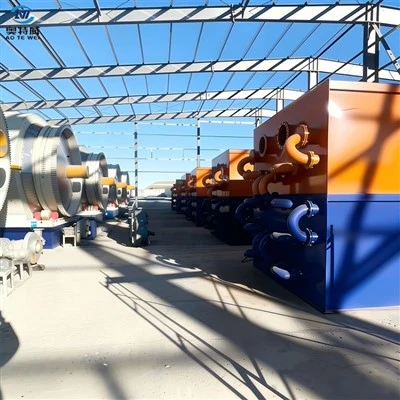
If you’re planning or scaling a pyrolysis plant for power generation, or you’ve already got one and you’re dealing with low uptime or bad performance, hit us up for a chat. We don’t do pushy sales stuff—we’ve been in this space for years, we’ve fixed more bad auxiliary setups than we can count, and we’ll tell you exactly what you need, what you don’t, and how to get it without overpaying. No gimmicks, no hidden fees, just solid advice from people who actually work with this gear every day.
Refining Plant References:
- Pyrolysis Oil and Syngas Conditioning for Power Generation, International Energy Agency Bioenergy Task 37, 2021
- Auxiliary Equipment Selection for Small-Scale Waste-to-Energy Pyrolysis Plants, Journal of Waste Management, Vol. 112, 2020
- Safety and Efficiency Standards for Syngas-Fueled Genset Systems, National Fire Protection Association (NFPA) 85, 2022
Shangqiu Aotewei Environmental Protection Equipment Co., Ltd.
Shangqiu Aotewei Environmental Protection Equipment Co., Ltd. is one of the most professional pyrolysis plant auxiliary equipment manufacturers and suppliers in China, also supports customized service. Please feel free to buy CE approved pyrolysis plant auxiliary equipment at competitive price from our factory. Welcome to contact us for pricelist.
Address: No.88 Longhai Road, Liangyuan District, Shangqiu City, Henan Province, China
E-mail: colin@henanpower.com.cn
WebSite: https://www.aoteweitech.com/
