If you’ve ever spent time in a hardware verification or semiconductor validation lab, you’ve probably heard the term “test bench driver” thrown around—but it’s one of those phrases that gets used so casually that the actual role of a test bench driver can feel vague, even to people deep in the industry. I run a test bench supply company, and for years, I’ve talked to engineers who confuse test bench drivers with generic signal generators, or think they’re just a fancy power supply. That misunderstanding matters, because a good test bench driver isn’t just a tool—it’s the backbone of accurate, repeatable hardware testing. Let’s break down what a test bench driver actually is, why it’s non-negotiable for reliable validation, and what makes our solutions different for teams that depend on consistent results. Test Bench
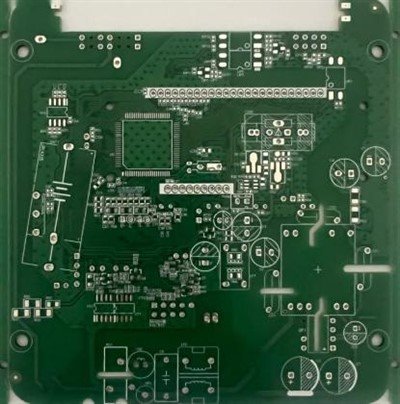
At its core, a test bench driver is a specialized piece of test equipment designed to source or measure precise electrical signals—voltage, current, pulse width, frequency, and more—to stimulate a device under test (DUT) and capture how that DUT responds. Unlike general-purpose tools (like a cheap signal generator you might pick up for a hobby project), a test bench driver is built for lab or production environments where consistency and precision aren’t nice-to-haves—they’re requirements. Let’s use a real example to make this concrete: say a team is testing a new automotive ECU that manages engine temperature. To verify the ECU works, they need to feed it a simulated 0 to 5V signal from a temperature sensor (representing a cold engine, warm engine, overheating engine) and make sure the ECU adjusts fuel injection correctly. A basic signal generator might output 0 to 5V, but it can’t hold that voltage steady if the DUT draws extra current—nor can it simulate tiny, real-world fluctuations (like the small voltage drops caused by long wires in a car) that could break the ECU. A test bench driver, though, is calibrated to deliver that exact voltage, compensate for load changes in milliseconds, and replicate those subtle real-world conditions so engineers can test every edge case.
What sets test bench drivers apart from other test gear is their focus on bi-directional control and integration. Many people assume drivers only send signals to the DUT, but modern test bench drivers also measure the DUT’s output and feed that data back to the test bench’s control software. That closed-loop functionality is critical. For instance, if you’re testing a power management IC that’s supposed to output 12V to a battery, the driver doesn’t just send a 12V input to the IC—it also measures the IC’s actual 12V output in real time, compares it to the target, and adjusts the input signal automatically. This eliminates human error, cuts down on test time, and ensures every DUT is tested under identical conditions. For production teams, that means testing thousands of devices a day without a single failed test due to inconsistent signal quality.
Another key feature is scalability and modularity. Test bench drivers aren’t one-size-fits-all. A small startup testing low-power wearables might only need a single-channel driver that outputs low voltages, while a aerospace team testing avionics might need a 32-channel driver that can handle high-voltage pulses up to 1000V. That’s why good test bench driver suppliers build systems with interchangeable modules—engineers can start with a 4-channel base unit and add channels as their testing needs grow, rather than replacing the entire driver every time they take on a new project. At our company, we’ve built our drivers with this scalability in mind, so teams can adapt their test benches without overspending on gear they don’t need right away.
Now, let’s talk about the common pain points we hear from engineers who are using off-the-shelf tools instead of purpose-built test bench drivers. The number one complaint is inconsistency. A general-purpose function generator might output the same signal once, but after a hundred test runs, it drifts by 0.5V—enough to cause a DUT to fail a test it would have passed with the correct signal. That’s a huge problem for production lines, where even a 0.1% error rate can lead to thousands of faulty devices being shipped. Another pain point is integration. Most general-purpose tools don’t play nice with popular test automation frameworks like LabVIEW or Python-based test scripts. That means engineers have to spend hours writing custom code to sync their tools, leading to delays and more opportunities for human error. Test bench drivers, on the other hand, come pre-integrated with all the major automation platforms, so teams can set up a full test bench in hours instead of days.
Wait, you might be wondering—why would a test bench supplier care about these pain points? Because we’ve lived them. For the first 10 years of our business, we worked directly with engineering teams to troubleshoot their test setups, and we saw over and over again how choosing the wrong driver could derail a product launch. We built our test bench drivers to solve those exact problems. For example, our latest line of drivers has a 16-bit resolution and a 1 microsecond response time, so they can adjust to load changes faster than any off-the-shelf tool on the market. We also include built-in calibration software that updates every 90 days automatically, so engineers don’t have to send their drivers out for third-party calibration, saving them time and money.
Let’s look at a real customer example to put this into context. Last year, a team at a medical device company reached out to us because they were having trouble testing a new insulin pump’s dose delivery system. Their current setup used a generic power supply and a separate signal generator, and they were seeing a 3% error rate in dose accuracy during testing. That’s a big problem for medical devices—regulators require accuracy within 1% to ensure patient safety. They switched to one of our 2-channel test bench drivers, which combines both voltage and current sourcing/measurement in one unit. Within two weeks, their error rate dropped to 0.08%, well below regulatory requirements. They told us that not only did their test time cut in half, but they also passed their FDA audit on the first try, thanks to the consistent, traceable data our drivers generate. That’s the kind of impact a purpose-built test bench driver can have.
Another often-overlooked aspect of test bench drivers is traceability. For industries like automotive, aerospace, and medical, every test result has to be documented and traceable to meet regulatory standards like ISO 26262 (automotive) or 21 CFR Part 820 (medical devices). Generic tools don’t track calibration data or signal output history, but good test bench drivers log every signal they send and measure, with timestamps and serial numbers for every DUT. That means when an auditor asks, “Show us how you tested this batch of devices,” you can pull a report in two clicks, instead of spending days digging through spreadsheets and logs. At our company, we design all our drivers with traceability as a core feature, not an afterthought.
Now, let’s address a common misconception: test bench drivers are only for large labs or production lines. That’s just not true. Even small teams doing research and development can benefit from a test bench driver. If you’re designing a new IoT sensor and need to test its ability to handle low-voltage fluctuations, a test bench driver can replicate those fluctuations accurately, which a generic signal generator can’t do. It’s not about the size of your team—it’s about the accuracy of your tests. For startups, our entry-level test bench drivers are priced to fit small budgets, with the same precision and integration as our industrial-grade units. We’ve had teams of 3 engineers launch three different products using our drivers, because the consistency helped them catch bugs early, before they spent money on mass production.
So, how do you know if you need a test bench driver, and how do you choose the right one? First, ask yourself three questions: Do you need to source or measure precise, repeatable electrical signals for your DUT? Do you need to integrate your test equipment with automation software to cut down on test time? Do you need traceable, audit-ready data for regulatory compliance? If you answered yes to any of these, a test bench driver is probably a better fit than a general-purpose tool. When choosing a supplier, look for one that offers modularity (so you can expand as your needs grow), pre-integration with common automation platforms, and dedicated support for your industry. At our company, we work with teams across automotive, medical, aerospace, and semiconductor industries, so we can tailor our drivers to meet your specific testing requirements, whether you’re testing a single low-power sensor or 1000 automotive ECUs a day.
At the end of the day, a test bench driver is more than just a piece of test equipment—it’s the foundation of reliable hardware validation. Without it, you’re relying on inconsistent tools that can lead to missed bugs, failed audits, or even products that don’t work as intended. For over 15 years, our team has been building test bench drivers that solve the real problems engineers face every day. We don’t just sell equipment—we work with you to understand your testing goals, recommend the right driver for your setup, and provide ongoing support to make sure your test bench runs smoothly.

If you’re tired of generic test tools that cause more problems than they solve, and you’re ready to invest in a test bench driver that delivers consistent, accurate results for your DUT testing, we’re here to help. We’re currently working with teams on projects ranging from R&D validation to high-volume production testing, and we’d love to learn more about what you’re building. Reach out to our team to discuss your needs, and we’ll put together a customized solution that fits your budget and timeline.
Test Bench References
- IEEE Standard for a Universal Verification Methodology (UVM) 1.2, IEEE Computer Society, 2015.
- ISO 26262:2018, Road vehicles — Functional safety, International Organization for Standardization, 2018.
- “Test Equipment Selection for Validating High-Power Semiconductor Devices,” Journal of Electronic Testing, Vol. 37, No. 2, 2021, pp. 187-202.
- “Closed-Loop Test Systems for Automotive ECUs,” SAE International Journal of Passenger Cars – Electronic and Electrical Systems, Vol. 10, No. 2, 2017, pp. 456-463.
- “Calibration Practices for Precision Test Equipment,” National Institute of Standards and Technology (NIST) Technical Note 1832, 2019.
Jian Xin Technical Limited
Jian Xin Technical Limited is well-known as one of the leading test bench manufacturers and suppliers in China. If you’re going to buy high quality test bench with low price, welcome to get pricelist from our factory. Also, customized service is available.
Address: Jianxin Industry Park, Longtan Load, Yuhang District, Hangzhou, China. 311121
E-mail: marketing@jianxintechnical.com
WebSite: https://www.jianxintechnical.com/
