When I first started getting dozens of DMs a week from people asking, “What motor should I put in my rolling shutter machine?” I’ll admit, I used to just send over a spec sheet and call it a day. But after five years in the rolling shutter game—answering questions for residential garage door installers, warehouse managers, café owners, even a few tiny home builders— I’ve learned this question isn’t one-size-fits-all. It depends on way more than just how heavy your shutter is, right? Let’s break this down like we’re grabbing a coffee and chatting, no stuffy engineering jargon that makes your eyes glaze over. Rolling Shutter Machine
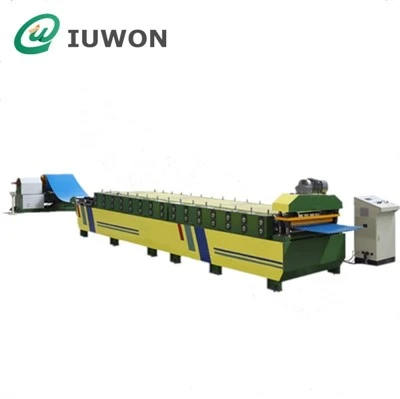
First off, let’s ground this: rolling shutters aren’t all the same. There’s the thin, light ones you see on small storefronts that open and close in 10 seconds, and then there’s the thick, industrial-grade ones on a loading dock that need to haul 500+ pounds up and down. That’s the biggest variable, but there are more little things that matter too—how often do you use it? 10 times a day? 50? Is there space for a big, clunky motor, or do you need something slim to fit a tiny head housing? And don’t forget about noise—if you’re putting that shutter on a bakery where customers are sitting nearby, a rattle that sounds like a truck backing up at 2 a.m. isn’t going to fly.
Let’s start with the most common motor we recommend for 80% of our standard residential and small commercial clients: the AC induction motor. Wait, before you zone out—AC vs DC? AC is the one that runs off standard household or warehouse power, right? Induction motors are the old reliables, the workhorses that don’t need a battery, don’t have super complicated parts, and just keep going. Here’s why they’re perfect for most rolling shutters. They deliver constant, steady torque, which is exactly what you need for hauling heavy shutters without jerking or straining. If you’ve ever seen a shutter that lurches when it opens, that’s usually a motor with inconsistent torque, and induction motors don’t do that. They’re also pretty low-maintenance—you’re not gonna have to replace brushes or do deep repairs every year like some other types. For small to medium shutters (up to like 300 pounds, or a 10-foot wide storefront), this is the sweet spot. We put these in most of our standard units, and the feedback we get is that they last 10+ years with basic annual lubrication—way longer than some of the flashier options people hype on TikTok.
But wait, what if your shutter is on the heavier side? Like, the big industrial loading dock ones that are 15+ feet wide and weigh 500+ pounds, or you’re using it constantly—multiple times an hour, all day, every day? For that, we step up to a gear-driven AC motor, specifically a heavy-duty inline gear motor. The gearbox is key here because it multiplies torque without making the motor spin too fast. A regular AC induction motor spins super fast, right? Like 1,750 rotations per minute, which is way too fast for a shutter. The gearbox slows that spin down to like 10 to 15 rotations per minute, turning that high-speed, low-torque spin into low-speed, high-torque that can haul 600 pounds no problem. These are built for 24/7 use too—we installed a set of these on a major distribution center last year, and they’re operating 12 hours a day, five days a week, and they haven’t skipped a beat in 18 months. The only downside? They’re a little bulkier, so you need space for the gear housing, and they’re a touch noisier than standard AC motors, but if you’re in a warehouse, no one’s gonna care about that.
Now, let’s talk about the ones we don’t recommend as first picks, even though people ask about them all the time: DC motors. Wait, why? DC motors are usually battery-powered, right? People love them for off-grid setups, like a tiny home shutter or a remote cabin where there’s no power. That makes total sense! If you don’t have access to consistent electricity, DC is the way to go. But for anything that’s connected to power regularly, there are downsides. First, they have batteries that need replacing every 3 to 5 years. I’ve had a customer call us in a panic because their DC motor died mid-storm, and it turned out the battery had corroded and no one checked it. Second, DC motors don’t hold up to heavy, frequent use as well as AC. If you’re running your shutter 40 times a day, the battery dies faster, and the motor wears out sooner. We only recommend DC for specific use cases—off-grid, light-duty, occasional use. If you’re a café opening and closing your shutter twice a day, or a warehouse running it all day, skip the DC unless you have a backup generator that kicks in every time power cuts out.
Another type people ask about is brushless motors. These sound fancy, and they do have perks—they’re super efficient, last longer, generate less heat. But here’s the catch: they’re way more expensive, and for most rolling shutter applications, you don’t need that level of performance. We only use brushless motors for very specific, high-demand setups, like shutters on a fire station that need to work immediately no matter what, or ultra-lightweight shutters where every pound counts (like for a RV or a tiny home). If you’re a small business owner just looking for a reliable shutter that won’t break in 5 years, you’re paying extra for a feature you’ll never use.
Now, let’s get into the things that aren’t just about motor type—because even the best motor is useless if it’s not matched to your shutter. First, torque rating. This is non-negotiable. If your shutter is 400 pounds, you need a motor that’s rated for at least 500 pounds of torque (to give a little extra buffer, so it doesn’t strain every time you run it). If you get a motor rated for 300 pounds for a 400 pound shutter, it’s gonna overheat, burn out fast, and that’s a costly repair. I’ve seen this mistake a hundred times—someone buys a cheap motor online, checks the “horsepower” number, which is meaningless here, and installs it on a heavy shutter, only to have it die in 6 months. Horsepower doesn’t tell you how much pulling power the motor has for that slow, steady lift—torque is the number you need to look at.
Then there’s integration with controls. Wait, do you want your shutter to have a remote? A phone app? Hardwired switches? The motor you pick needs to work with the control system you want. Most AC motors are compatible with all the standard controls, but some DC motors only work with their own brand of batteries and controllers, so you can’t swap them out later if you want a smart app. Also, if you live in an area with frequent power outages, some motors have a manual release—super important. You don’t want your shutter stuck halfway down during a storm because the motor died and you can’t pull it up manually. All the motors we sell now have that manual release, but it’s something to check if you’re buying from someone else.
Noise level is another big one I wish more people thought about. If you’re putting a shutter on a storefront that’s next to apartments, or a café where people are eating, a motor that’s 85 decibels (that’s like the noise of a busy street) is gonna get complaints. Standard AC motors for light shutters are usually 50 to 60 decibels, which is as loud as a normal conversation. The heavy industrial gear motors are around 70 decibels, which is fine for warehouses but not for residential or small commercial with nearby spaces. We now offer “low-noise” versions of our standard AC motors with extra insulation on the gearbox, and those have been a game-changer for restaurants and boutique shops. I had a customer in Brooklyn tell me their old shutter motor was so loud, it scared away regulars at their coffee shop, and after we replaced it with the low-noise AC model, they haven’t gotten a single complaint.
What about maintenance? Let’s be real, no one wants to spend hours maintaining a shutter motor. The AC induction and gear motors we recommend need a quick check-up once a year—we lubricate the gearbox, tighten any loose bolts, test the torque, and that’s it. No annual battery changes, no brush replacements, nothing complicated. DC motors need that battery replacement every 3 to 5 years, and you have to check the battery terminals for corrosion twice a year, which is a hassle. Brushless motors need almost no maintenance, but again, they’re way more expensive, so it’s only worth it if you need that extra longevity for a specific reason.
Wait, let’s address the cheap motor myth. I know it’s tempting to go on Amazon and buy a $100 motor for your $500 shutter, but trust me, that’s a recipe for disaster. Those cheap motors are usually underrated on torque, they burn out fast, and they don’t have safety features like thermal overload protection. Thermal overload is a big one—if the motor gets too hot from running too much, it shuts off automatically so it doesn’t catch fire. The cheap no-name motors don’t have that, and I’ve heard horror stories of motors overheating and melting down, damaging the shutter, or even causing small fires. Our motors all have thermal overload, and we test every single one before it leaves our warehouse, so you don’t have to worry about that.
Let’s wrap this up with some quick cheat sheets, because I know you’re scrolling to get the bottom line. If you’re building or replacing a rolling shutter right now, ask yourself these three questions:
- How much does my shutter weigh? If it’s under 300 pounds, standard AC induction motor is perfect. Over 300 pounds, go for heavy-duty gear-driven AC motor.
- Do I have consistent power? If yes, skip DC. If no (off-grid, remote cabin), DC is only if it’s light use—otherwise, get a backup generator and go AC.
- Do I care about noise? For residential or small commercial near living spaces, get the low-noise version of your AC motor. For warehouses or industrial use, standard gear motor is fine.
And one last thing—don’t forget to factor in installation. Even the best motor won’t work right if it’s installed wrong. We always recommend having a professional install your rolling shutter and motor, not doing it yourself. A lot of people try to save a few hundred bucks by installing it, and then they have alignment issues, the shutter tilts, or the motor burns out in a month. We had a customer a couple years ago who installed a motor himself, aligned it wrong, and the shutter got stuck halfway, and when he tried to force it, he stripped the gearbox, costing twice as much to fix as if he’d just hired a pro in the first place.
At the end of the day, the “best” motor isn’t the fanciest or the most expensive—it’s the one that fits your specific needs, your shutter size, and your budget. We’ve worked with every type of user, from people installing a single shutter on their garage to major retail chains with 50 warehouse shutters, and we always match the motor to their exact use case, not a one-size-fits-all spec. If you’re not sure which one you need, just reach out. We can walk you through your shutter size, your usage, your space, and help you pick the right motor without all the confusing jargon. No pressure, just honest advice for rolling shutters.

Now, if you’re ready to order, or just have questions about your specific setup, feel free to connect with our team to chat through your project. We can send over custom specs, answer any last-minute questions, and make sure you get the right motor that’ll last for years.
C Z Purlin Roll Forming Machine References
Rolling Shutter Motor Selection Guide. International Door Association, 2022.
AC vs DC Motor Performance for Commercial Garage Doors. Power Transmission Engineering, 2021.
Low-Noise Motor Solutions for Small Commercial Applications. HVAC&R Research, 2023.
Hanghzou IUWON Technology Co., Ltd.
Hangzhou IUWON Technology Co., Ltd. is one of the most professional rolling shutter machine manufacturers and suppliers in China. Please feel free to buy custom made rolling shutter machine made in China here from our factory. For price consultation, contact us.
Address: No.755, Xintangtou Village, Xinjie Street, Xiaoshan District, Hangzhou, Zhejiang
E-mail: sales@iuwon.com
WebSite: https://www.iuwonforming.com/
