If you’re working in fluid power — whether you’re designing industrial automation, mobile machinery, or marine equipment — you’ve likely come across the term “hydraulic motor torque.” For those not deeply embedded in hydraulic components supply, it might sound like just another technical spec on a datasheet. But getting the calculation right isn’t just about numbers: it’s about matching a motor to your load, avoiding costly downtime, and ensuring your equipment performs exactly as it should. As a supplier of hydraulic components, we talk about torque calculation with customers every day, and I’ve seen firsthand how a small misunderstanding here can lead to big problems down the line. Hydraulic Components
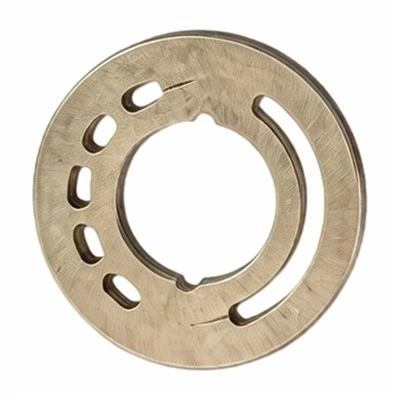
To start, let’s break down what hydraulic motor torque actually is. Unlike an electric motor that generates torque from electrical current, a hydraulic motor converts the pressure and flow of hydraulic fluid into rotational force. That rotational force, or torque, is what lets a machine lift a heavy load, turn a conveyor, or drive a wheel on an excavator. The key here is that torque isn’t a fixed value — it depends on two core inputs: the pressure of the hydraulic fluid entering the motor, and the motor’s displacement, which is the volume of fluid it takes to make one full rotation.
Let’s make this concrete. Displacement is usually measured in cubic inches per revolution (in³/rev) or milliliters per revolution (mL/rev). A motor with a larger displacement needs more fluid to turn once, so it can generate more torque — same as a bigger engine needs more fuel to produce more power. Pressure, measured in pounds per square inch (psi) or bars, is the force that pushes that fluid through the motor. If you increase the pressure, you increase the force pushing the motor’s internal parts, which in turn increases the torque.
The basic formula for hydraulic motor torque is simpler than many people think, but it’s critical to apply it correctly. The standard equation we use with customers is:
Torque (lb-ft) = (Pressure (psi) × Displacement (in³/rev)) / (2 × π)
Wait, let’s check that math: π is approximately 3.1416, so 2×π is about 6.2832. That means for every pound per square inch of pressure, and every cubic inch of displacement, you get roughly 0.159 lb-ft of torque. Let’s test with an example: say you have a hydraulic motor with a displacement of 10 in³/rev, and you’re running it at 2,000 psi. Plugging in the numbers: (2000 × 10) / 6.2832 ≈ 3,183 lb-ft of torque. That’s enough to drive a heavy conveyor belt or power a small auger.
But here’s where things get tricky — and where a lot of first-time buyers go wrong. That formula gives you the theoretical torque, sometimes called “ideal torque,” but real-world conditions mean you’ll never hit that number exactly. Hydraulic systems have losses: fluid leaks past internal seals (called slippage), friction in the motor’s bearings and gears, and pressure drops in hoses and valves before the fluid even reaches the motor. As a supplier, we always factor in a efficiency rating, usually between 80% and 95% depending on the motor type. Gear motors, for example, are generally around 85-90% efficient, while piston motors (used for higher torque applications) can hit 92-95% efficiency. So the actual usable torque is theoretical torque multiplied by efficiency.
Let’s adjust that example to be realistic. If that same 10 in³/rev motor is 85% efficient, the real torque would be 3,183 × 0.85 ≈ 2,706 lb-ft. That’s the number you need to compare against your application’s required torque, not the theoretical one. Why does this matter? If you size your motor using only theoretical torque, you might end up with a motor that seems right on paper, but can’t actually move your load because it’s accounting for less than the real losses. We see this all the time: a customer tries to use a cheap, low-efficiency gear motor for a high-torque job, and it stalls under load. We end up replacing it with a higher-displacement, higher-efficiency piston motor, and the problem is solved.
Another common mistake is forgetting to account for additional loads on the motor. Your application’s required torque isn’t just the torque needed to move the primary load. You also have to add torque for friction in the system, inertia when starting or stopping, and any external resistance. For example, if you’re powering a hydraulic winch to lift a 10,000 lb load, you’ll need to calculate the torque needed to lift that load, plus the torque needed to overcome the winch drum’s bearing friction, plus the torque needed to accelerate the load from a standstill. If you skip those extra factors, your motor will be underrated, and you’ll risk damage to both the motor and the rest of the system.
Let’s walk through a practical application to make this even clearer. Suppose you’re designing a mobile wood chipper, which uses a hydraulic motor to turn the chipper drum. The drum has a diameter of 2 feet, and you need to exert 5,000 lb of force on the wood to chip it. First, calculate the torque needed for that force: torque = force × radius. The radius of the drum is 1 foot, so torque = 5,000 lb × 1 ft = 5,000 lb-ft. Now add in additional loads: let’s say friction in the drum’s bearings adds 500 lb-ft, and inertia when starting adds another 300 lb-ft. Total required torque is 5,000 + 500 + 300 = 5,800 lb-ft.
Now use the torque formula to pick a motor. Let’s assume we’re using a piston motor, which has 90% efficiency. Rearranging the torque formula to solve for displacement: Displacement = (Torque × 2 × π) / (Pressure × Efficiency). Let’s say your hydraulic system runs at a maximum pressure of 3,000 psi. Plugging in the numbers: Displacement = (5,800 × 6.2832) / (3,000 × 0.90) ≈ 36,442 / 2,700 ≈ 13.5 in³/rev. That means you’d need a piston motor with at least 13.5 in³/rev displacement to meet your requirements. If you only used the theoretical torque, you’d calculate Displacement = (5,800 × 6.2832) / 3,000 ≈ 12.1 in³/rev, which would be too small — the motor would stall under load.
So why does all this matter to you, especially when working with a hydraulic components supplier? Sizing a motor incorrectly doesn’t just mean a delay in your project. It can lead to overheating, shortened motor lifespan, increased energy costs, and even safety hazards. A motor that’s underrated will work harder than it should, generating excess heat that breaks down seals and internal parts. We’ve had customers come to us with motors that failed after just a few months, only to find they’d used a displacement 20% smaller than needed. Replacing that motor wasn’t just a cost for the new part — it was downtime for their machine, which cost them more in lost production.
On the flip side, sizing a motor too large is a waste of money. A bigger, higher-displacement motor costs more upfront, and if you’re only using a fraction of its torque capacity, you’re paying for performance you don’t need. Efficient sizing balances performance, cost, and longevity, which is what we help our customers do every day. We don’t just sell a motor — we work with you to run the numbers, account for your specific application’s losses, and find the right fit.
Another factor to consider is motor type, because torque calculations vary slightly between gear, vane, and piston motors. Gear motors are the most common for low to medium torque applications, they’re affordable, and their efficiency is consistent enough for many jobs. Vane motors are good for medium torque and smooth operation, making them popular for conveyor systems. Piston motors, as we mentioned, offer higher efficiency and higher torque, so they’re used for heavy-duty applications like construction equipment, marine winches, and agricultural machinery. Each type has its own efficiency curve, which we always share with customers when walking through torque calculations.
Let’s also talk about how to measure torque if you need to verify a motor’s performance. If you have a motor already installed and want to check if it’s delivering the expected torque, you’ll need a torque meter, which is a tool that attaches to the motor shaft to measure rotational force. You can also calculate it indirectly by measuring the pressure across the motor (the pressure inlet minus the pressure outlet) and the flow rate of the fluid. Using the power formula: Hydraulic power (horsepower) = (Pressure (psi) × Flow (gpm)) / 1,714. Then, since power = torque × rotational speed (in rpm), you can rearrange to find torque: Torque (lb-ft) = (Horsepower × 5252) / rpm. That’s another useful equation for on-site checks.
At the end of the day, hydraulic motor torque calculation is about precision, not complexity. The formula itself is simple, but applying it to your unique application requires attention to detail. That’s why having a reliable hydraulic components supplier matters: we don’t just give you a datasheet and send you on your way. We ask about your load, your operating conditions, your machine type, and help you work through the numbers. We’ve seen every scenario, from small conveyor systems to heavy mining equipment, so we can spot potential issues before they become problems.
If you’re designing a new system, upgrading an existing one, or troubleshooting a motor that’s underperforming, we’re here to help. We can walk you through the torque calculation specific to your application, provide recommendations for the right motor type and displacement, and make sure you get the performance you need without overspending. Whether you’re a small business owner building a custom machine or a large engineering team working on a major project, our team has the expertise to support you.

If you’re ready to discuss your hydraulic motor needs and get a tailored solution, we encourage you to reach out. We’re here to answer questions, walk through calculations, and ensure you have the right components to keep your equipment running smoothly and efficiently.
Hydraulic Pump Parts References:
- Hydraulic Motor Selection Guide, Fluid Power Society, 2022
- Principles of Hydraulic Systems Design, 3rd Edition, McGraw-Hill, 2019
- Efficiency Ratings for Common Hydraulic Motors, International Fluid Power Association, 2021
- Mobile Hydraulic Equipment Sizing Best Practices, OEM Off-Highway Magazine, 2023
Qingzhou Baiyun Anti-friction Products Co., Ltd.
With abundant experience, we are one of the most professional hydraulic components manufacturers and suppliers in China. Please rest assured to wholesale customized hydraulic components at competitive price from our factory. Welcome to contact us for quotation.
Address: Linglongshan North Road (south of the railway bridge), Economic Development Zone, Qingzhou City, Weifang City, Shandong Province
E-mail: byantifriction@gmail.com
WebSite: https://www.baiyunbimetal.com/
