If you’ve ever asked, “What’s the cost of an electronic energy meter?” you’re probably not just a curious homeowner. Maybe you’re a facilities manager sizing up bulk orders for your apartment complex, or a small electrical contractor looking to replace old analog units for your client’s shop. As a supplier who’s been working with these meters for over a decade, I can tell you there’s no one-size-fits-all answer—but breaking down what goes into the price will help you avoid overpaying for features you don’t need, or underspending on a meter that’ll leave you with headaches down the line. Electronic Energy Meter

Let’s start with the basics: electronic energy meters aren’t just the dials your grandma’s basement had. They’re digital, they track usage way more accurately than analog ones, and they can connect to your phone or a building’s management system if you want. That tech comes at a cost, but not all tech is equal. I’ve seen people walk into our shop asking for the cheapest meter possible only to return a year later because it couldn’t handle their commercial load, or couldn’t sync with their existing utility’s software. So let’s talk about the factors that actually drive the price, no jargon included.
First, the type of meter. Residential meters are way simpler than commercial or industrial ones. A basic single-phase residential meter—this is the kind that goes on a house, or a small retail space with 120/240V service—will run you anywhere from $20 to $60. That’s the entry level, and for most homes, it’s perfect. It just tracks kWh (kilowatt-hours), the unit utilities use to bill you, and doesn’t have any fancy smarts. The mid-tier residential smart meters, which can send usage data automatically to the utility instead of a guy driving around to read your meter, are a little more: $50 to $120. The smart part adds a communication module (usually cellular or Wi-Fi) and a display that shows real-time usage, so you can see if your space heater is eating up your bill.
Now if you’re a property manager or a business owner, you’re looking at three-phase meters. Those are for places with heavy equipment—like a factory, a grocery store with refrigeration cases, or an office building with multiple tenants. Three-phase meters handle higher voltage (208V to 480V) and can split usage between different units or floors, which is key if you’re sub-metering. The price here jumps, obviously. A basic three-phase sub-meter might be $80 to $200, while a smart three-phase meter that can do load monitoring, track different types of energy (like solar vs. grid), and integrate with a building management system can run $150 to $500. Industrial meters, which are built to handle super heavy loads and have way more durability, can even go beyond $1,000, but that’s only for places like manufacturing plants or data centers.
Next up, accuracy and certification. This is non-negotiable if you want your meter to be accepted by the utility. All meters have to meet standards set by organizations like the International Electrotechnical Commission (IEC) or regional bodies, like the American National Standards Institute (ANSI) in the U.S. The accuracy class of a meter tells you how much it can deviate from true usage—class 1 means it’s within 1% accuracy, class 0.5 is within 0.5%, and so on. The higher the accuracy, the more the meter costs, but skimping here is a bad idea. If your meter is off by even 2%, over a year that could add up to hundreds of dollars in wrong utility bills, or worse, get your utility to flag you for tampering if your usage is way off their estimate. We’ve had customers come to us with cheap meters from overseas that didn’t have the right certification, and they had to scrap them within six months because the utility wouldn’t accept them. That’s a cost they didn’t plan for, so always check for certification first.
Then there’s extra features, which are where the price can really start to vary. Let’s list the ones people actually care about:
- Communication: Cellular, Wi-Fi, or RF (radio frequency) meters cost more than pulse-only meters, because they have a module to send data remotely. A pulse-only meter is just as accurate, but you have to go read the display yourself, which is a pain if you’re managing multiple buildings. If you’re a homeowner, you might not need it, but for a property manager, it’s a must.
- Load monitoring: Some meters track not just how much energy you use, but when you use it, and can alert you if you’re overloading a circuit. That’s great for preventing blackouts or fires in older buildings, and it adds $20 to $100 to the price, depending on the model.
- Solar or net metering compatibility: If you have solar panels and want to track how much energy you’re sending back to the grid, you need a bi-directional meter. Regular meters only track energy coming in, so a bi-directional one adds $50 to $150 to the cost. We see a lot of homeowners adding these when they go solar, and it’s worth every penny because you get accurate credits from the utility.
- Durability: Meters that go outdoors, or in harsh environments (like a construction site, or a warehouse with dust and humidity) need a higher IP rating. IP54 means it’s dust-tight and splash-resistant, IP67 means it can be submerged briefly. The higher the IP rating, the more the meter costs, but if it’s going outside, you can’t skimp here. A cheap indoor meter will die in six months if you put it outside.
Now let’s talk about installation costs, because a lot of people forget this. The meter itself is just the part that measures; you have to pay an electrician to install it, and in some areas, you have to pay the utility to test and approve it. For a residential meter, installation is usually $150 to $300, depending on how easy it is to access the existing meter. For a commercial three-phase meter, installation can be $300 to $1,000, because it’s more work, and you might need additional wiring or a panel upgrade. Utilities also charge a metering fee sometimes, especially for smart meters, which can be $50 to $200 on top of everything. I always tell people to budget for installation and certification costs, because the meter alone is only part of the total.
Wait, what about bulk orders? That’s a big one for our business. If you’re a property manager buying 50 meters for an apartment complex, or a contractor buying 100 for a new development, you can get a nice discount. We usually offer 10-20% off for orders over 10 units, and up to 30% off for orders over 50. That’s why a lot of small businesses wait until they need a bunch to place an order, instead of buying one at a time. But don’t just buy the cheapest bulk option—make sure the meters are compatible with your wiring and your utility’s system. We’ve had customers buy a cheap bulk order from a different supplier, only to find out the meters didn’t sync with their utility’s AMI (Advanced Metering Infrastructure) system, so they had to throw half of them away. That’s a huge waste of money, so vet the product before you commit to a big order.
Also, let’s talk about common misconceptions. A lot of people think smart meters are way more expensive than they used to be, but no—five years ago, a basic smart residential meter was around $100, and now you can get one for $50, because the tech has gotten cheaper. The main jump is for commercial and industrial models, because those are still lower volume, but even those are getting more affordable. Another myth: analog meters are cheaper long-term. They might be cheaper upfront, but you have to pay for manual reads every month, and they’re less accurate, and they break way more often than electronic ones. We replace analog meters all the time for customers who switched, and the maintenance cost adds up way more than the difference in upfront price.
Now, let’s break down a real example to make this concrete. Let’s say you’re a homeowner with solar panels, and you want to replace your old analog meter with a bi-directional smart meter. You pick a mid-tier certified model, with Wi-Fi communication, IP54 rating (since it’s on the side of your house). The meter itself is $95. Installation by a licensed electrician is $225. The utility’s testing and approval fee is $75. Total cost: $395. That’s way less than a lot of people guess, and that includes all the necessary parts and fees. If you were a property manager buying 20 of these for a small apartment complex, you’d pay $95 * 20 = $1,900, minus 20% bulk discount, so $1,520, plus installation for all 20, which would be around $3,000, total around $4,520. That’s a steal for 20 working, certified meters that will save you time on reads and give you accurate billing.
What about the hidden costs people don’t talk about? Warranty is a big one. A good meter comes with a 1-5 year warranty, and some commercial models have 10-year warranties. The cheap meters from no-name suppliers usually have a 1-year warranty, or no warranty at all. If a sensor breaks in a meter 2 years after installation, you have to pay to replace it, which is half the cost of the meter plus installation. A $20 meter with a 1-year warranty ends up costing more over 5 years than a $60 meter with a 5-year warranty, because you have to replace the cheap one twice. That’s a calculation a lot of people miss when they’re looking for the lowest price.
Another hidden cost: compatibility. If you have an existing building management system, or you want to track usage with a specific software, make sure the meter you buy can integrate with it. Some meters use proprietary software, so you have to pay extra to sync it, while others use standard protocols like Modbus or MQTT, which are free. We had a customer who bought a $80 commercial meter that used a proprietary system, and he ended up paying $300 just to get the data to sync with his software. That’s a $380 meter, not $80, so always check for compatibility before you buy.
Now, where does our company fit into all this? As a supplier, we don’t push the cheapest meter—we push the right meter for your needs. If you’re a homeowner who just needs a replacement for an old analog, we’ll show you the $30 basic model, which is certified, has a 3-year warranty, and works with your utility. If you’re a property manager who needs 50 sub-meters for a multi-tenant building, we’ll show you the mid-tier smart sub-meter that’s compatible with AMI systems, offer you a bulk discount, and even connect you to a licensed electrician we work with for installation. We’re not here to sell you something you don’t need—we’re here to make sure you don’t have to deal with the headaches of a meter that doesn’t work, or costs more than it should long-term.
So if you’re in the market for an electronic energy meter, whether it’s one for your house, or a hundred for a development, don’t just look at the price tag. Ask yourself: what type of service is this meter for? Residential, commercial, or industrial? Do I need smart features, or just a basic one? Is it certified by the right bodies to work with my utility? What’s the warranty, and will it work with my existing systems? And don’t forget to budget for installation and any extra fees.
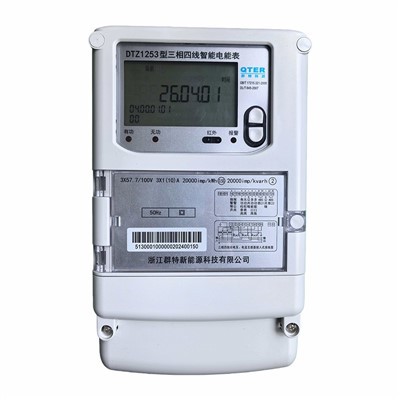
At the end of the day, an electronic energy meter is an investment—you’re not just buying a device that measures kWh, you’re buying accuracy, convenience, and peace of mind that your bills are correct. Skimping on that can end up costing you way more than a few extra dollars upfront. If you want to talk through what you need, or get a quote for bulk orders, feel free to reach out. We can help you find the right meter that fits your budget and your needs, no fluff, no hidden fees.
Electronic Energy Meter References
- International Electrotechnical Commission (IEC). "Electrical energy measurement equipment for AC systems." IEC Standard 62052, 2021.
- U.S. Energy Information Administration (EIA). "Smart Meters: Benefits, Costs, and Deployment." EIA Report, 2022.
- National Electrical Manufacturers Association (NEMA). "Standards for Electronic Energy Meters." NEMA Publication 12-2020, 2020.
- Pike Research. "Global Electronic Energy Meter Market Forecasts, 2021-2030." Pike Research, 2021.
Zhejiang Qunte New Energy Technology Co., Ltd.
As one of the most professional electronic energy meter manufacturers in China, we’re featured by quality products and good price. Please rest assured to buy discount electronic energy meter made in China here from our factory. We also accept customized orders.
Address: No. 56, Fengxi Road, Tang’ao Yu Village, Liushi Town, Yueqing City, Wenzhou City, Zhejiang Province
E-mail: 251951196@qq.com
WebSite: https://www.zjqtmeter.com/
