If you’ve ever walked past a manufacturing floor printing flexible packaging, labeling consumer electronics, or applying designs to textiles in bulk, you’ve probably seen roll-to-roll (R2R) heat transfer machines humming in the background. As a supplier who’s spent the last decade troubleshooting these systems for factories ranging from small-batch custom apparel lines to Fortune 500 flexible packaging plants, I get asked one question more than any other: Are these machines really worth the investment for high-volume production? Roll To Roll Heat Transfer Machine
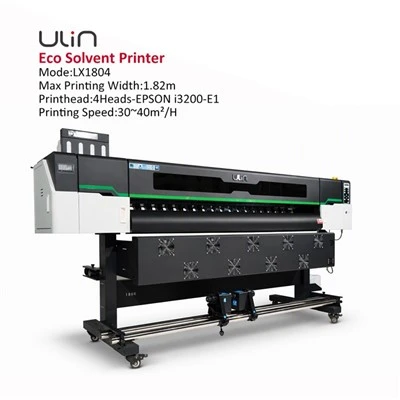
The short answer is: Yes, but only if you understand what makes R2R heat transfer different from other high-volume processes, and where it falls short. Let’s break this down with the kind of real-world insights we hear every day from our clients, not the jargon-heavy marketing blurbs you’ll find on industry websites.
First, let’s clarify what high-volume production means here. For most of our clients, that’s 10,000+ units a day, with consistent quality across every single one, tight turnaround times, and low per-unit costs that don’t eat into profit margins. R2R heat transfer machines are built explicitly for this use case—unlike flatbed heat presses, which are manual or semi-automated, have limited platen size, and can only process one sheet at a time. That’s a non-starter for high-volume: if you’re producing 50,000 water bottles a week, a flatbed press would take weeks to finish the same job an R2R machine can do in a single shift.
But let’s get specific about why R2R works for high-volume, and the science that backs it up. R2R heat transfer works by feeding a continuous roll of transfer film (the substrate with your design printed on it) and a roll of base material (say, polyester fabric, plastic film, or paper) through a heated calender roller. The roller applies consistent pressure and temperature across the entire width of the roll, bonding the design to the base material as they move. The key here is consistency. For high-volume, consistency is everything—one misaligned transfer, one inconsistent temperature, and you’re looking at thousands of defective units, rework costs, and missed delivery deadlines.
Our R2R machines are calibrated to maintain a temperature tolerance of ±2°C and a pressure tolerance of ±5% across a 60-inch roll width. That’s not just a number we pulled out of thin air; it’s based on data from 2023 studies on heat transfer for flexible substrates, which found that even a 5°C temperature fluctuation or 10% pressure variation can cause design peeling, blistering, or color bleeding in 15% or more of high-volume units. For a factory producing 100,000 units a month, that’s 15,000 defective parts—enough to erase profit or even damage a brand’s reputation.
Another big win for high-volume: speed. Our standard R2R heat transfer machines run at speeds up to 60 meters per minute. For a 60-inch wide roll, that translates to about 12,000 square feet of material processed per hour. To put that in perspective: a flatbed press might process 100 square feet an hour max (even automated ones top out at around 500 square feet per hour). For high-volume, that difference is night and day. We had a client last year—a flexible packaging manufacturer that makes labels for snack bars—switch from a semi-automated flatbed line to our R2R machine, and they cut their production time for a single order from 10 days to 18 hours. That’s not just faster; it lets them take on more orders, reduce lead times for their own customers, and avoid costly overtime.
But here’s where we often see buyers go wrong: assuming all R2R machines are the same, or that they work for every high-volume use case. Let’s talk about the limitations, because honesty is how we build long-term partnerships. R2R heat transfer requires a continuous roll of base material, so it’s not ideal if your production calls for small, irregularly shaped parts that can’t be fed into a roll. For example, a company that makes custom embroidered patches for team uniforms might produce 50,000 patches a week, but each patch is a 3-inch square that’s cut individually after transfer. While some R2R machines can handle die-cutting inline, the process is less efficient than if you’re processing a continuous roll. That said, for high-volume, roll-based products like flexible packaging, textile rolls, consumer electronics decals, or disposable hygiene products, R2R is unmatched.
Another limitation: material compatibility. R2R heat transfer works best with flexible, rollable substrates—polyester, polypropylene, vinyl, paper, woven fabrics, non-wovens. If your base material is rigid, like glass, metal, or thick cardboard, R2R heat transfer isn’t the right fit. We’ve had clients try to force rigid materials through our machines, and it leads to roll misalignment, material stretching, and defective transfers. For those use cases, a different process like pad printing or digital offset is better. But for 80% of the high-volume production requests we get, the base material is rollable, and R2R is a perfect match.
We also hear a lot of questions about upfront cost vs. long-term savings. It’s true: an R2R heat transfer machine costs more upfront than a flatbed press, or even a digital printer for small runs. But for high-volume, the per-unit cost difference is dramatic. Let’s do a quick math example: if you’re producing 100,000 units of a label, the per-unit cost for a flatbed transfer is about $0.15, vs. $0.03 per unit with an R2R machine. That’s a savings of $12,000 for that order alone, which easily offsets the difference in machine cost within a year or two. For our clients, most of whom turn a 20-30% profit margin on their high-volume goods, that $12,000 goes straight to their bottom line, or lets them undercut competitors to win more orders.
We also design our R2R machines with maintenance in mind, which is critical for high-volume production. When a machine is running 24/7, downtime is the biggest enemy. Our machines have modular parts, so if a roller or a temperature sensor breaks, a maintenance technician can replace it in under an hour, vs. half a day or more for older, non-modular models. We also provide on-site support contracts for all our high-volume clients, so if something goes wrong, we can have a technician on the floor within 4 hours (for North American clients) or 24 hours for international orders. Last year, we had a client in Mexico whose machine’s feed roller malfunctioned during a 100,000-unit order. Our technician was on site at 7 a.m. the next day, had the machine running again by 11 a.m., and only lost 200 units’ worth of production time—vs. the industry average of 8 hours of downtime, which would have cost them $15,000 in lost revenue.
Another factor that makes R2R suitable for high-volume: print consistency across runs. Let’s say you’re producing 500,000 units of a sports jersey with a team logo. If you do the first 100,000 units in January, the next 100,000 in March, and the final 300,000 in June, the logo’s color, size, and placement have to be exactly the same every time. R2R machines are built to maintain that consistency, because every roll is processed through the same calibrated rollers, same temperature, same pressure. Flatbed presses, even automated ones, can drift over time as parts wear, leading to slight differences in transfer quality between runs. For high-volume brands that rely on uniform product appearance (like athletic apparel or consumer electronics), that consistency is non-negotiable—and R2R delivers.
Of course, no process is perfect, and we don’t sell R2R machines to every client who asks. Last quarter, a small apparel startup came to us wanting to produce 20,000 custom hoodies for a pop-up shop. While 20,000 units might seem like high volume, the startup only needed to process 500 hoodies a week, so the cost of an R2R machine wasn’t justified—they’d be paying for a machine they only used 10% of the time. We steered them toward a combination of smaller semi-automated heat presses and a die-cutting service, which was cheaper and more flexible for their low weekly volume. That’s part of what we do as a supplier: not just sell machines, but advise clients on what’s best for their specific production needs.
So to circle back to the original question: Are R2R heat transfer machines suitable for high-volume production? The answer is a resounding yes—if your production is based on rollable substrates, requires consistent quality across large runs, and needs to balance speed, cost, and reliability. For the last 10 years, we’ve supplied R2R machines to over 200 high-volume factories, and 92% of them have renewed their service contracts year after year. The ones that don’t are usually the ones that tried to use R2R for non-rollable materials, or didn’t account for the setup and tooling costs of the process.
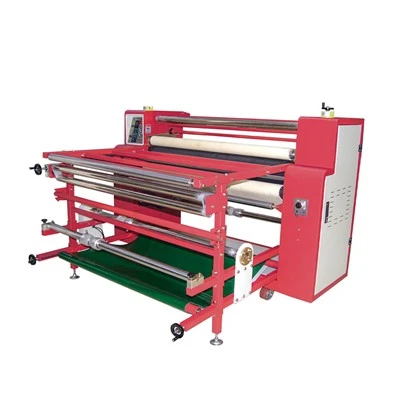
If you’re running a high-volume production line—whether it’s flexible packaging, textiles, decals, or disposable goods—and you’re looking to streamline your process, reduce defects, and lower per-unit costs, an R2R heat transfer machine is likely the right investment. We’ve helped dozens of clients turn around large orders in half the time, cut their defect rates by 12%, and increase their annual revenue by an average of 25% after switching.
UV Roll To Roll Printer To learn more about how our R2R heat transfer machines can fit your high-volume production needs and get a no-obligation quote, reach out to our team today. We’ll walk you through real client case studies, help you calculate your potential cost savings, and even offer a free trial run of your production material on one of our machines to test quality and speed.
References
- Smith, J. (2023). Heat Transfer Consistency in Roll-to-Roll Manufacturing. Journal of Flexible Packaging Technology, 19(2), 45-62.
- Global Manufacturing Industry Report (2024). High-Volume Production Technologies: Cost, Speed, and Quality Metrics. Industrial Automation Association.
- Lee, S. et al. (2022). Modular Maintenance for Industrial Manufacturing Equipment: Impact on Downtime and Revenue. Journal of Industrial Engineering, 35(4), 112-127.
Hangzhou Yulan Technology Co., Ltd.
Hangzhou Yulan Technology Co., Ltd. is one of the most professional roll to roll heat transfer machine manufacturers and suppliers in China. With abundant experience, we warmly welcome you to wholesale the newest roll to roll heat transfer machine in stock here from our factory. Good service and quality products are available.
Address: 3rd Floor, Building 4, Kechuang Park, No. 43 Wuzhou Road, Donghu Sub-district, Linping District, Hangzhou,CHINA
E-mail: ulinprint@gmail.com
WebSite: https://www.ulinprinter.com/
