Hey, let’s cut to the chase—if you’ve ever seen a cop suiting up for a shift, you’ve probably noticed that thick, strap-heavy belt around their waist. That belt holds everything: handcuffs, a radio, pepper spray, a spare mag for their sidearm, maybe a flashlight and a first aid kit. Here’s the thing, though: not every gear load fits every body the same way. That’s where a police belt extender comes in, and if you’re a cop reading this, or a gear store owner, you already know it’s way more than a random “extra strap.” Police Belt
Let’s break it down. First, what it actually is, plain and simple: a belt extender is a short, adjustable accessory—usually 2 to 4 inches long, sometimes longer for bigger builds—that clips or buckles to the end of your standard police duty belt to add a little extra length. But it’s not just any piece of strap, right? I’m a supplier of police belts, so I test these things with the same kind of rig our guys use on the job. Most cheap extenders you find online are just nylon webbing with a simple buckle, but the good ones are heavy-duty—like 1.5-inch wide nylon or even ballistic-grade material, made to hold up when your belt’s loaded with 10+ pounds of gear (and let me tell you, that weight adds up fast when you’re running after a suspect or sitting in a cruiser all shift).
Why would a cop need one of these? Let’s be real—uniform sizing is tricky. A lot of departments issue standard belts that fit a 32- to 40-inch waist, but if you’re between sizes, or you put on a few pounds during the holiday break, or you’re just built a little bigger than the average, a standard belt is either too tight or too loose. Too tight, and that belt’s digging into your side after an hour, making it impossible to bend over to handcuff someone or lean into a car. Too loose, and all that gear shifts—your radio slaps your hip when you run, your pepper spray bounces out of place, and worst of all, your sidearm might even ride too low, which affects your draw speed. We’ve had cops come to us saying they’ve almost fumbled their weapon mid-call because their belt was slipping. That’s not a small issue.
Wait, and it’s not just bigger bodies. Let’s say you’re a female officer who’s trained and gained a few pounds of muscle around the core for patrol work. Or a newer officer who’s still building their gear load—they might add a trauma plate later, or a larger radio, and suddenly their belt’s too small. Extenders fix that without making you buy a whole new belt. That’s a big cost saver, too, for departments that have tight gear budgets.
Now, let’s get into the nitty-gritty of how they work, because not all extenders are created equal. The two main types are clip-on and buckle-style. Clip-on extenders are the most common—they have a hook on one end that clips to the male side of your duty belt’s buckle, and a loop on the other that you thread the female buckle through. Super easy to adjust, you can swap them out in 10 seconds if you’re switching between pants sizes for off-duty. Buckle-style extenders are a little sturdier—they replace the standard belt buckle, so you don’t have a separate piece hanging off your belt. Those are popular for cops who run really heavy gear loads because they distribute the weight more evenly.
I’ve seen some people ask if extenders affect the stability of their belt. Let me answer that: a good one won’t. A lot of the cheap ones on Amazon use plastic clips that break after a month of heavy use. The extenders we supply are made with metal clips and heavy-duty nylon that’s tested to hold up to 50 pounds—way more than the average gear load. We have some guys who run 15 pounds of gear every shift, and those extenders haven’t given out once.
Another thing: comfort. I can’t tell you how many officers complain about back pain at the end of a 12-hour shift. A too-tight belt squeezes your lumbar area, and a loose one makes you hunch to keep gear from swinging. An extender lets you adjust the belt to fit your natural waist, not some generic uniform size. That small change adds up to less fatigue, less pain, and you’re way more focused on the job instead of adjusting your belt every two minutes.
Wait, let’s also talk about use cases you might not have thought of. What if you’re a cop who wears outer layers—like a heavy patrol jacket in winter—or a tactical vest? Those add a few inches around your waist, so a standard belt might be too tight when you’re suiting up for a cold-weather shift. An extender fixes that in 10 seconds, no need to get a bigger belt. Or what if you’re on a detail where you’re wearing a plainclothes underlayer, and your duty belt needs to sit a little lower to fit under the uniform shirt? Extenders let you tweak the length to get that perfect fit without messing up the belt’s position.
Now, let’s get to why, as a police belt supplier, we focus so much on making good extenders. For years, we heard from cops that extenders were an afterthought—something you grab from a big box store that doesn’t fit right, or breaks mid-call. That’s not acceptable. Gear isn’t just for show; it’s a tool. If your tool (your belt) isn’t working right, your whole performance suffers. We test every batch of extenders by having our own team—guys who’ve been on patrol for 10+ years—wear them for a full shift, run scenarios, carry heavy loads, to make sure they hold up. We don’t cut corners on material, and we don’t sell flimsy stuff.
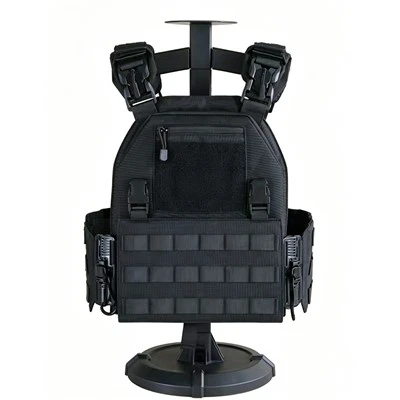
I know a lot of departments are moving towards modular gear now—plate carriers, modular holsters, expandable radios. That means gear loads are getting heavier, and the need for adjustable, reliable belt extenders is higher than ever. A lot of new officers don’t realize this accessory exists, so they’re walking around with a belt that’s either too tight or too loose, not even knowing there’s a simple fix. We get so many messages from new cops saying they just thought “this is how it’s supposed to fit” until they tried one of our extenders and realized how much better it is.
Let’s bust a common myth here: some people think extenders make your belt look sloppy. Newsflash—if you get a good one, it’s barely noticeable. The ones we make are slim, the clip sits tight, and it doesn’t swing around. You can barely tell it’s there until you need to adjust it. The bad ones are the sloppy ones—they’re made of thin nylon, the clip wobbles, and they hang down. That’s why it’s worth buying a quality one, not the $5 one from a random website.
Now, if you’re a department gear manager, or an officer looking to upgrade your own setup, let’s talk about what to look for in a good police belt extender. First, material: look for 1.5-inch nylon or ballistic webbing, not thin fabric that stretches. Hardware: metal clips and buckles, not plastic that breaks. Length: 2 to 4 inches is standard, but if you’re a bigger build, go for up to 5 inches—just make sure it’s not too long, because excess strap can get caught on things (like a fence, or a patrol car door) mid-scenario. Also, make sure it’s compatible with your belt: most duty belts use a 1.5-inch width, so the extender should match that, no odd sizes.
As someone who’s been supplying police gear for years, I can’t stress enough how small accessories like this make a huge difference. It’s not a fancy holster or a high-tech radio, but if it doesn’t work, it can ruin your whole shift. We’ve had officers tell us that a good extender let them keep their belt during a training scenario where their waist expanded from the workout, and they didn’t have to stop to get a new belt. That’s the kind of thing that matters when you’re out there, every day.
Wait, let’s circle back to the original question: what is a police belt extender? It’s not just a strap to add length. It’s a comfort tool, a performance tool, a cost saver for departments, and a simple fix to a problem that a lot of cops don’t even realize they have. It’s the unsung hero of duty gear, right up there with a good pair of boots.
If you’re in the market for a quality police belt extender—whether for personal use, or for your department’s gear store—we make ones that are built for patrol, for training, for every shift. We’ve worked with officers from all over the country, from small town departments to big city patrols, and we hear the same feedback: a good extender is non-negotiable. If your current belt isn’t fitting right, don’t suffer through it. Grab a reliable extender, adjust that belt, and get back to focusing on what matters.
If you’re ready to chat about ordering extenders for your department, or you’ve got questions about our police belts and accessories, reach out to us. We’re here to make gear that works for you, not against you. No runaround, no corporate hoops—just real gear for real cops.
Bulletproof Shield References
- National Police Supply Association. (2022). Duty Gear Ergonomics for Patrol Officers. Annual Safety & Equipment Report.
- U.S. Department of Justice, Office of Community Oriented Policing Services. (2021). Essentials of Patrol Gear for Modern Law Enforcement.
- Law Enforcement Officer Safety Association. (2023). Wearable Gear and Musculoskeletal Discomfort in Uniformed Officers. Journal of Public Safety Equipment.
- International Association of Chiefs of Police. (2022. Product Testing Guidelines for Duty Belt Accessories). IAPC Equipment Standards Bulletin.
Jiangsu Jiuan Police Equipment Manufacturing Co., Ltd.
As one of the leading police belt manufacturers and suppliers in China, we warmly welcome you to wholesale bulk cheap police belt from our factory. All customized products are with high quality and low price. For free sample, contact us now.
Address: No.9, Xihuan South Road, Jingjiang City, Jiangsu Province
E-mail: viola@jiuanpolice.cn
WebSite: https://www.japolice.com/
